This week’s activities
Growing cress
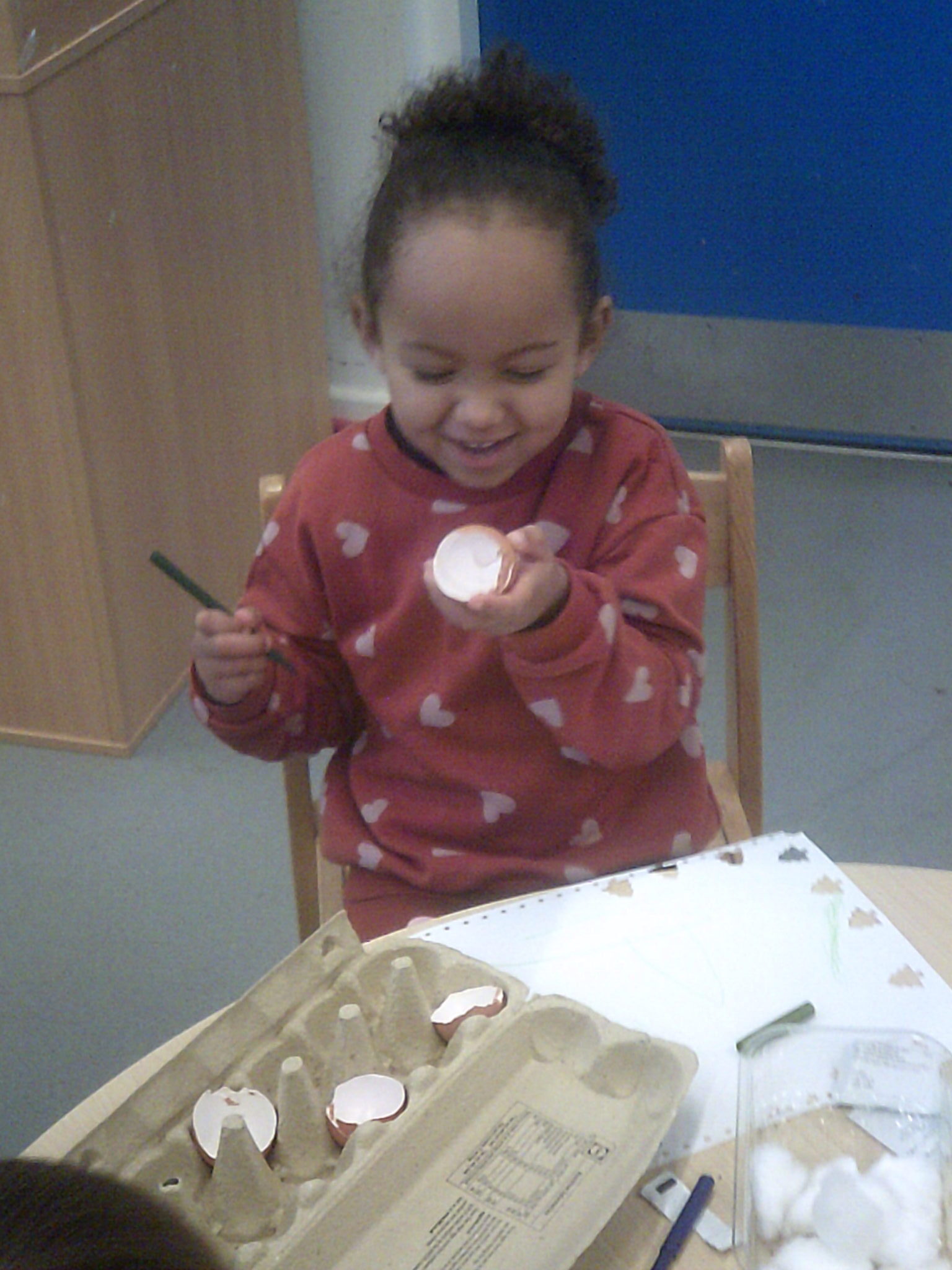
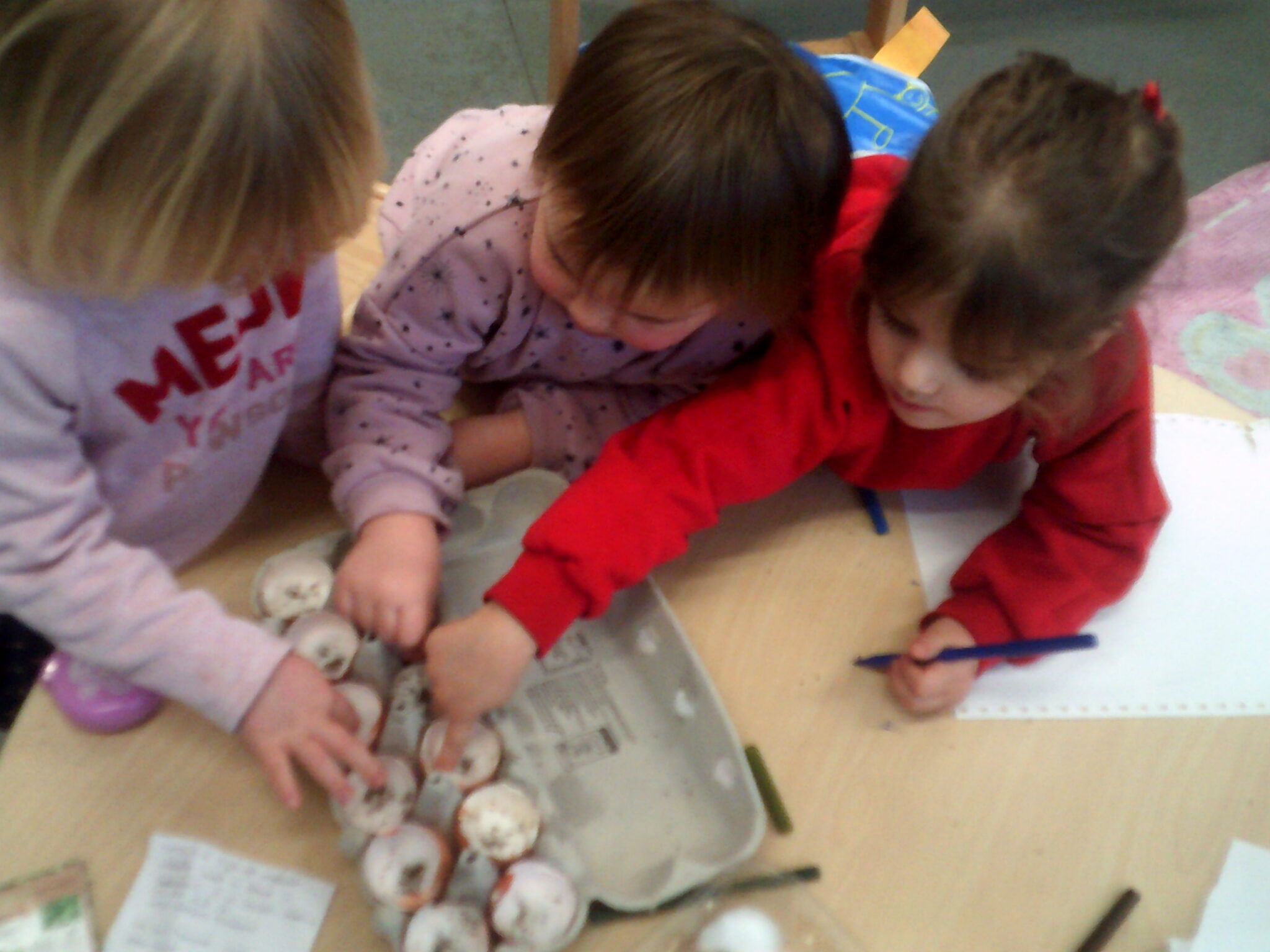
The children are learning about what happens to seeds to make them grow into plants; some of which we can eat, whilst others enhance our world through their natural beauty and benefit insects, birds and animals. A simple starting point is cress. Cress grows easily, doesn’t need much looking after and children can see the results happening before their eyes. As the seeds are tiny, we used empty egg shells as tiny pots, with a small amount of cotton wool and water instead of soil. The egg shells can be composted once they are no longer needed, meaning that we don’t need to use plastic containers. However, old yoghurt pots would make a good container too.
New language was introduced, including ‘dormant’ and ‘germinate’. The teacher explained that dormant means not active, like in a deep sleep, and germinate means the beginning of growth from seed to seedling. She also explained that the seeds are ‘dormant’ until they have the right conditions to grow into seedlings. This led to discussion around what the seeds need to germinate. Some of the children already knew that they need water and sunshine but this was extended to talk about oxygen/air, the right temperature and light (not just sunshine).
The teacher explained that cress is edible, meaning we can eat it. That it is often used in sandwiches and salads and that it contains vitamins, which our body needs to be strong and healthy. She also explained that, unlike some other edible plants, it can be grown all year round, describing that harvest means gathering the food when it has grown and we pick or cut it when it is ripe and ready to eat.
The children will be taking care of the cress seeds and monitoring their growth over time. Growing things with children is a great way of helping them understand that not everything is instant and that some things are worth nurturing and waiting for the result.
Yoghurt pot telephones
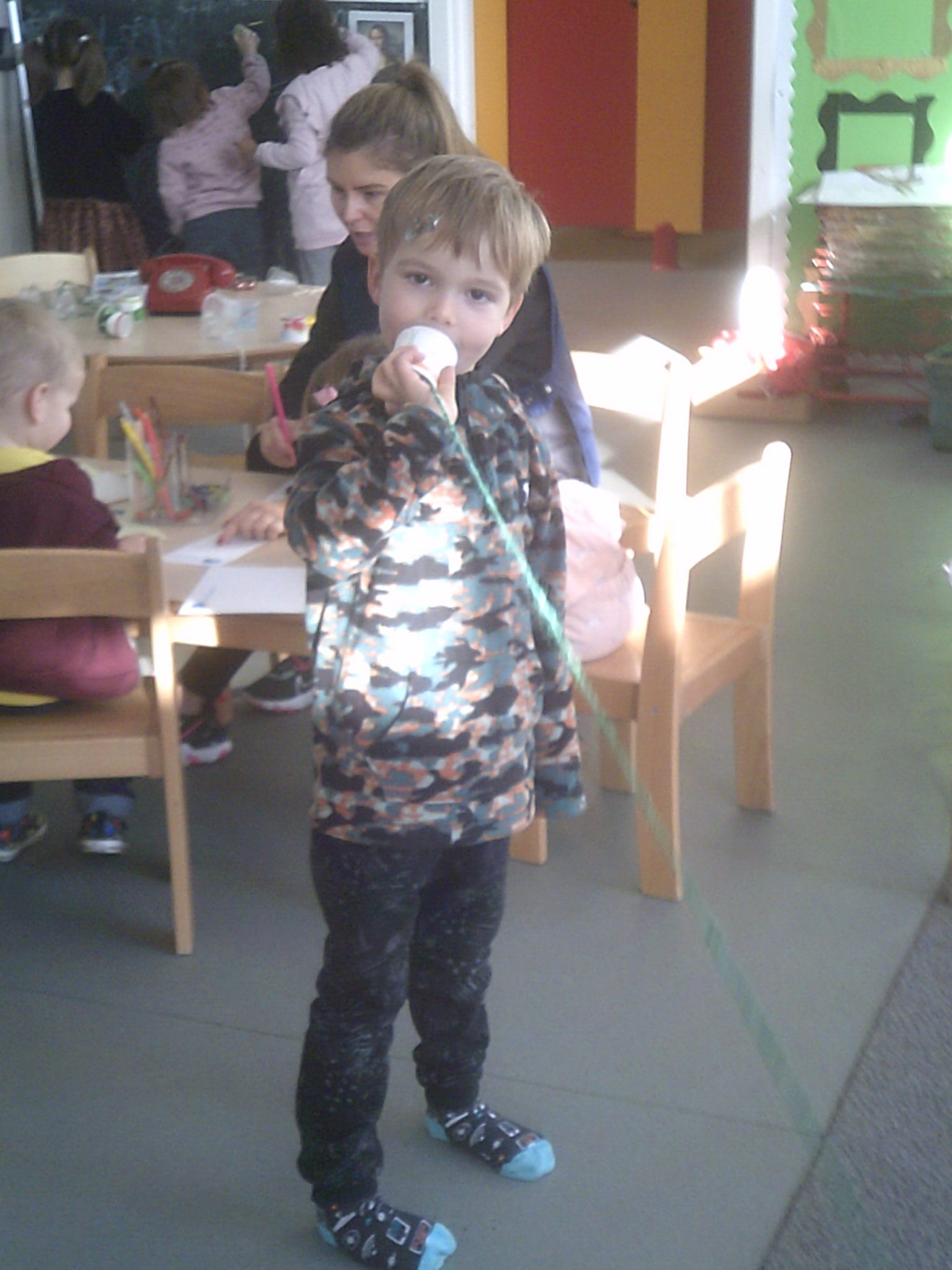
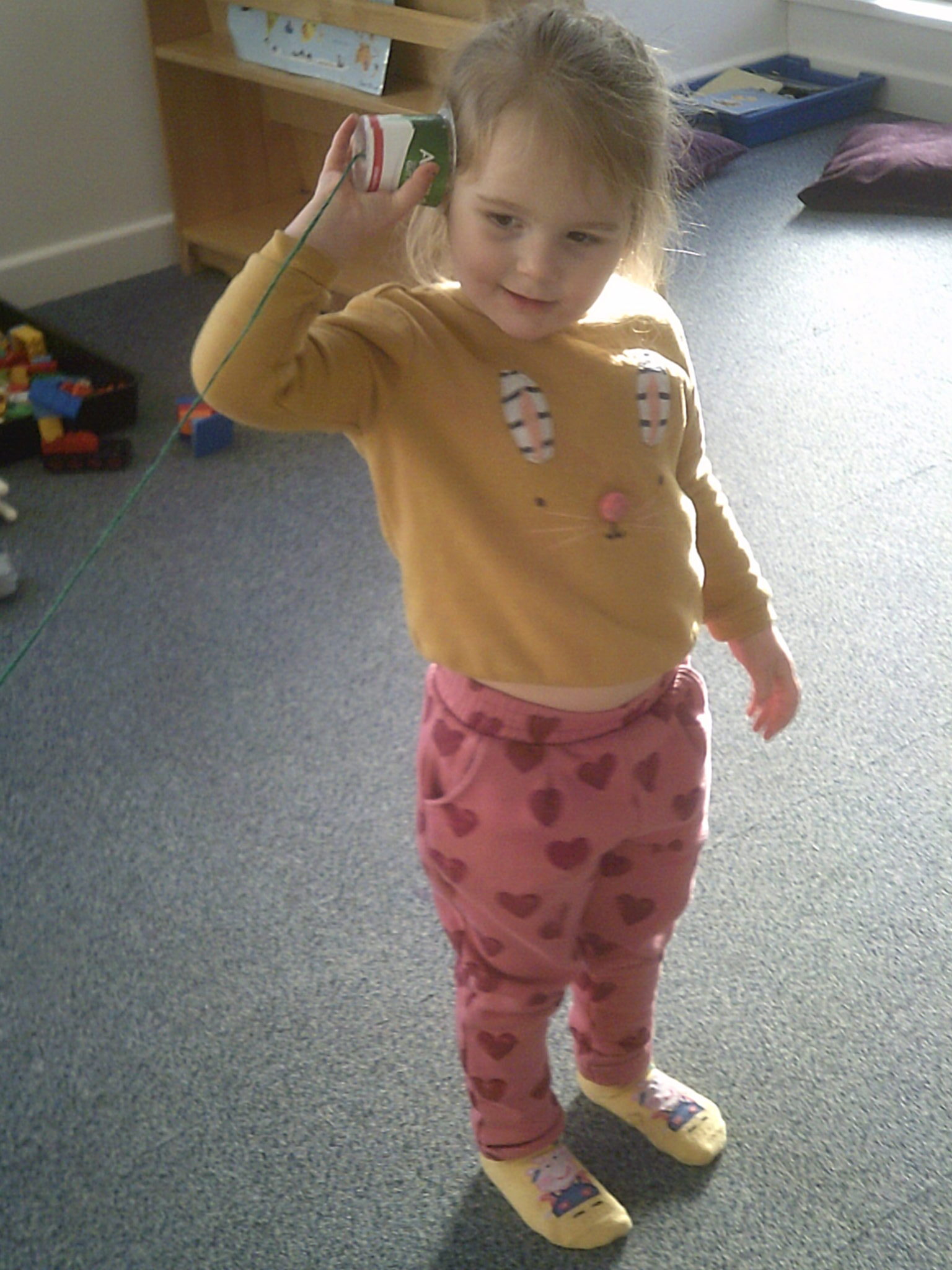
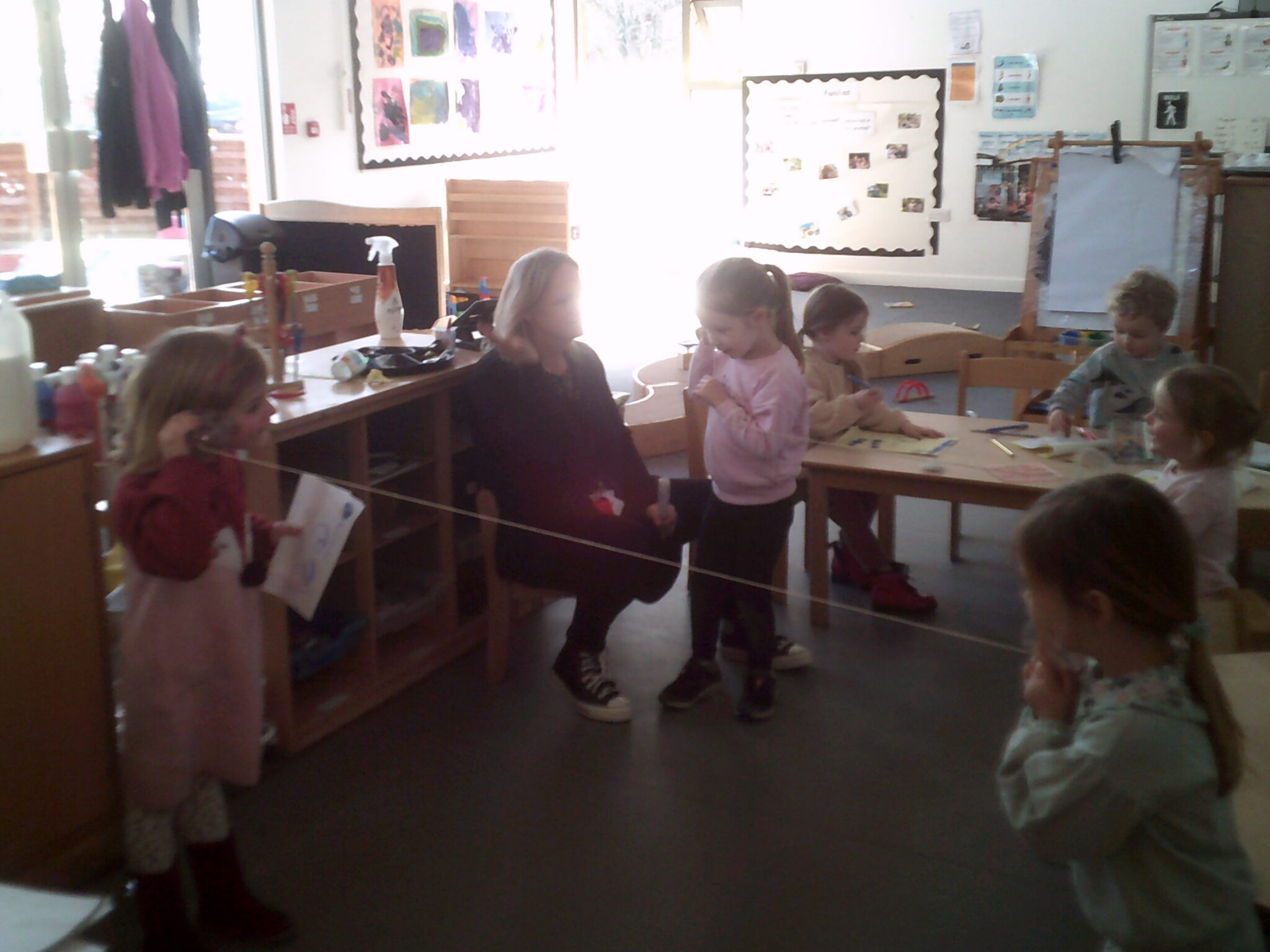
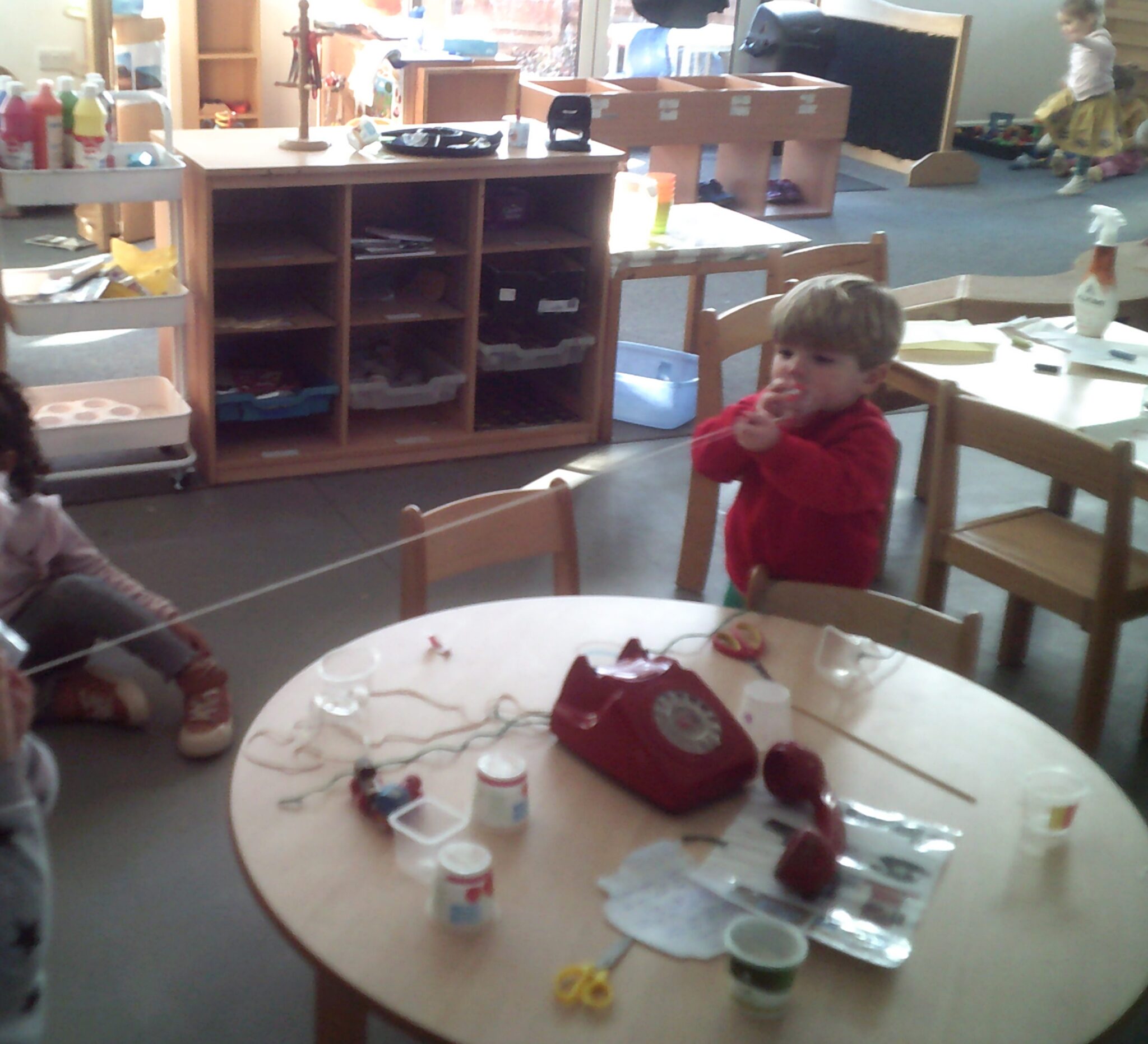
This is a simple science experiment that the children found really fun. The adult made the ‘telephone’ using yoghurt pots and string – one yoghurt pot at each end of a piece of string. They discovered that if the string is taut (another new word) that the sound vibrations travelled along the string and they could hear their friends at the other end. If the string was loose, the sound travels all around and not down the string.
They learnt that the telephone was invented by Alexander Graham Bell in 1876 – the date to a young child really doesn’t have much significance, so to explain the concept of 146 years ago the teacher used their families to illustrate what this means ie before grandparents, great-grandparents and great-great-grandparents were born.
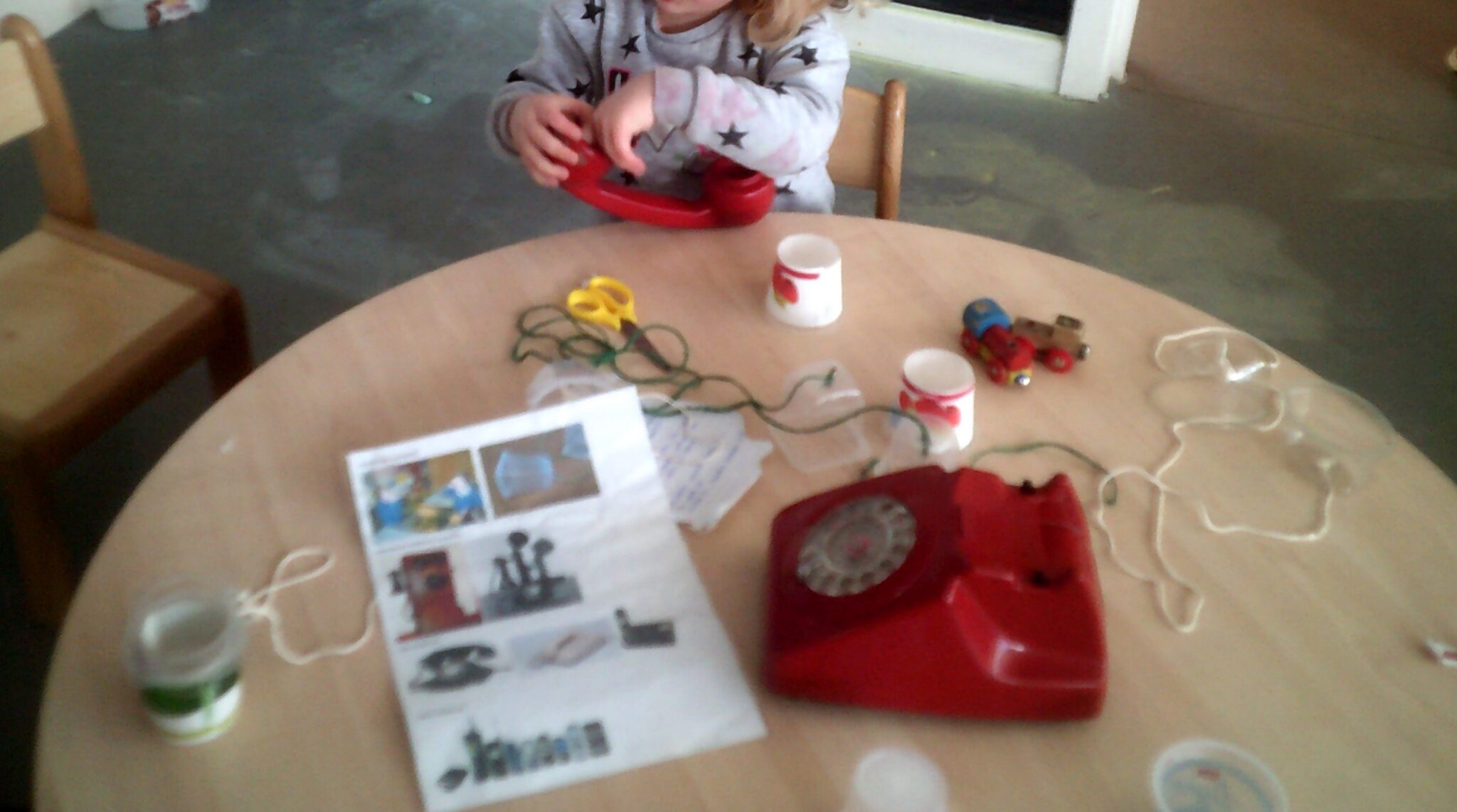
They discussed what invention means and looked at telephones through the ages, from the first telephone up until the mobile phones that children are very familiar with today.
Both of these on the surface simple activities, but involved lots of deep level thinking and lots of lovely new language. These activities are easily replicated at home.
As always, thank you for your continuing support.
The Pre-school Team