This week’s activity
Celebrating World Bee Day
Set out below is a whole day activity to mark and celebrate the importance of bees.
Part One
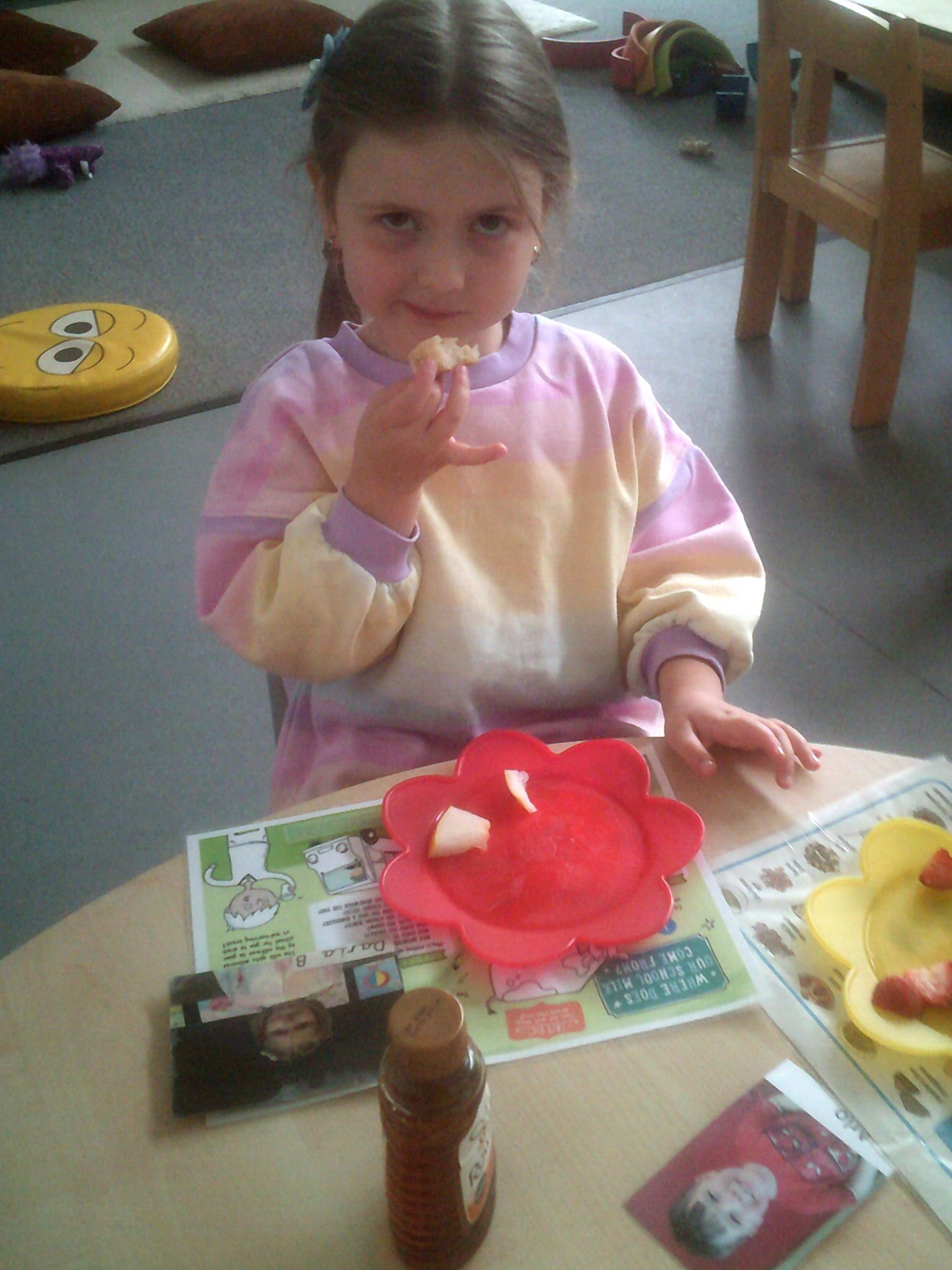
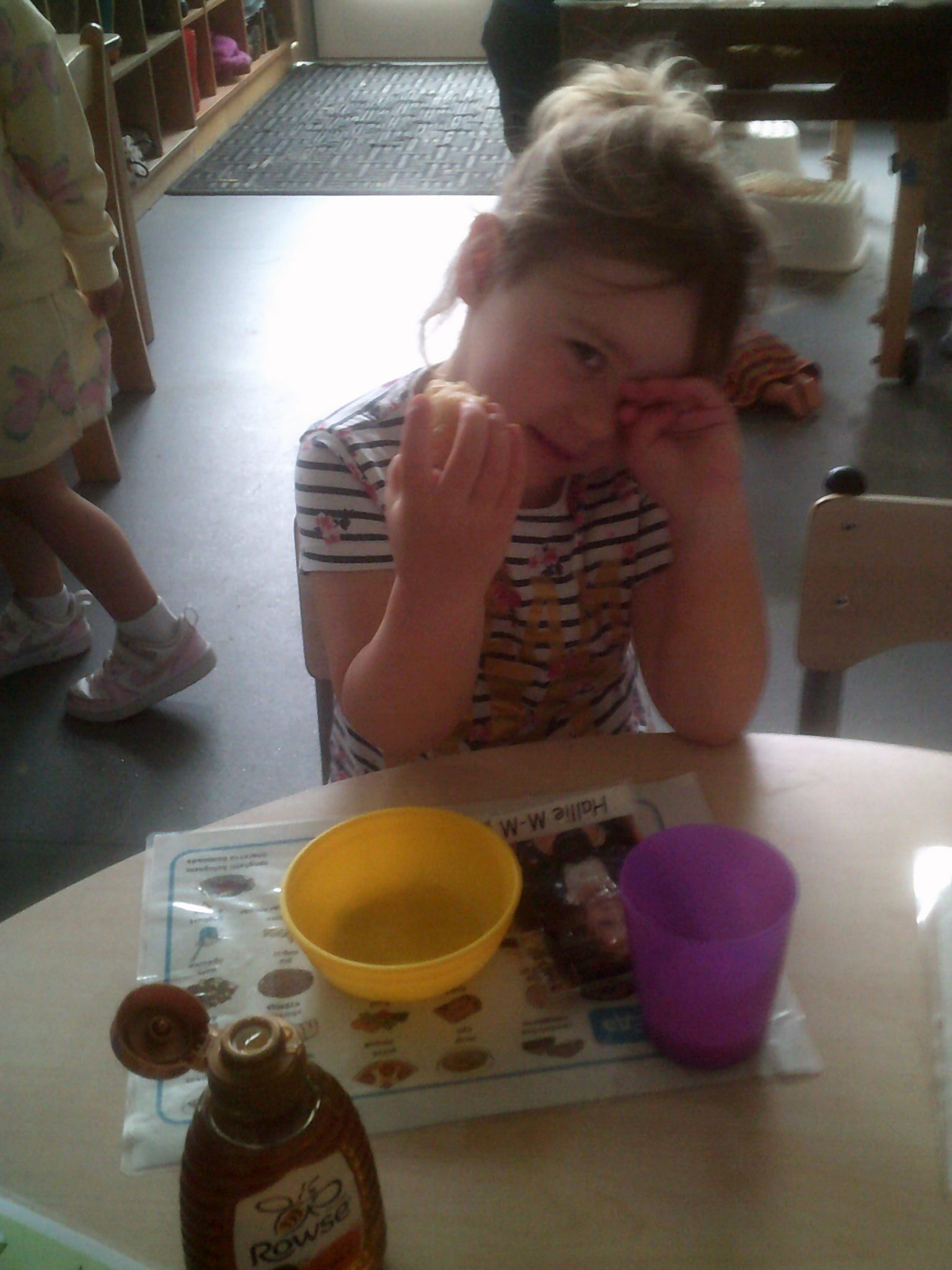
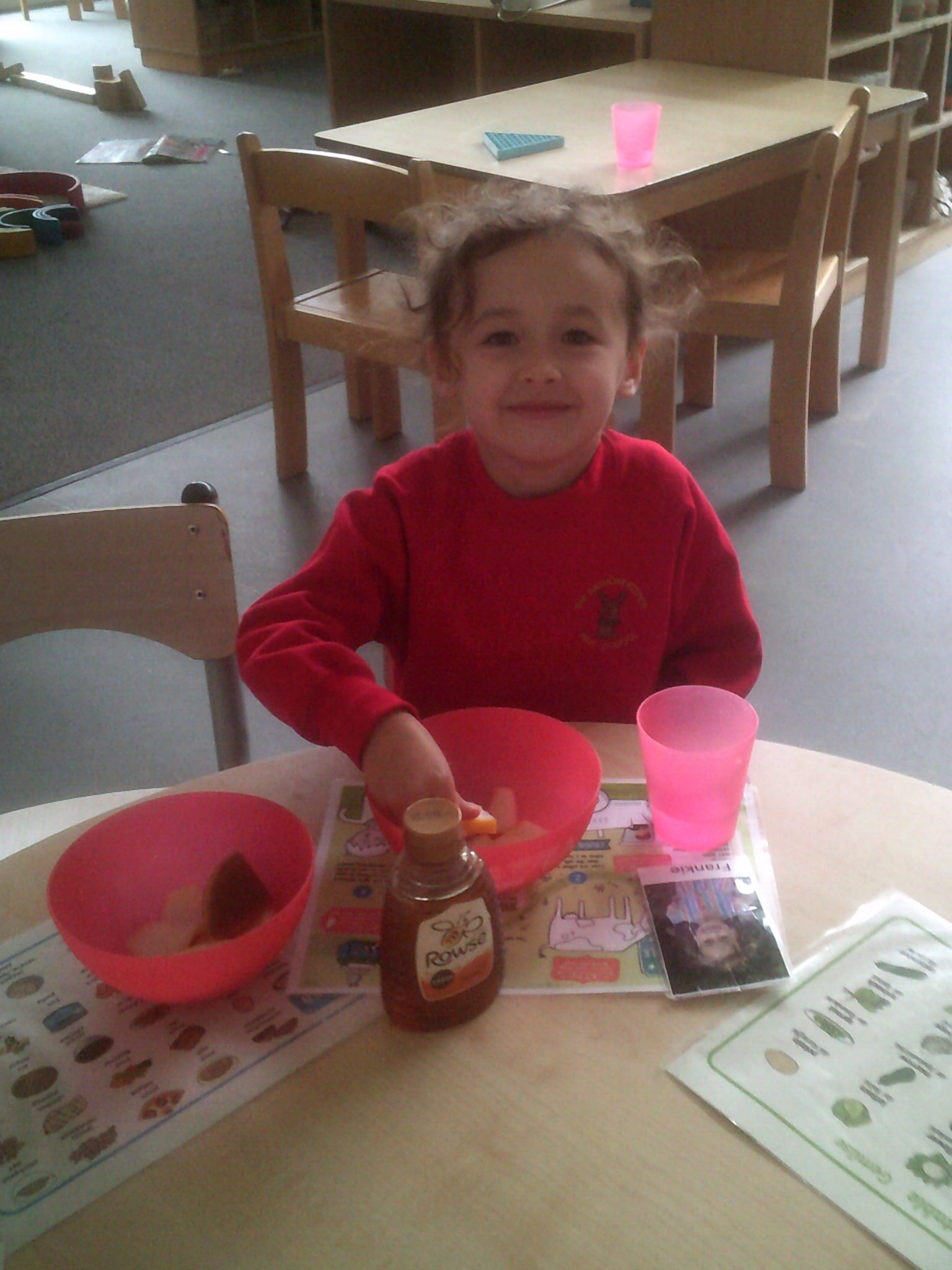
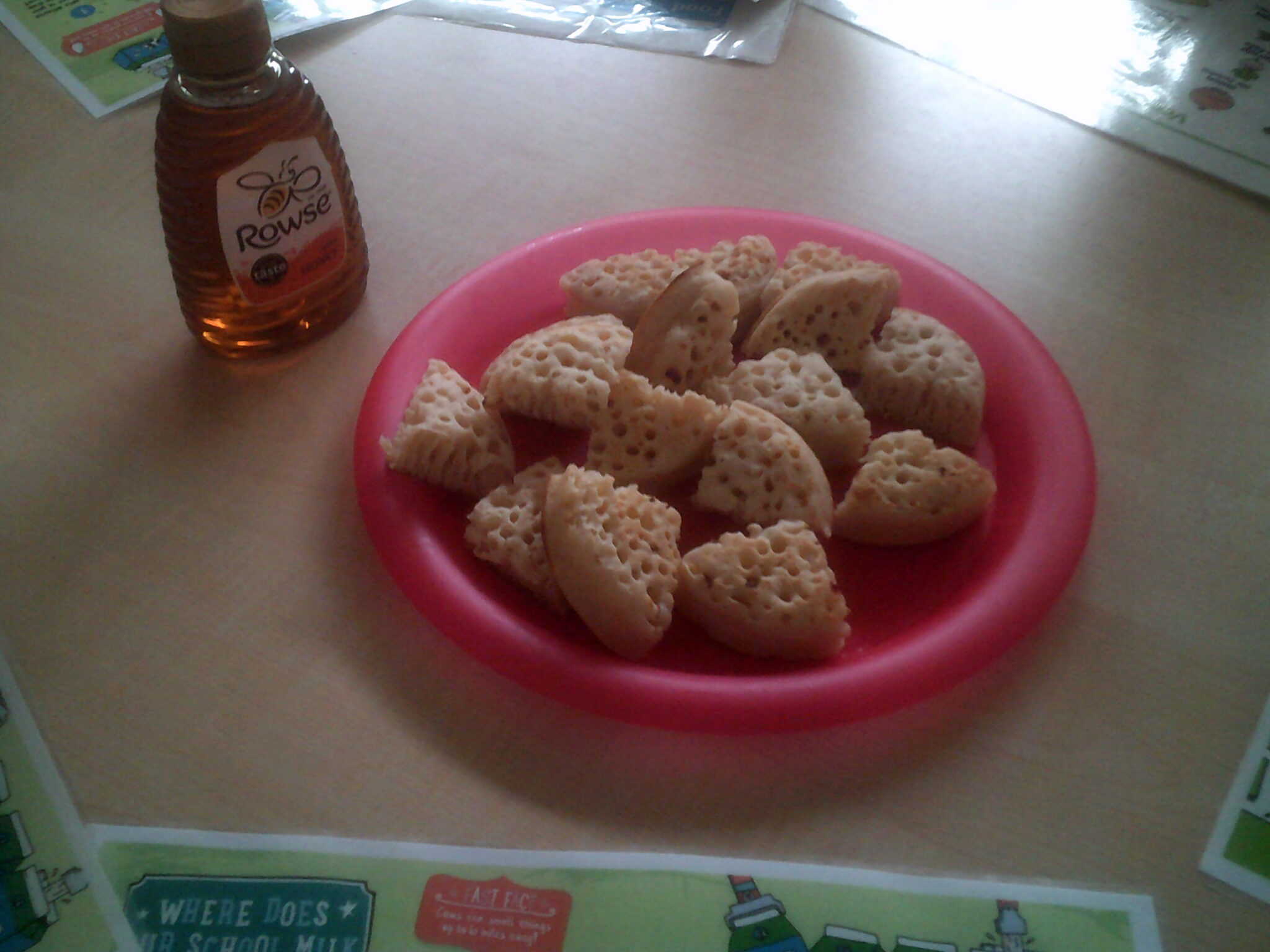
At snack time today, the children had the opportunity to try honey. Some chose to have it on crumpets instead of spread, whilst others had it on their fruit. Having tasted the honey, discussion followed around how honey was made. All of the children who were asked had remembered from previous activities that it is made by bees. The teacher, who is a trained bee keeper, explained that not all bees make enough honey for them to survive and for us to enjoy, but the ones that do are called ‘social honey bees’.
She went on to explain how the honey is made by the bees – the bees collect nectar from flowers to take back to the hive. They mix the nectar in a special area of their mouth, with a special liquid – an enzyme (this was not a word the children had heard before). The bees then place the mixture into a ‘cell’. One of the children remember making bee cells previously out of cardboard a few week ago; “we made those didn’t we” they commented. The teacher went onto explain that the cell is then closed with wax so the honey can be kept safe. The beekeeper will later collect the honey from the hive but will make sure there is enough honey for the bees to eat over the winter. The teacher explained that bees do not leave the hive over winter, which is why the beekeeper has to ensure they have enough honey left to eat.
Having discovered how honey is made, they talked about how honey is a treat and we shouldn’t eat too much as it is not good for our bodies in big quantities. However, small amounts of honey can help if we have a cough or cold, as it is anti-microbial (another new word). The teacher explained that this means it can help to fight against some germs, such as those that cause a cold.
Part Two
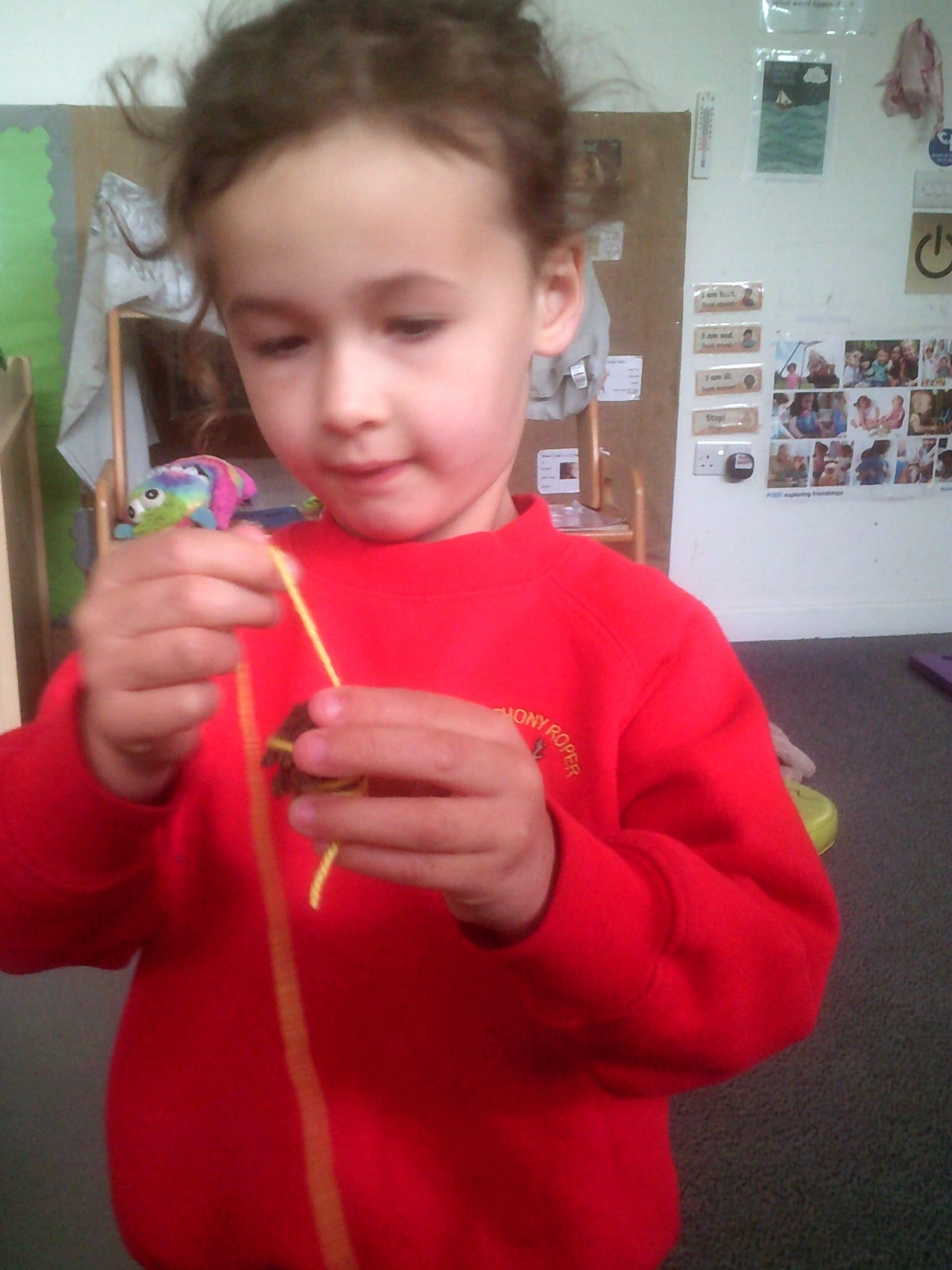
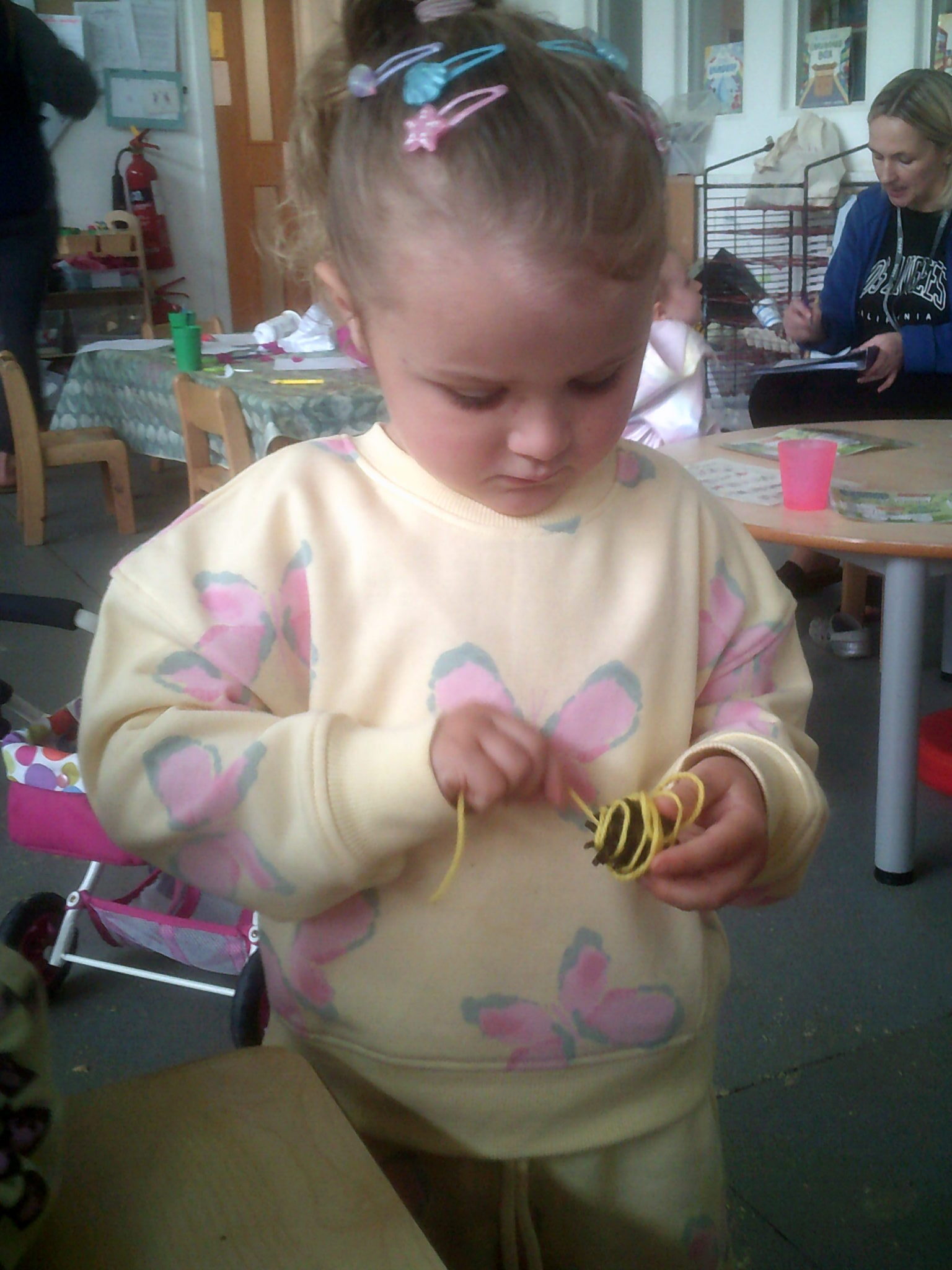
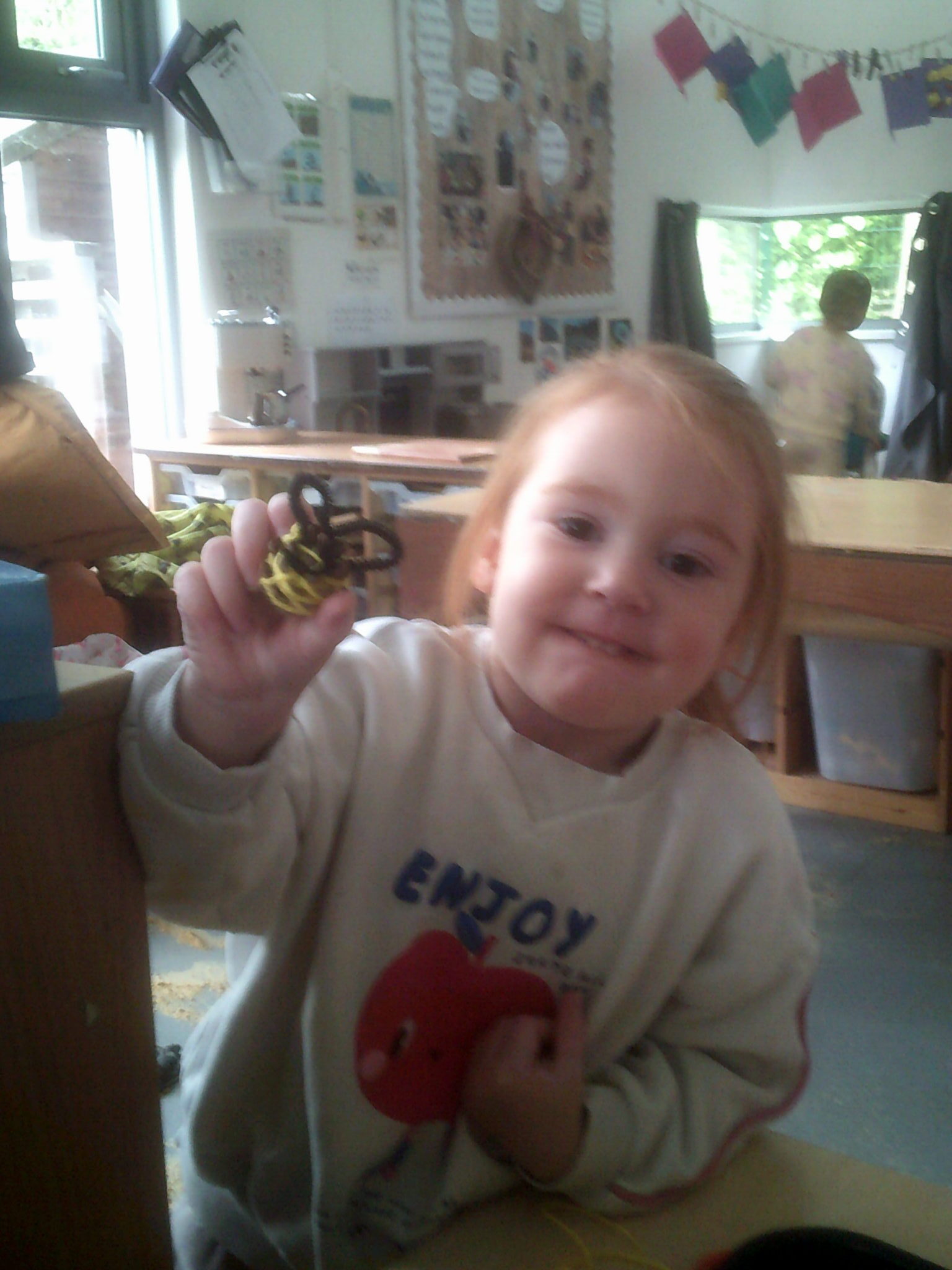
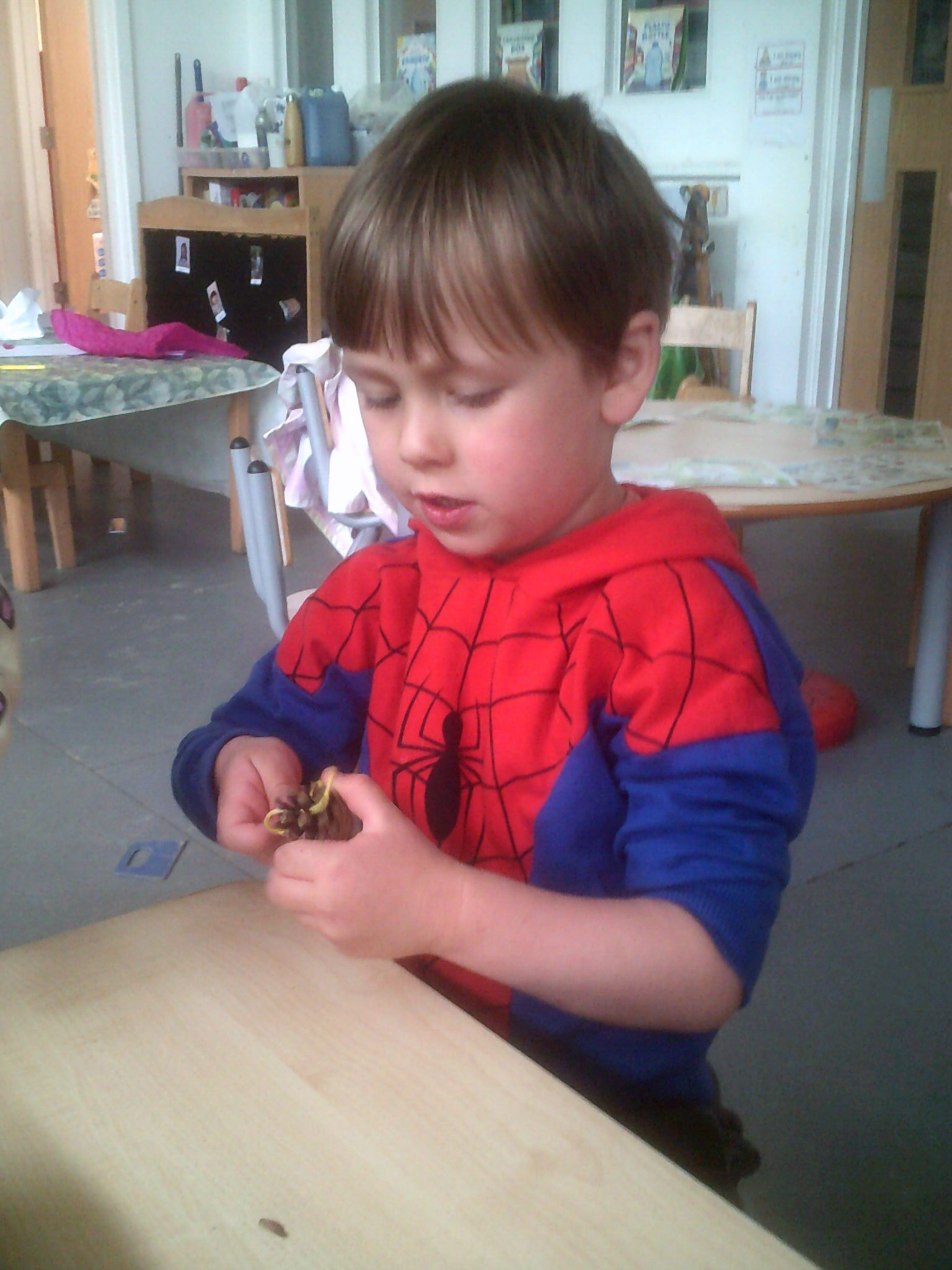
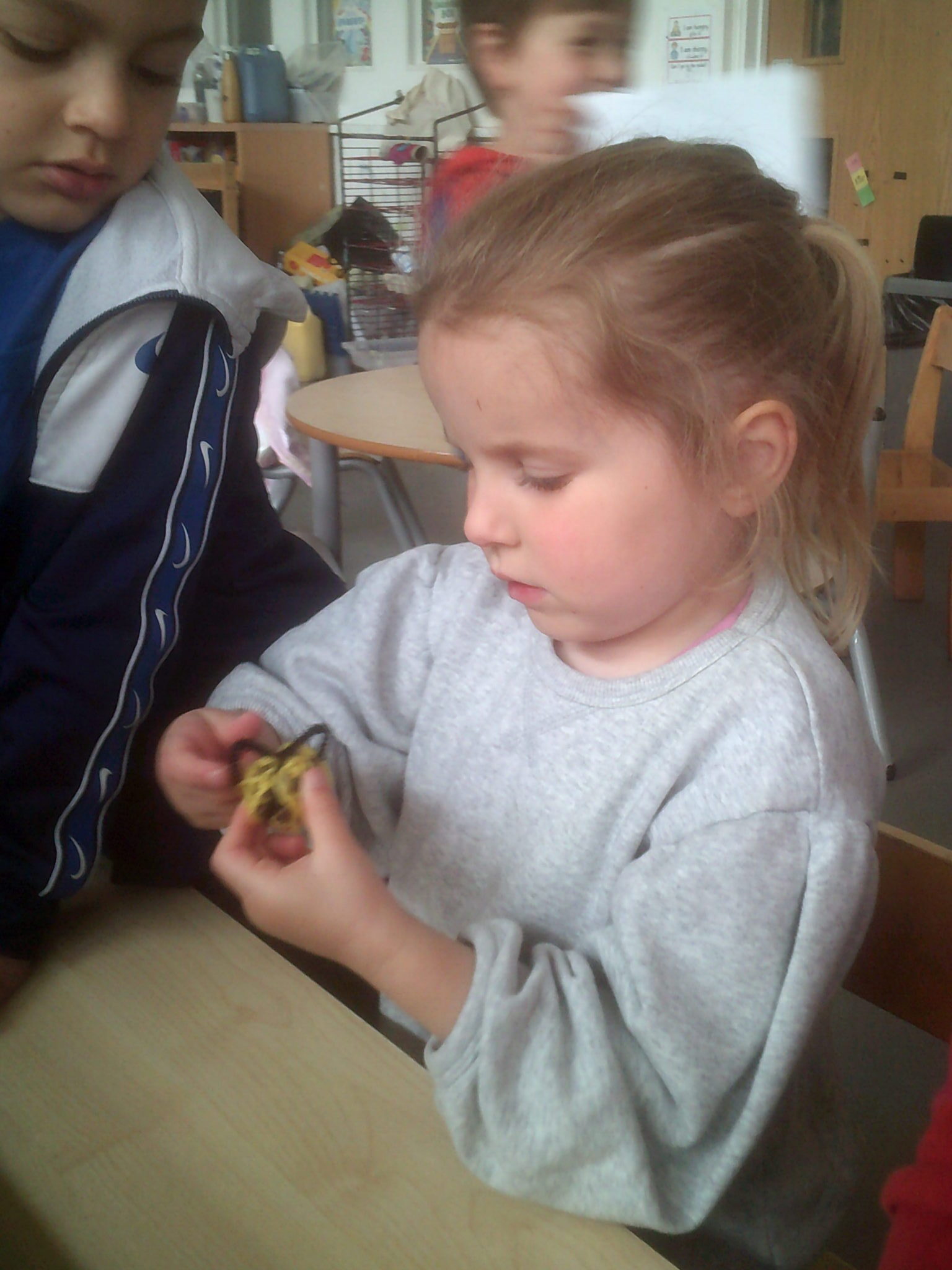
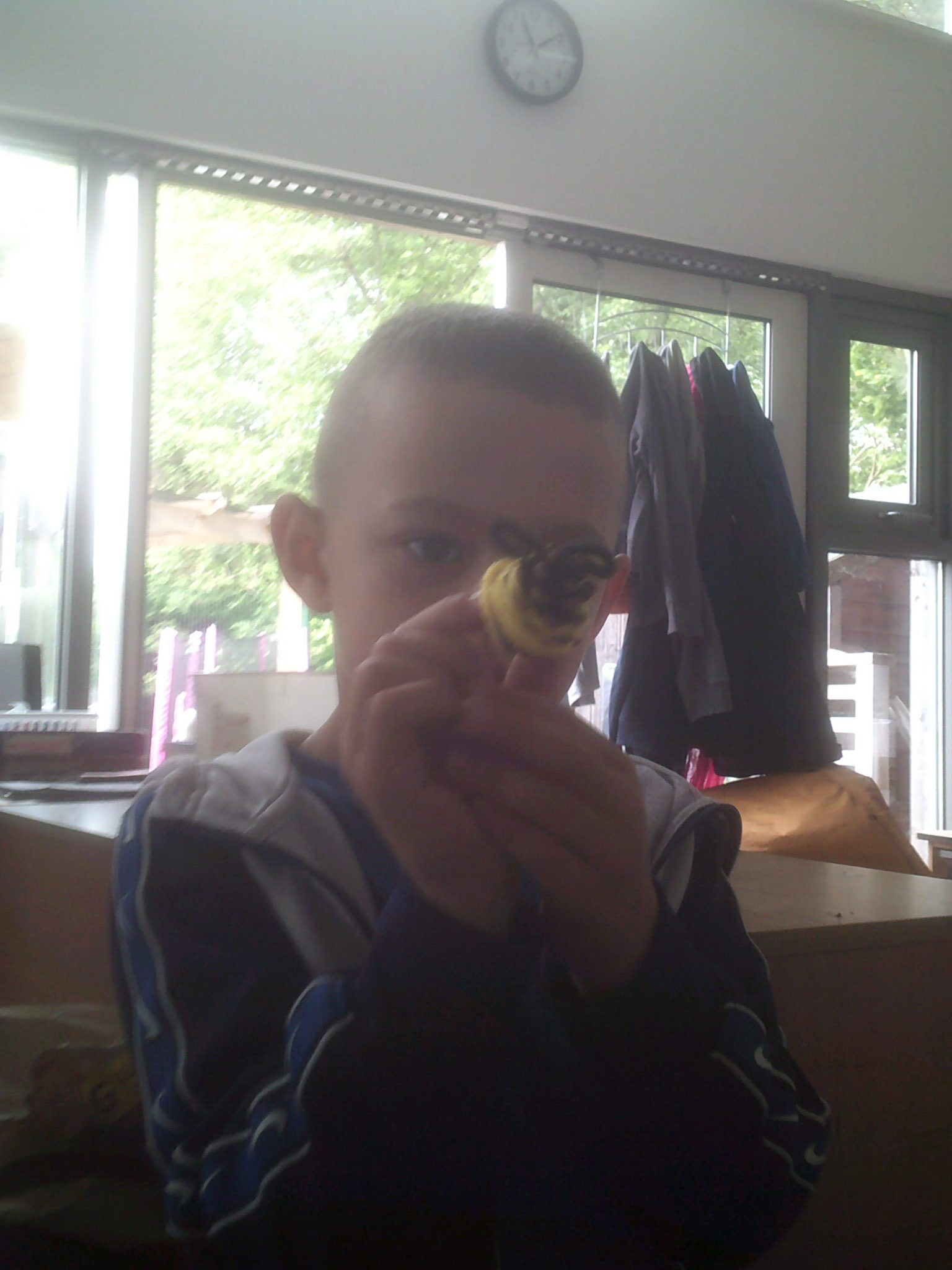
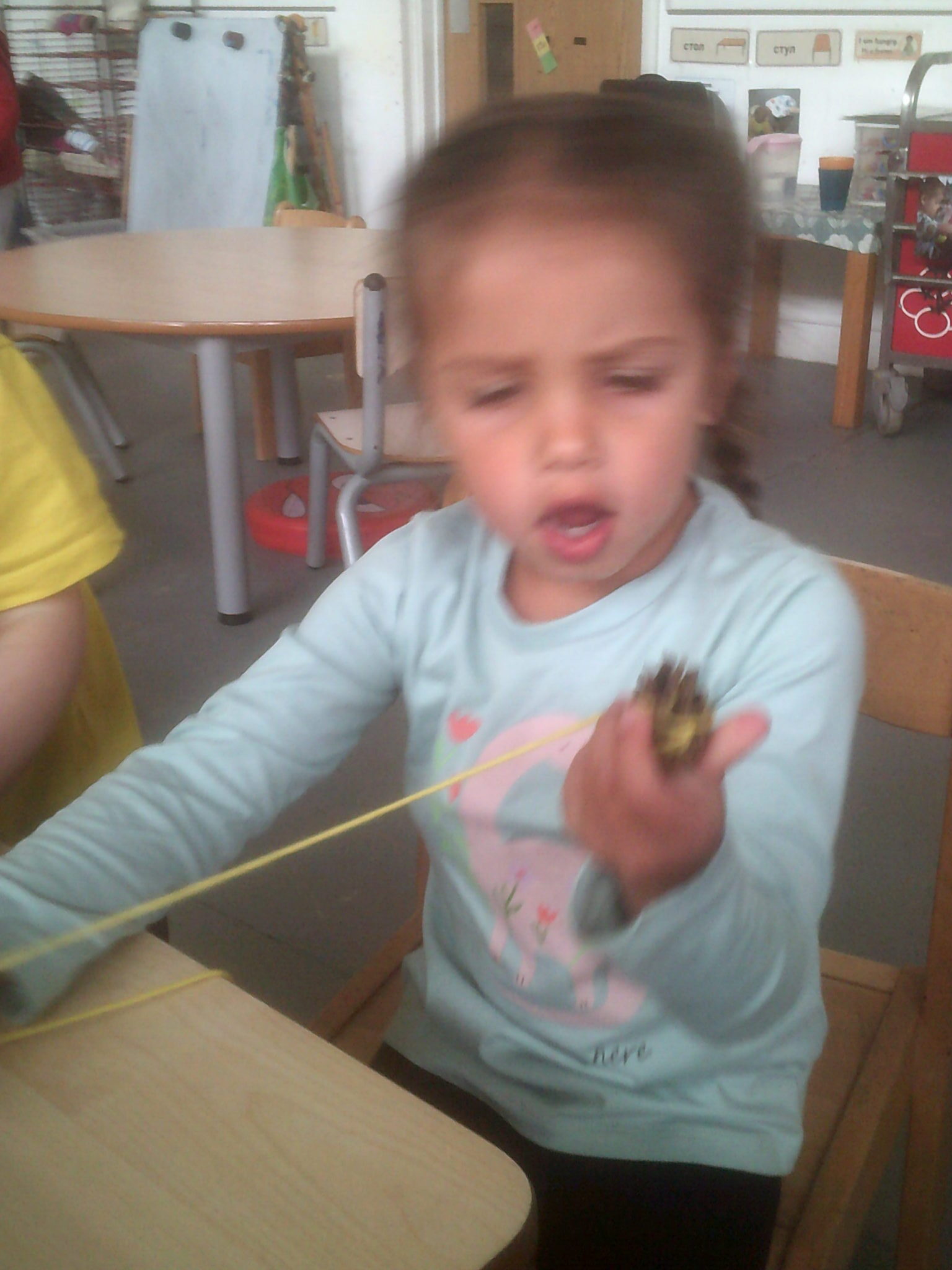
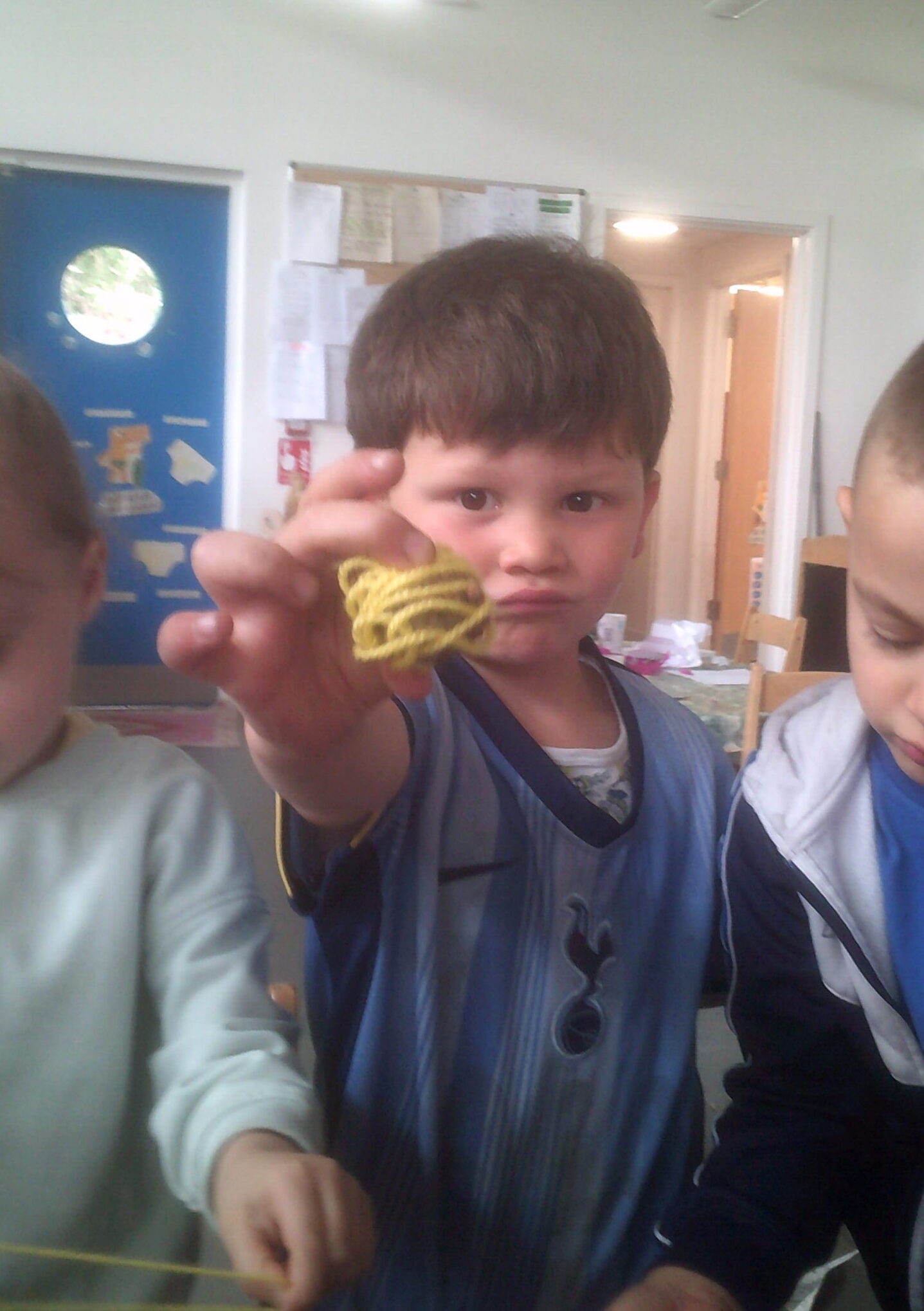
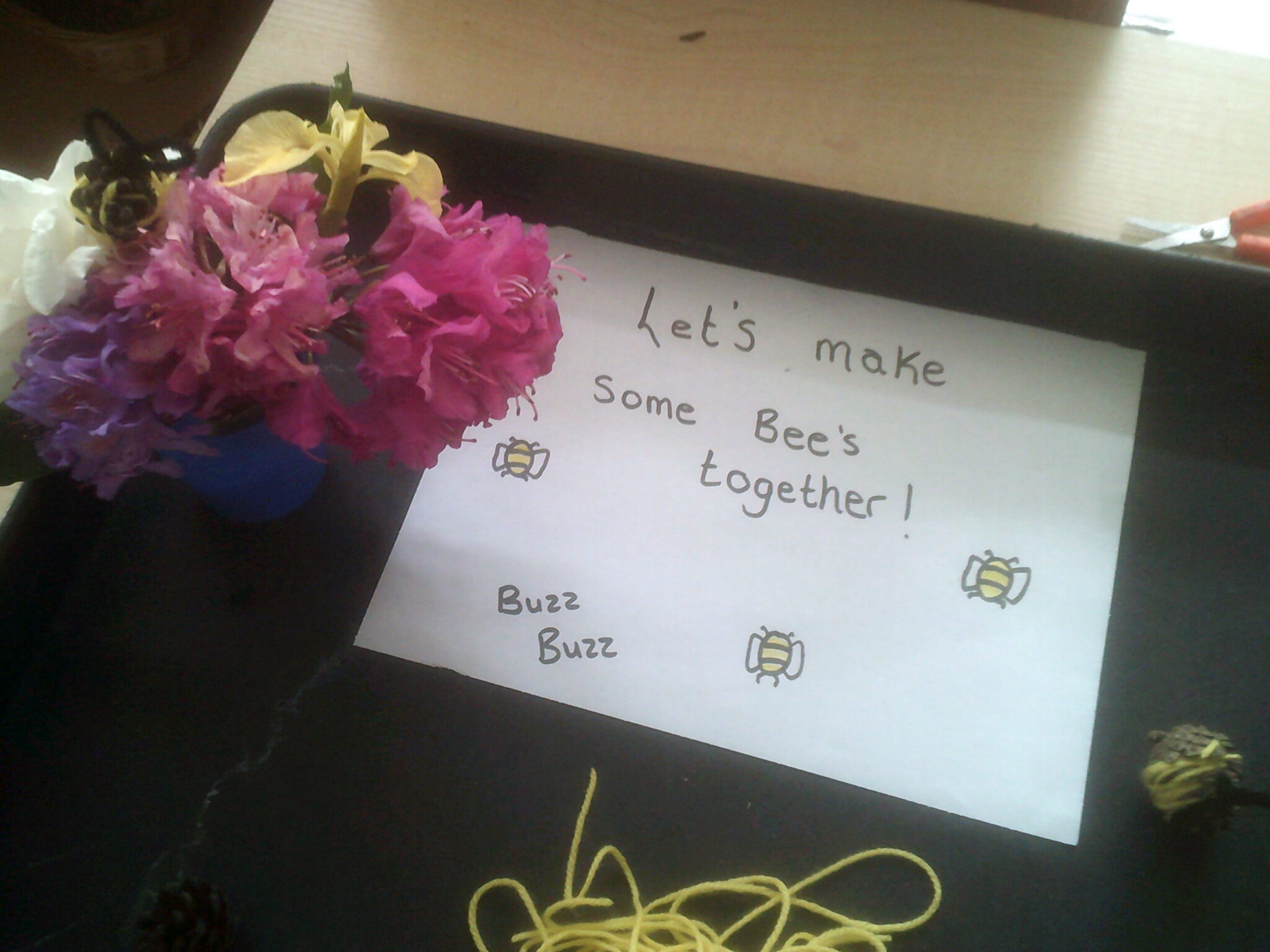
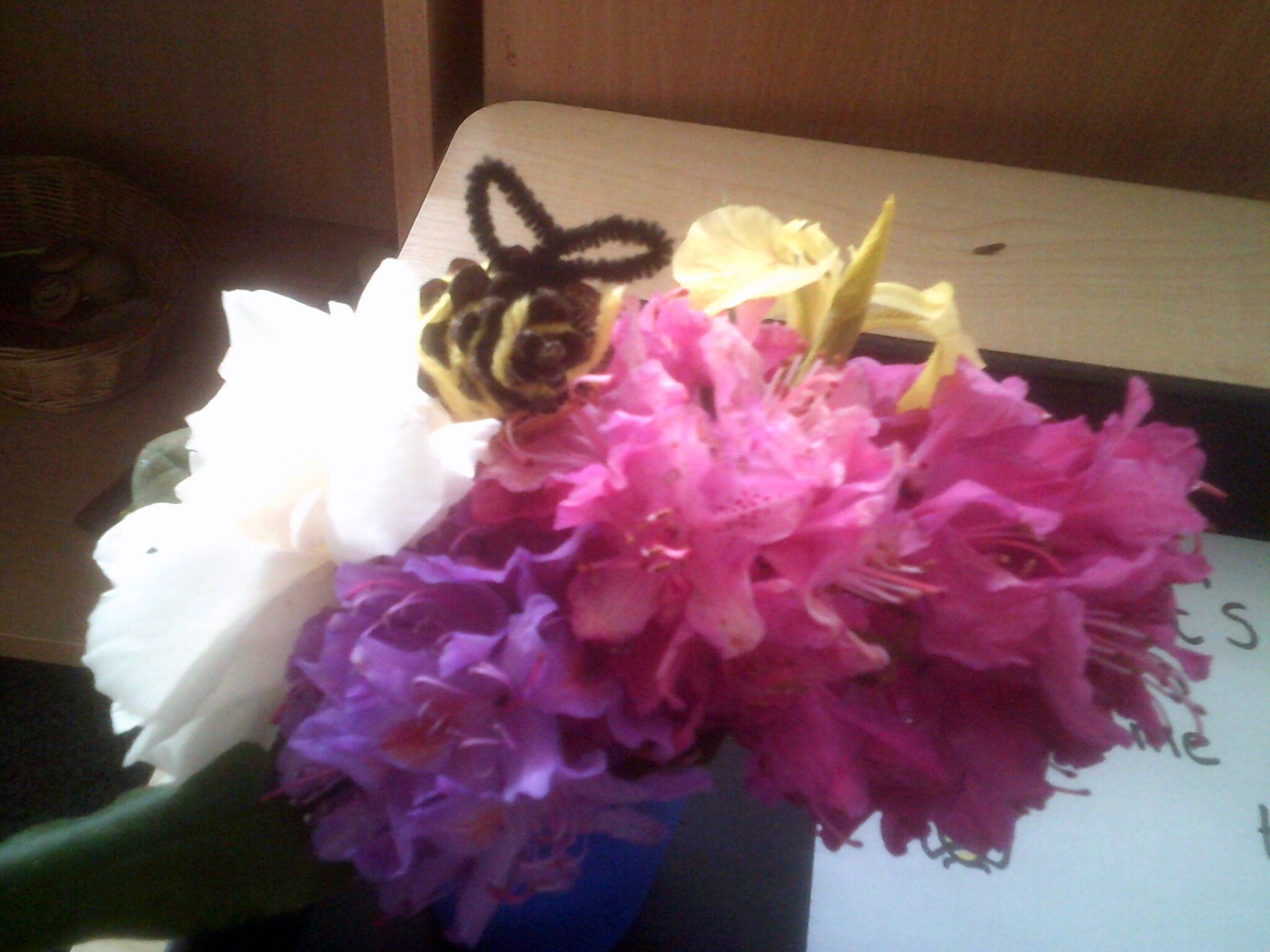
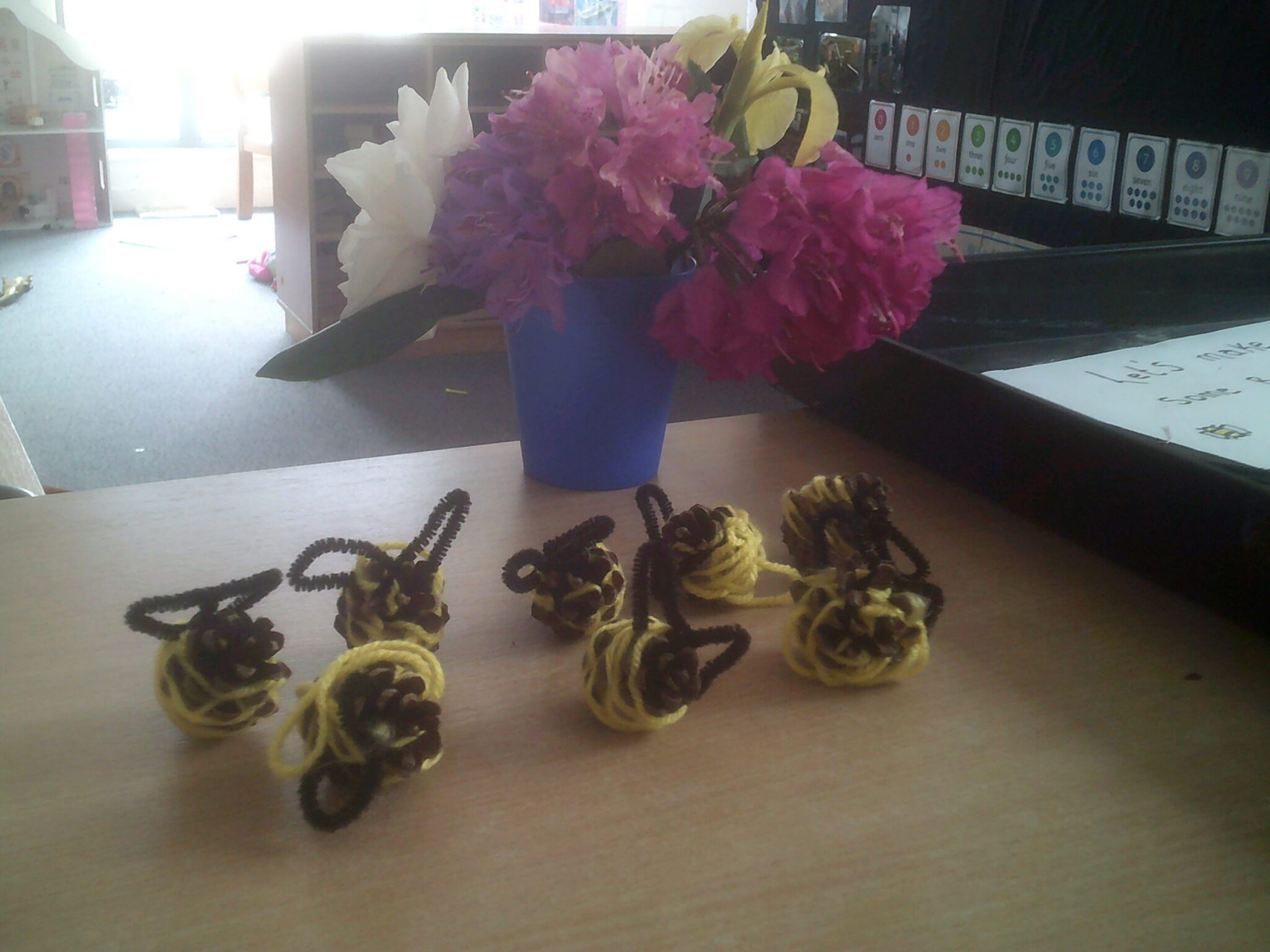
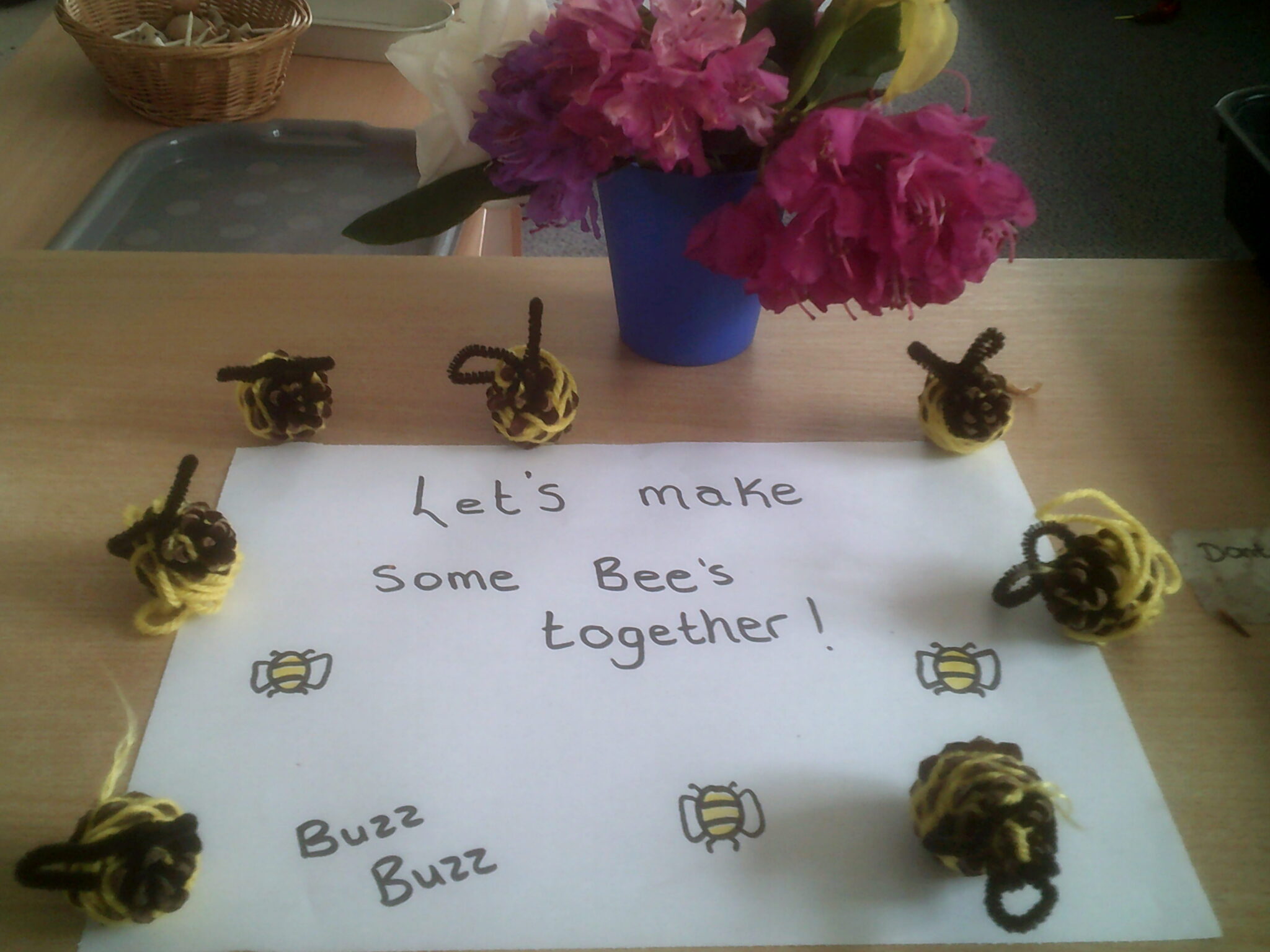
Later, the children made bees. They used pinecones, to represent the body, yellow wool and black pipe cleaners to make the stripes and legs. This involved a lot of fiddly work, great for their fine motor skills and hand-eye co-ordination.
The teacher had brought in some flowers from her garden so the children could see what some bee-friendly flowers look like. She explained that these are usually flowers that can be more easily accessed by the bees. Having shown the children different flowers, she asked if they could notice any differences that would make them more bee-friendly. One of the children noted “this one is really big and wide and this one is squished up, so the bees might get stuck in that one” – what a smart observation! The teacher agreed and said that flowers that have more space/are more open are easier for bees to get inside to reach the nectar at the bottom of the petals.
Part Three
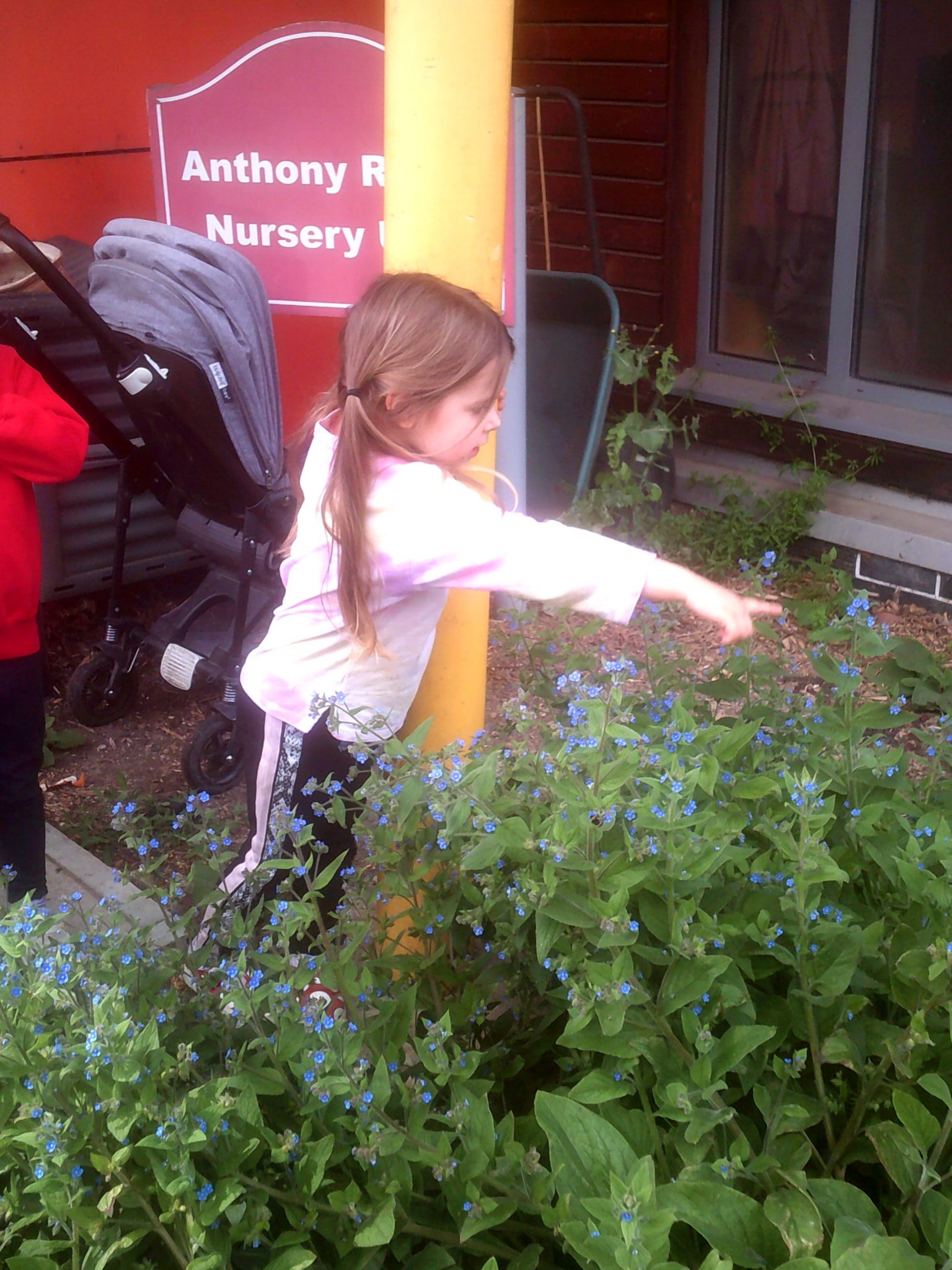
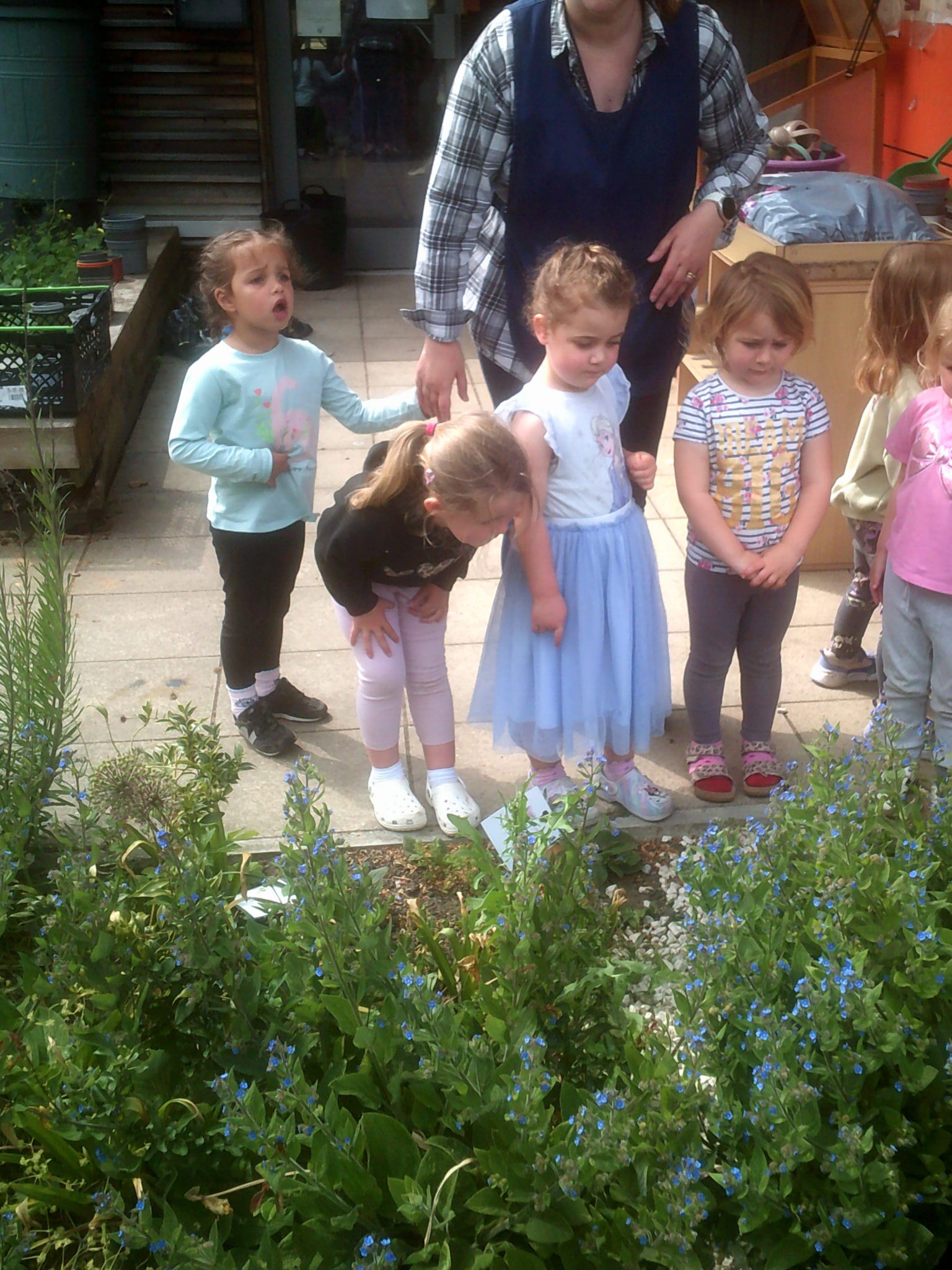
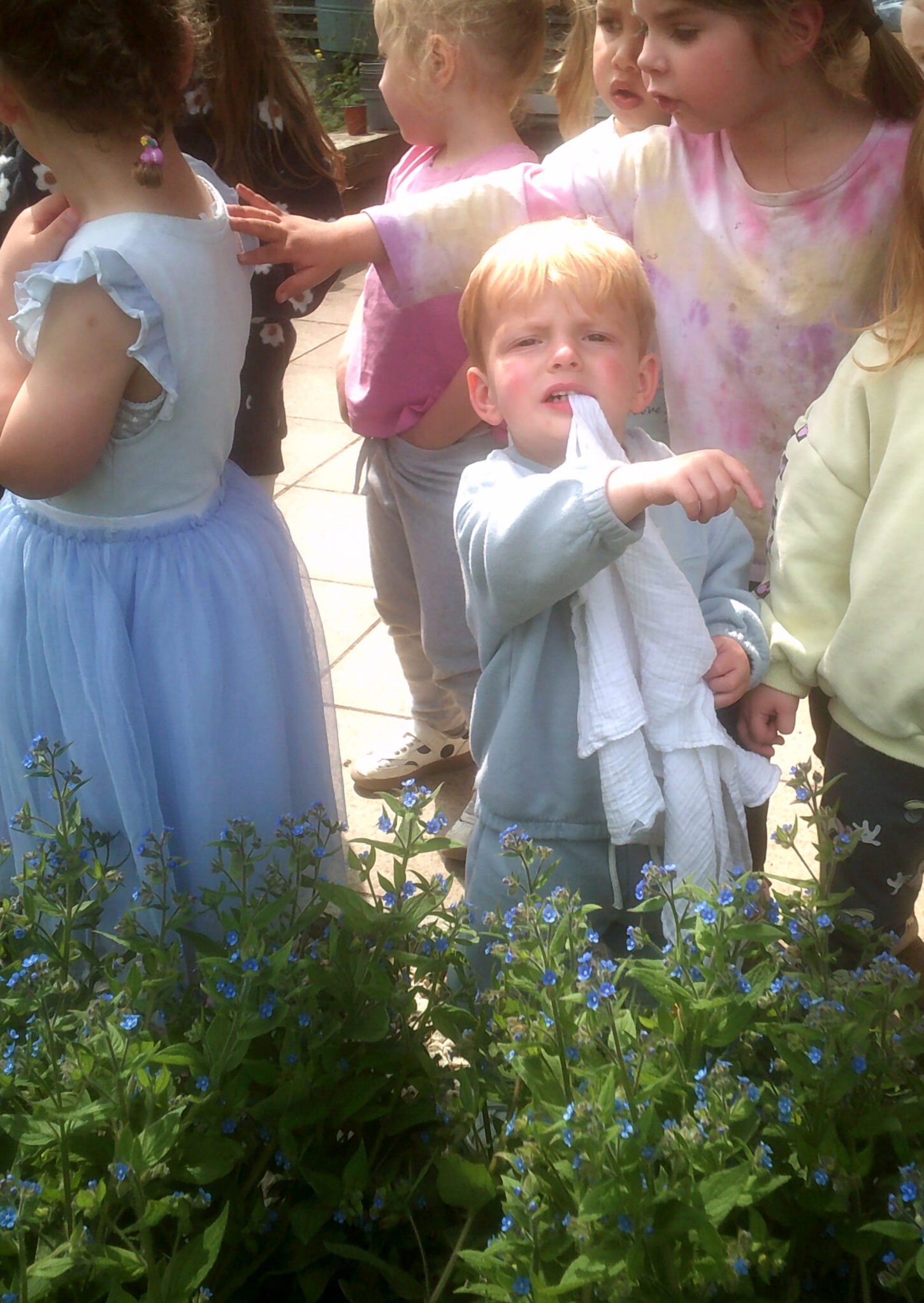
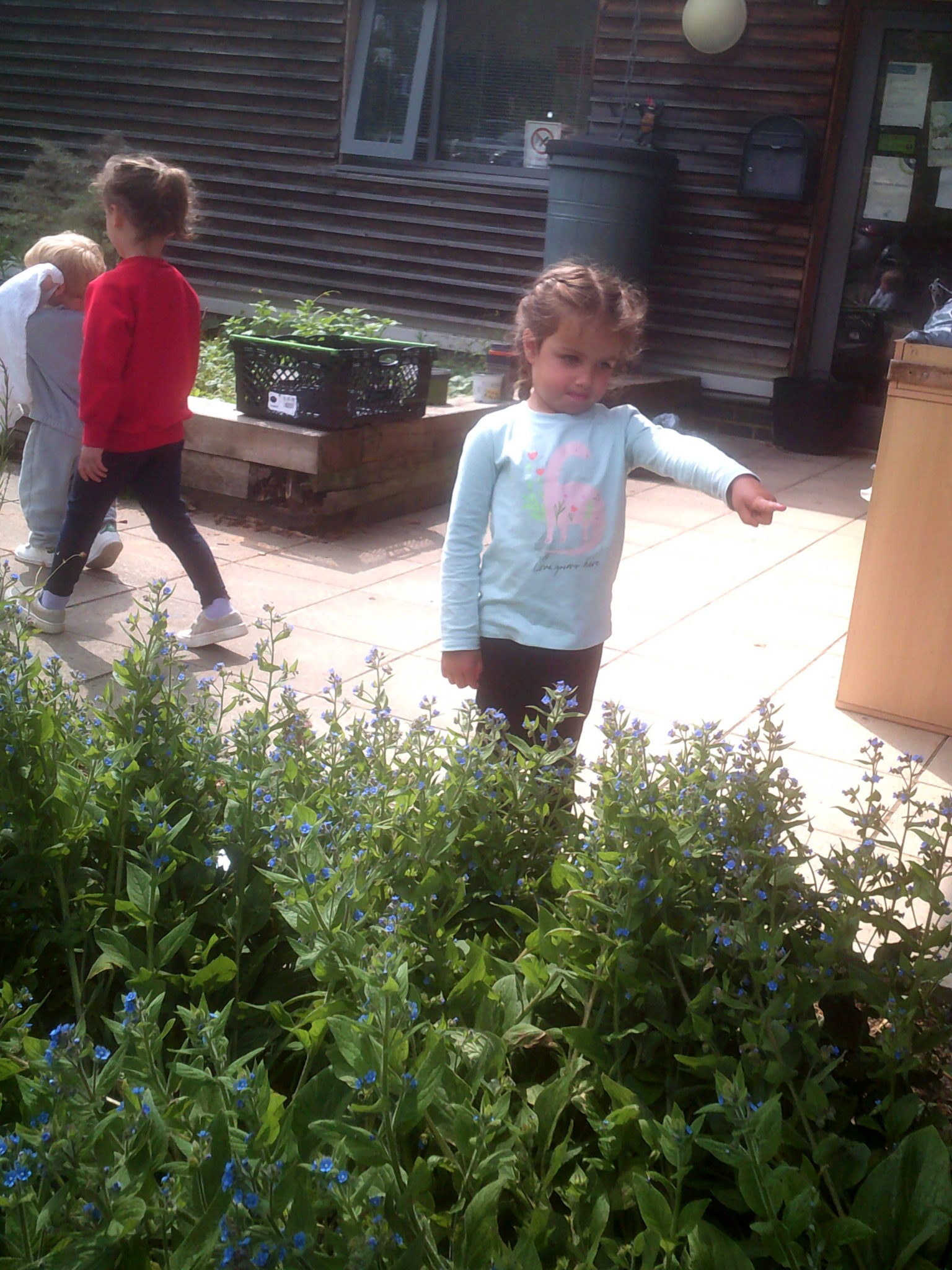
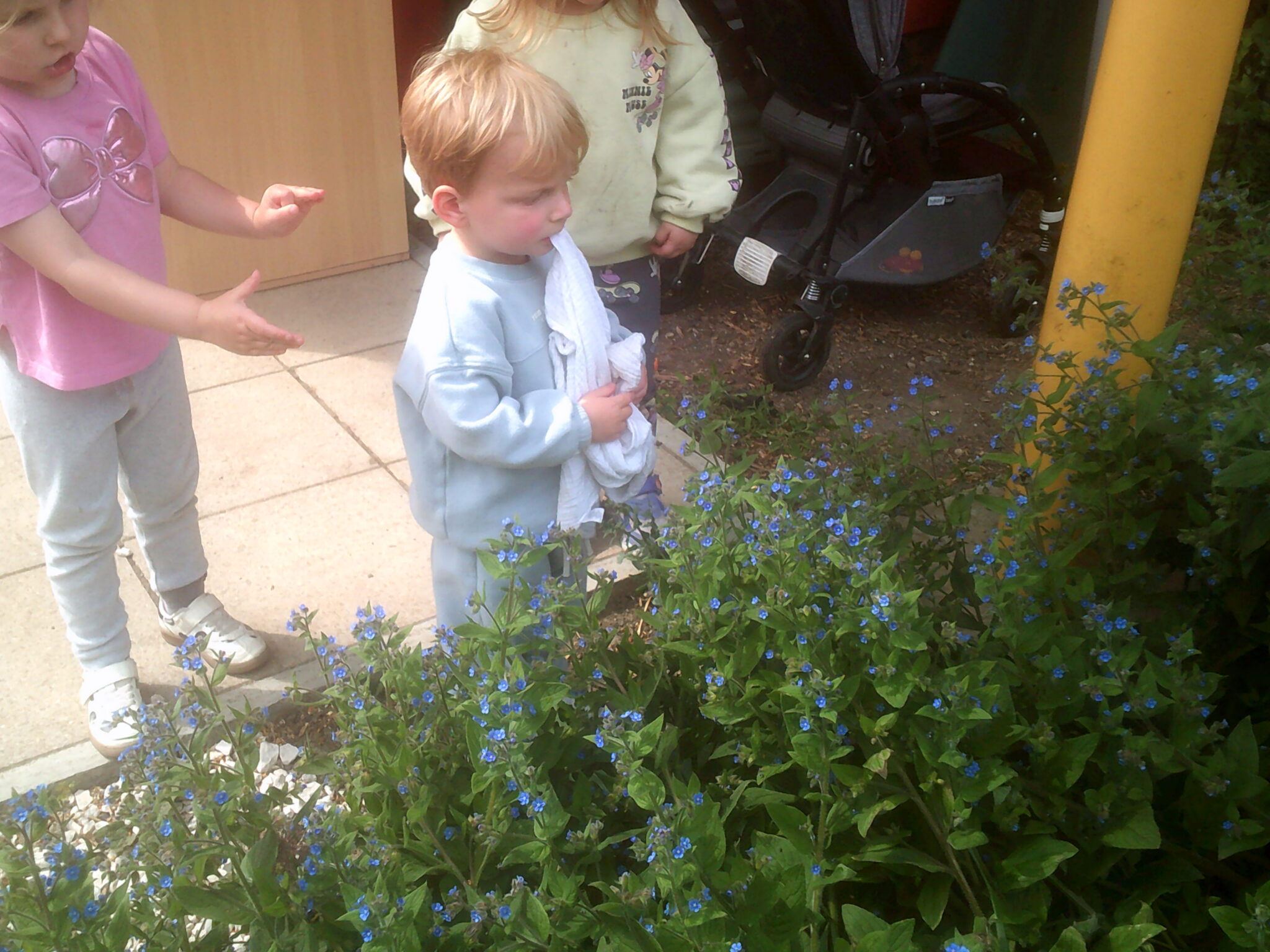
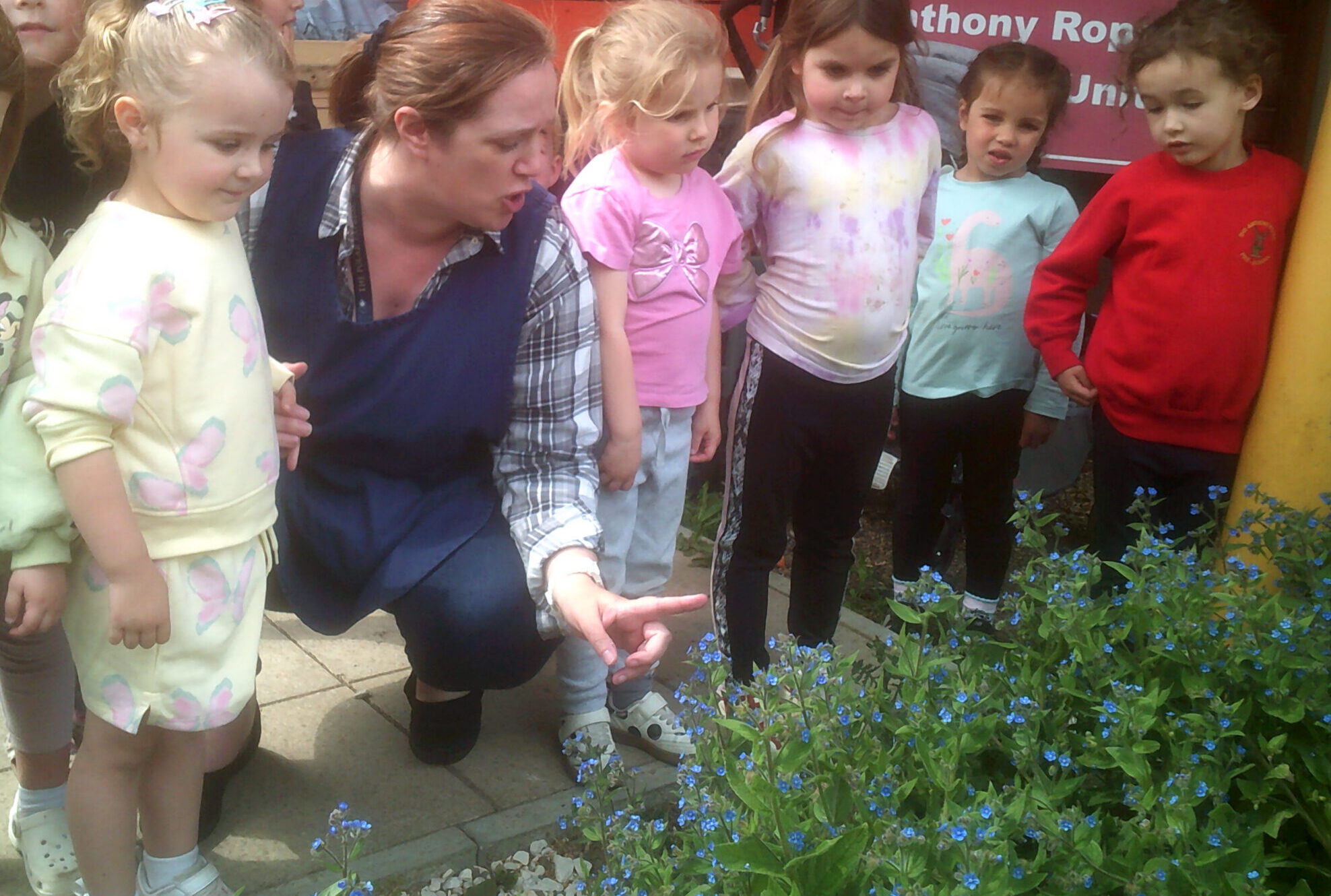
Pollen – the teacher explained that flowers and some flowering fruits (such as strawberries and cherry trees), contain pollen. She went on to describe that pollen is very sticky and as the bees land on the flowers, pollen gets stuck to them. When they fly to the next plant, the pollen is carried with them. This then pollinates (another new word to most children), the flower/plant and the cycle of life continues. Having learnt this process, they went to our allotment garden to look for bee-friendly flowers. They noticed that there were several bees on the blue flowers near the herb boxes.
Part Four
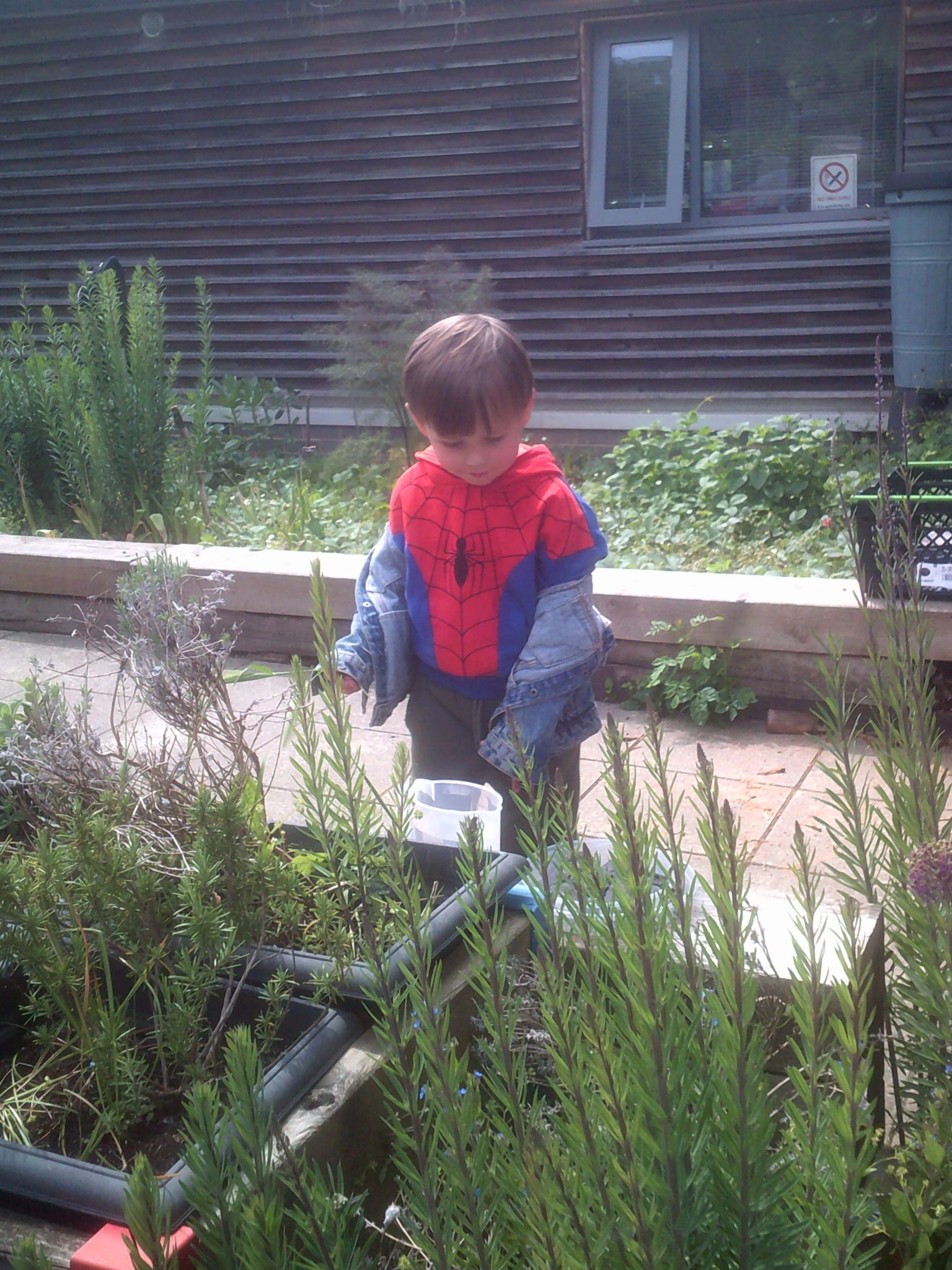
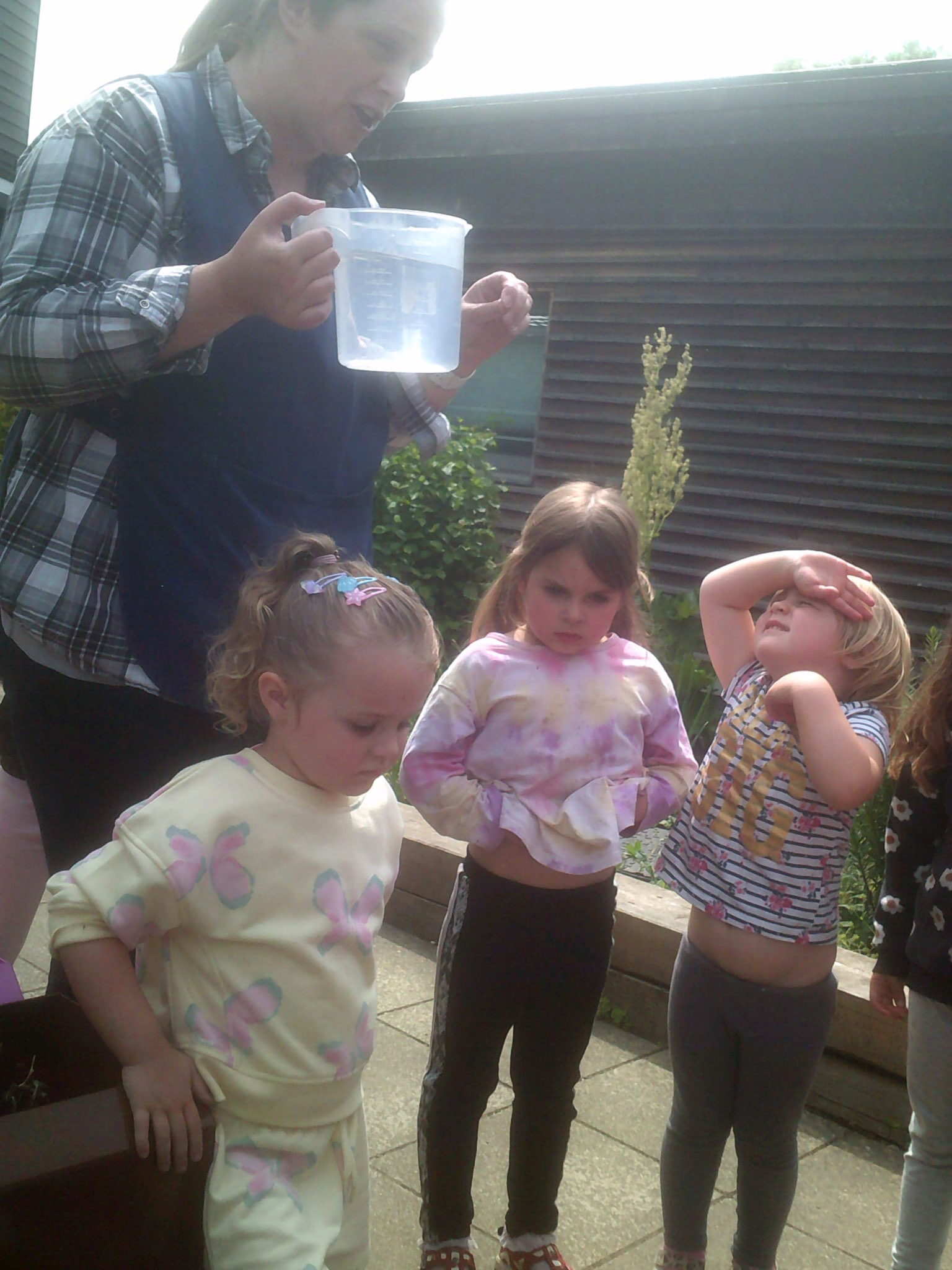
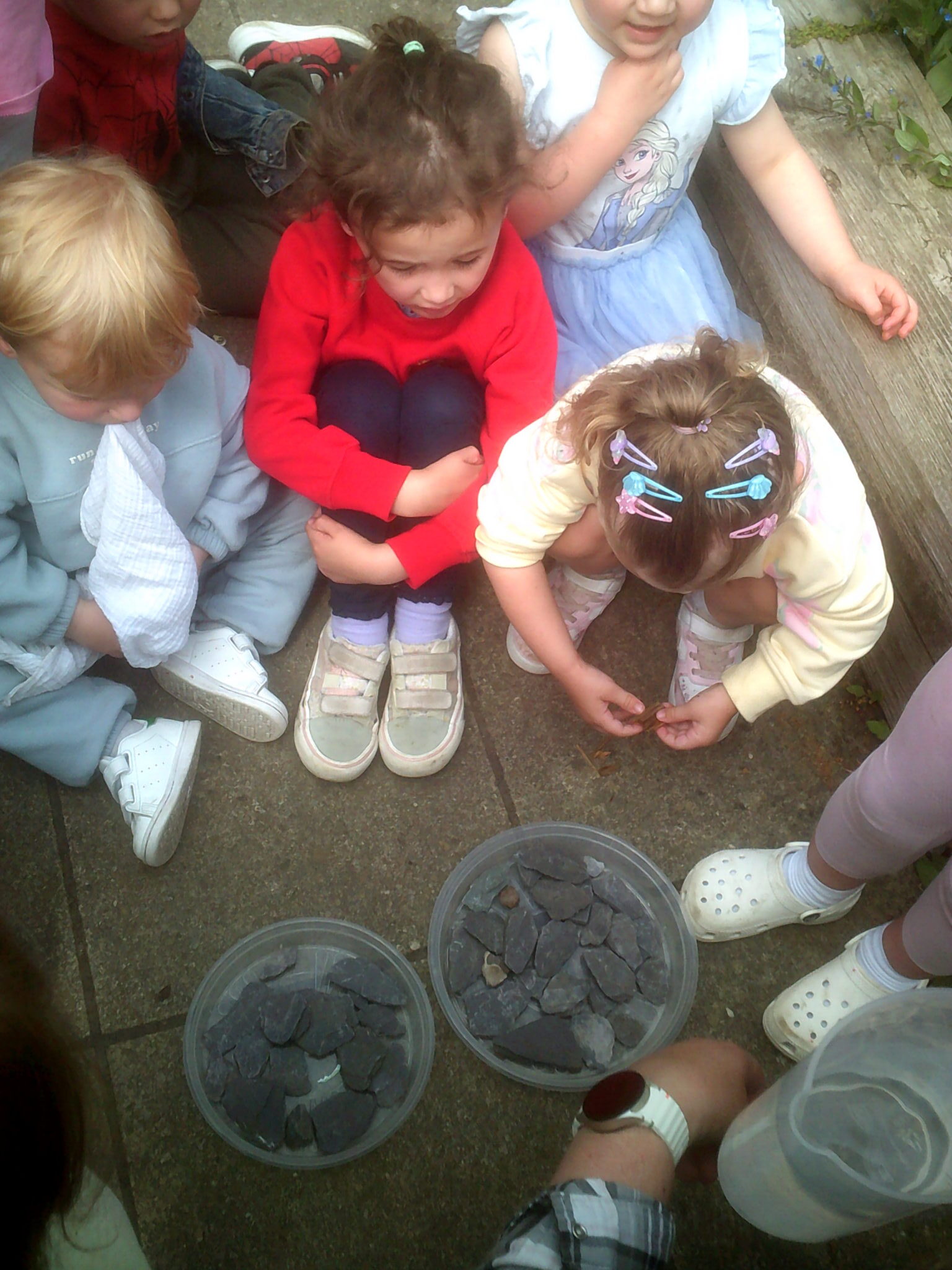
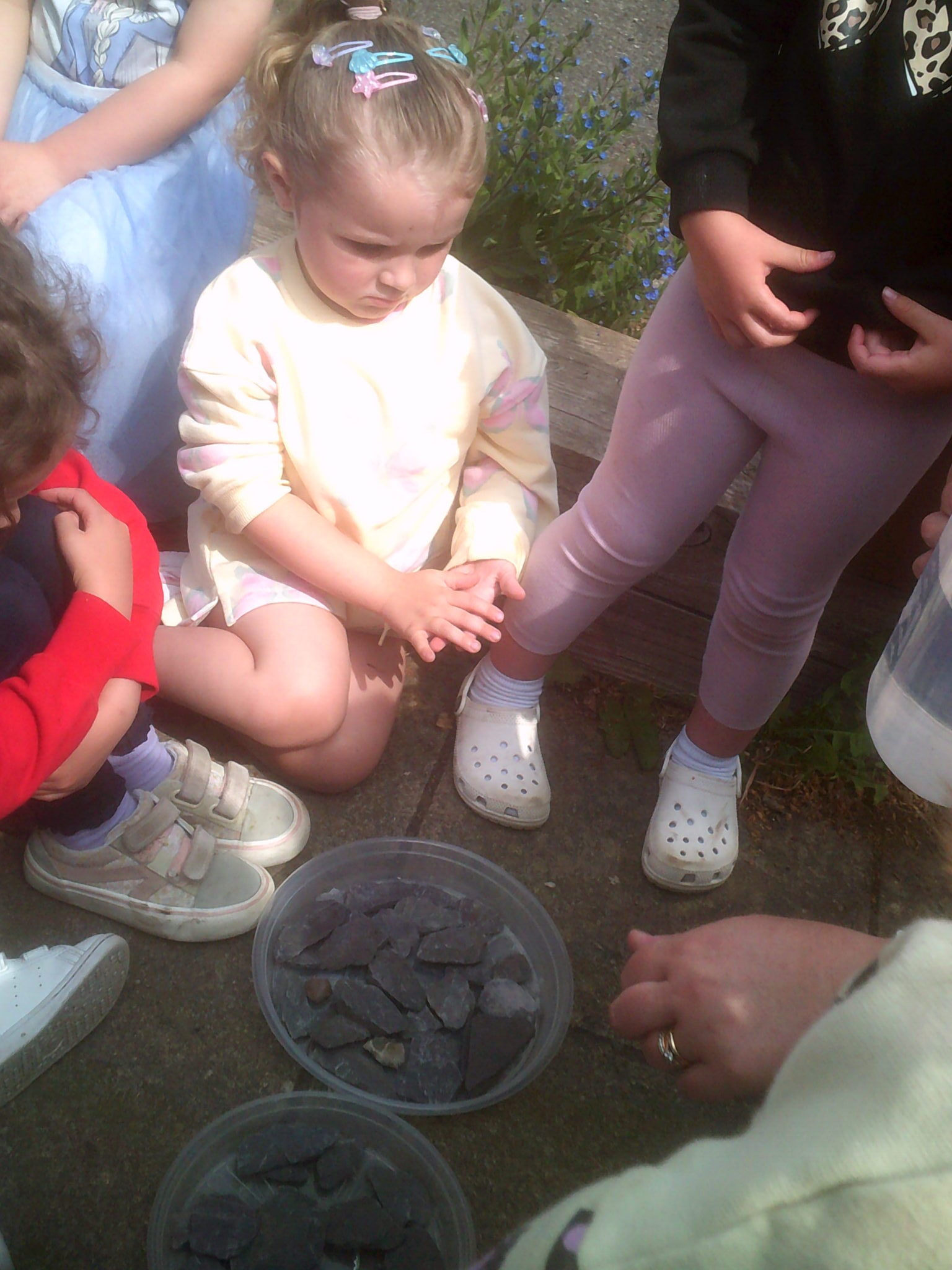
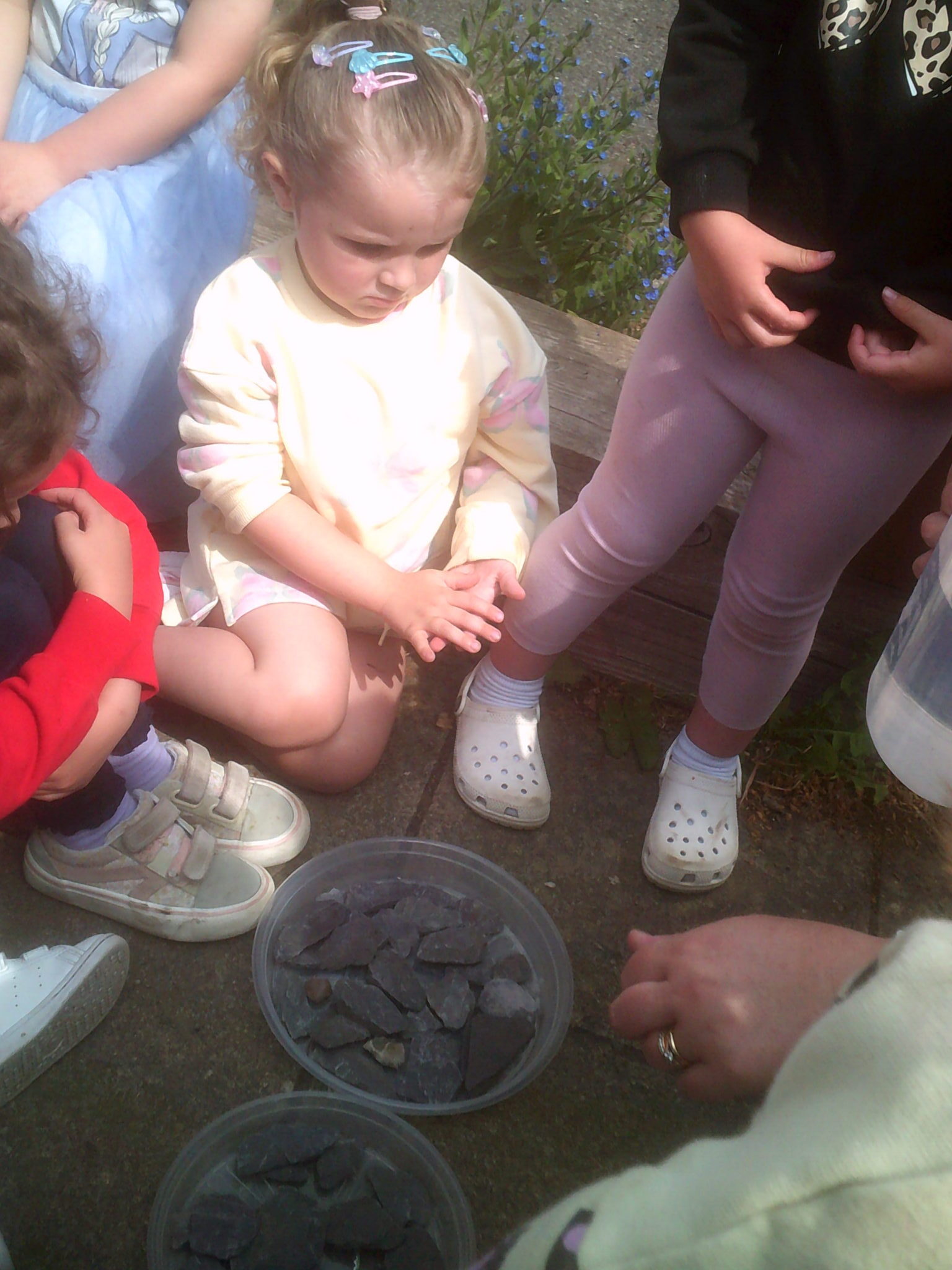
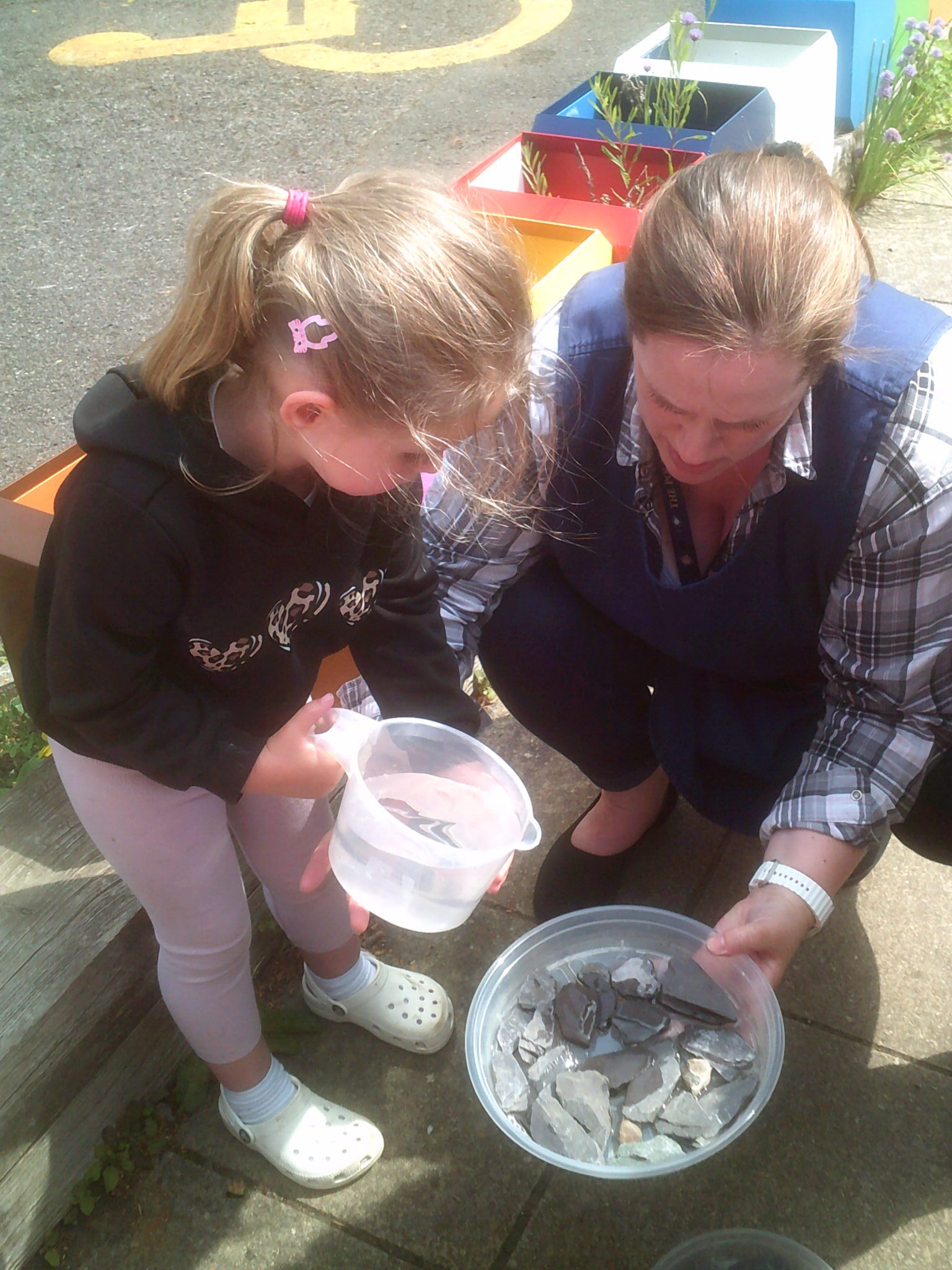
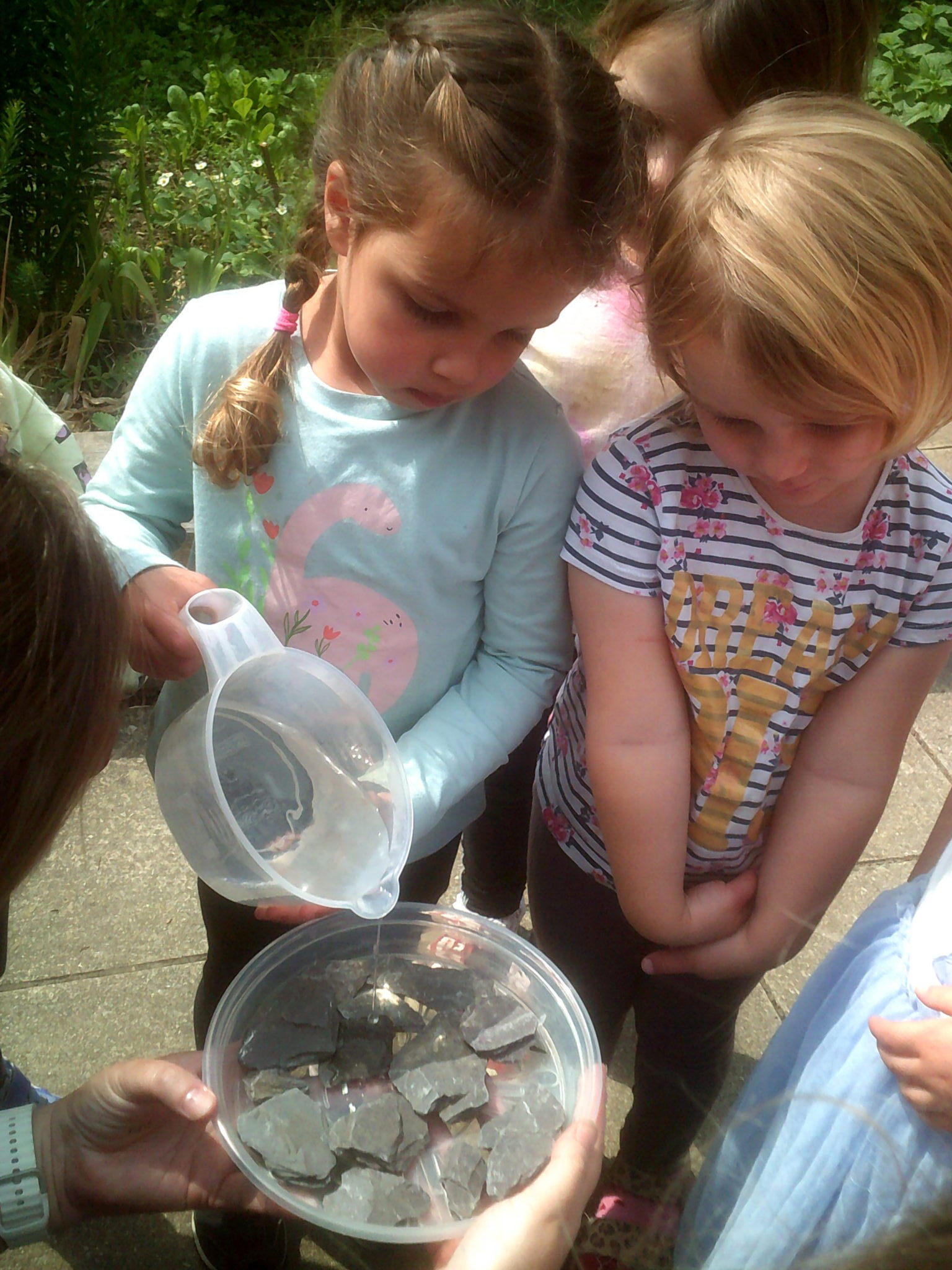
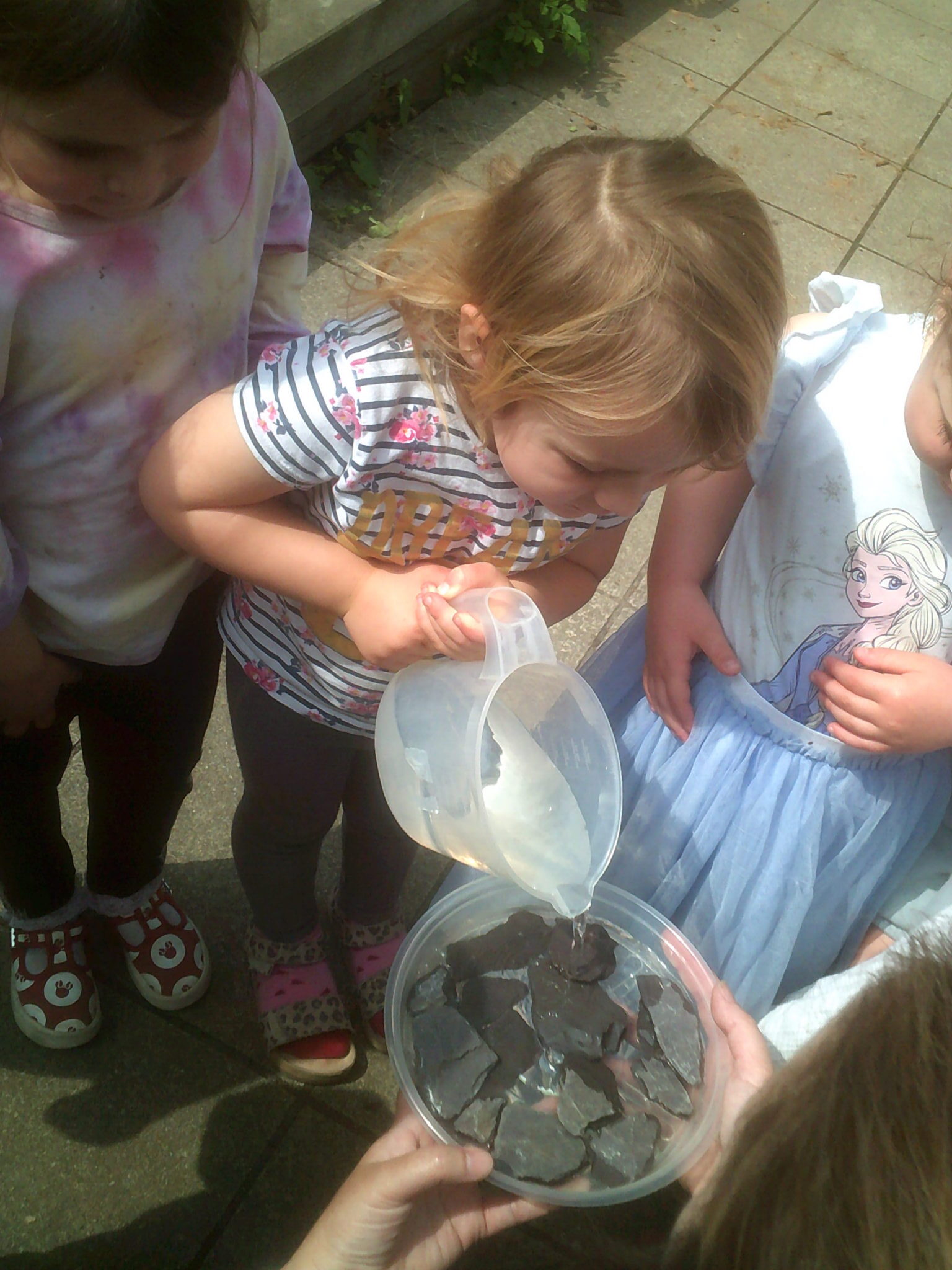
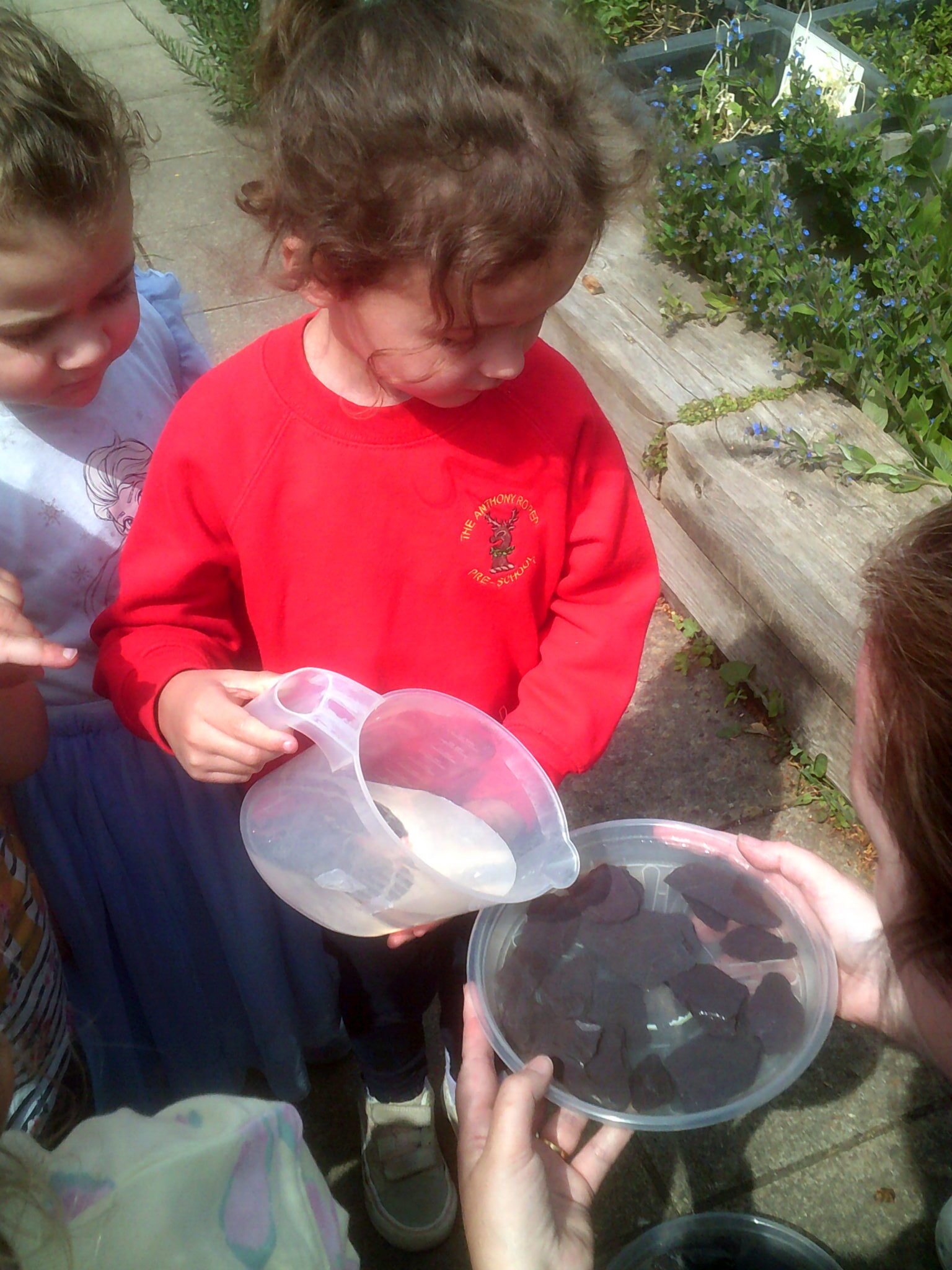
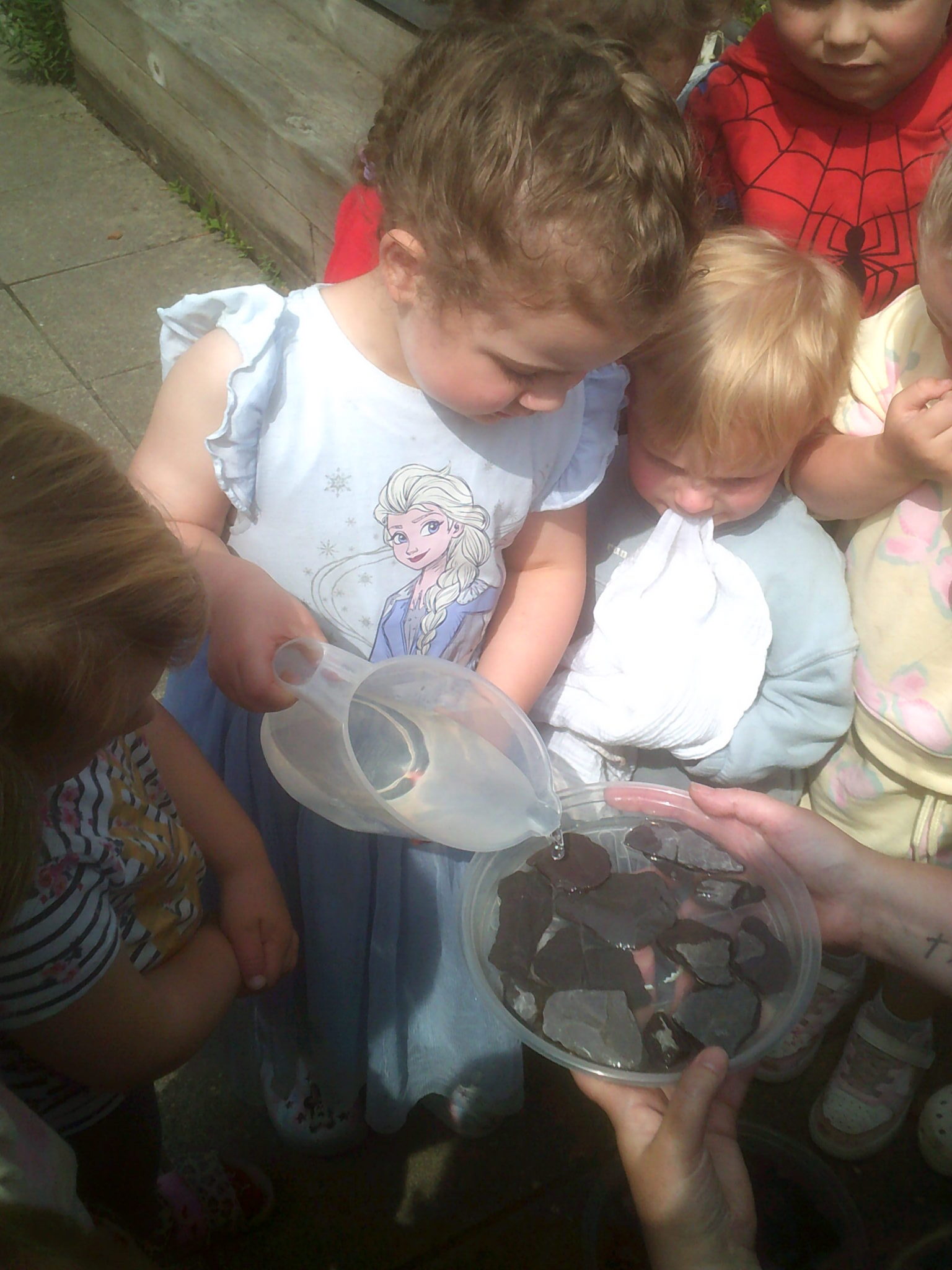
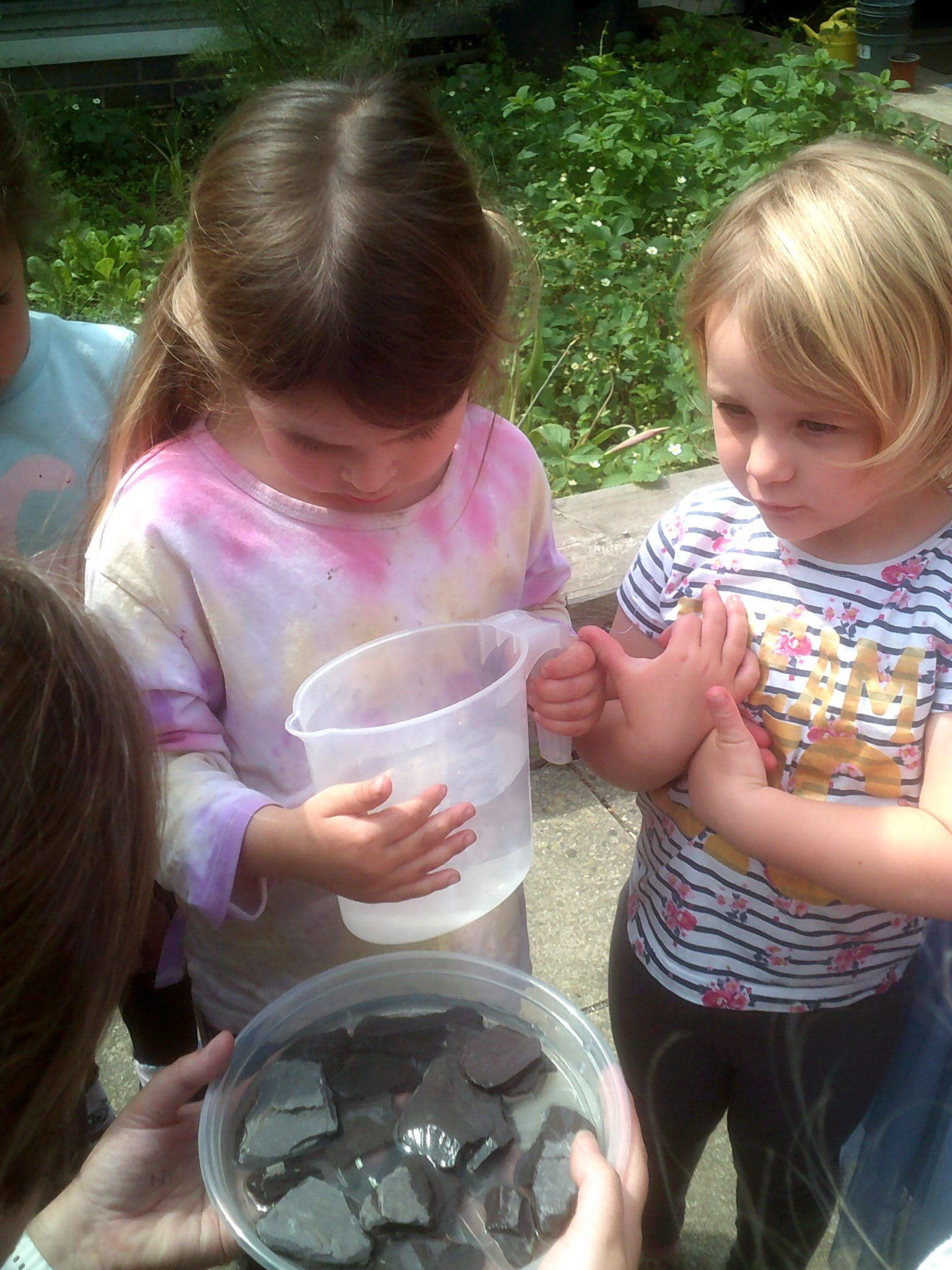
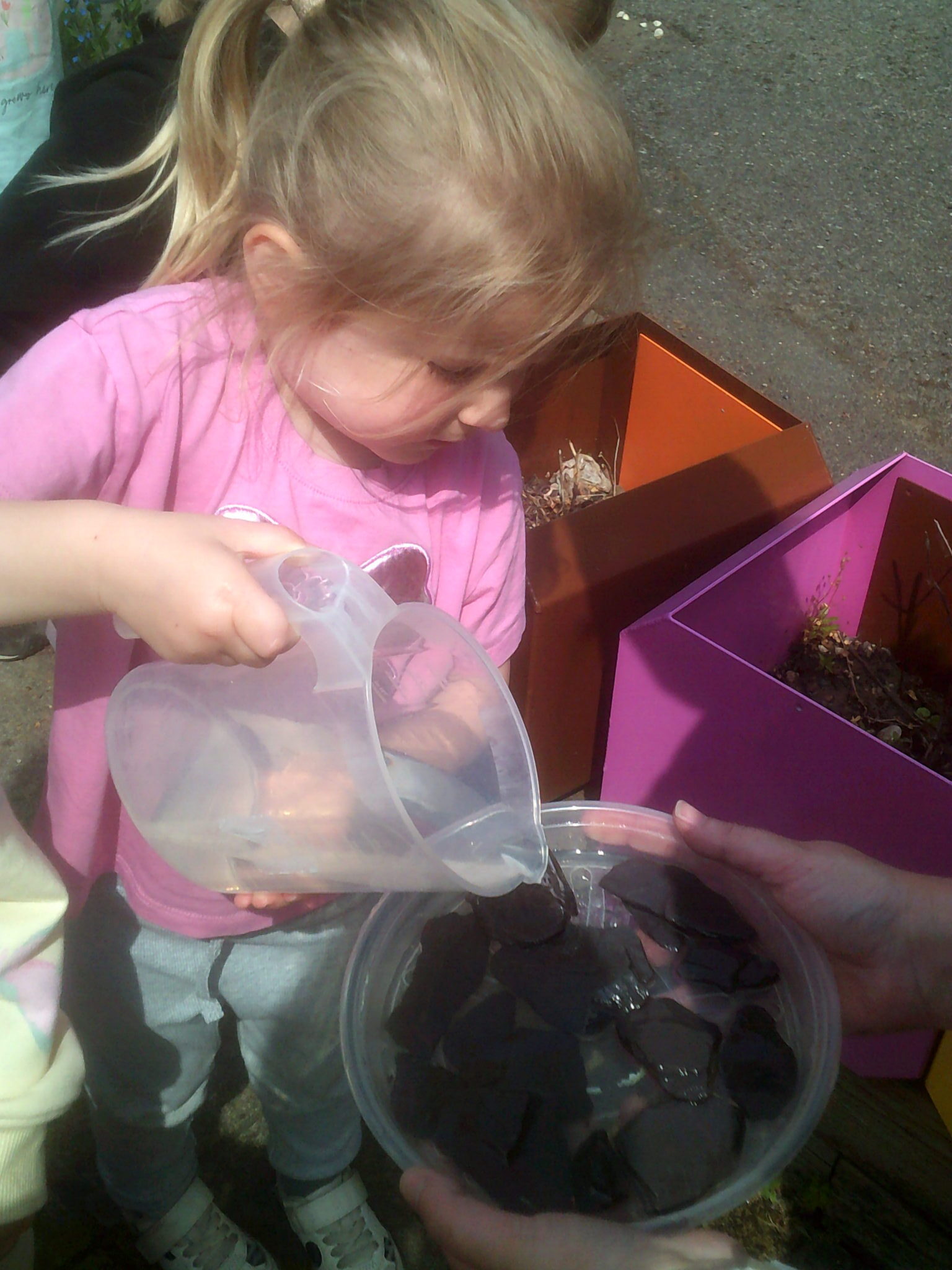
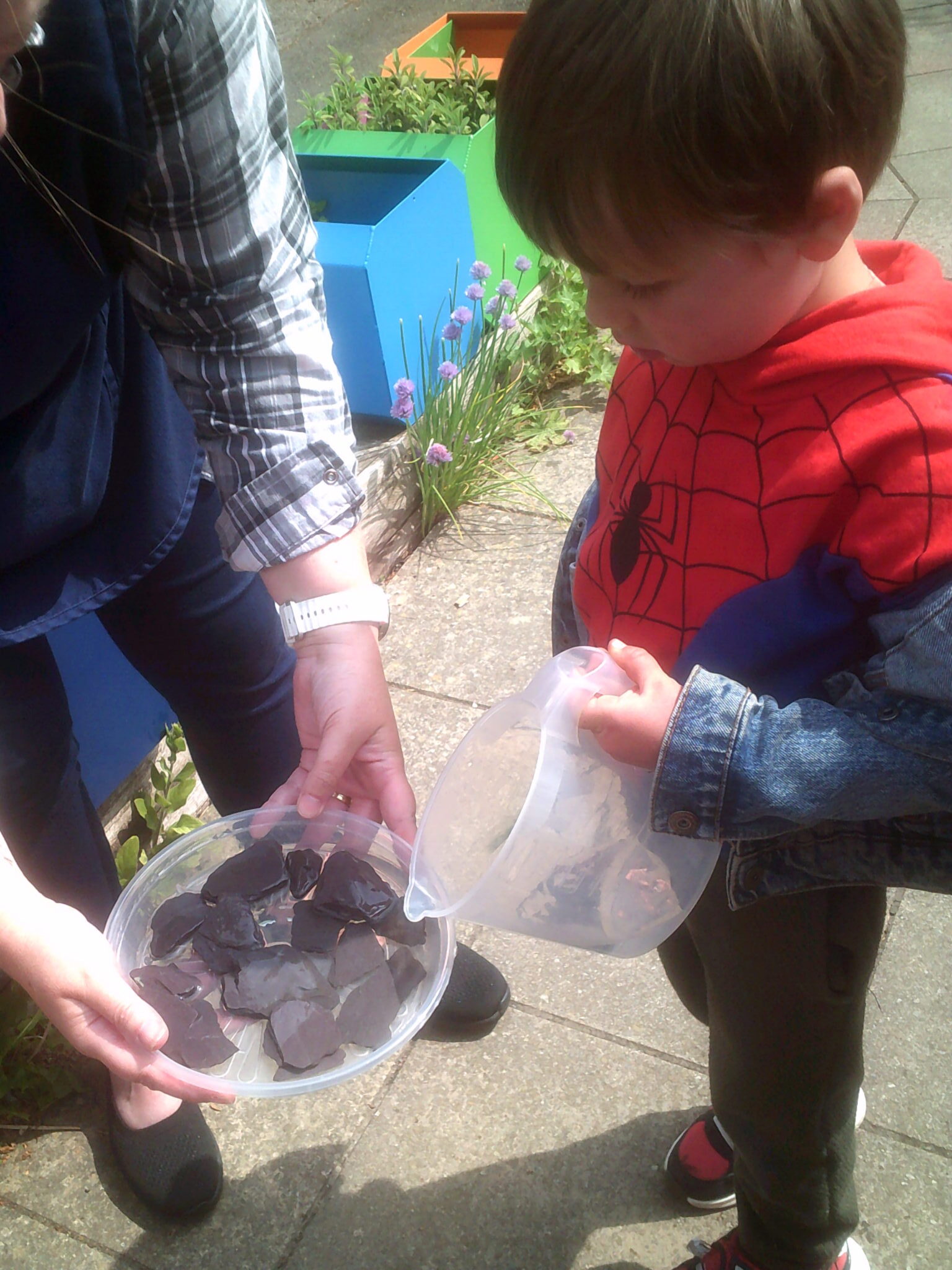
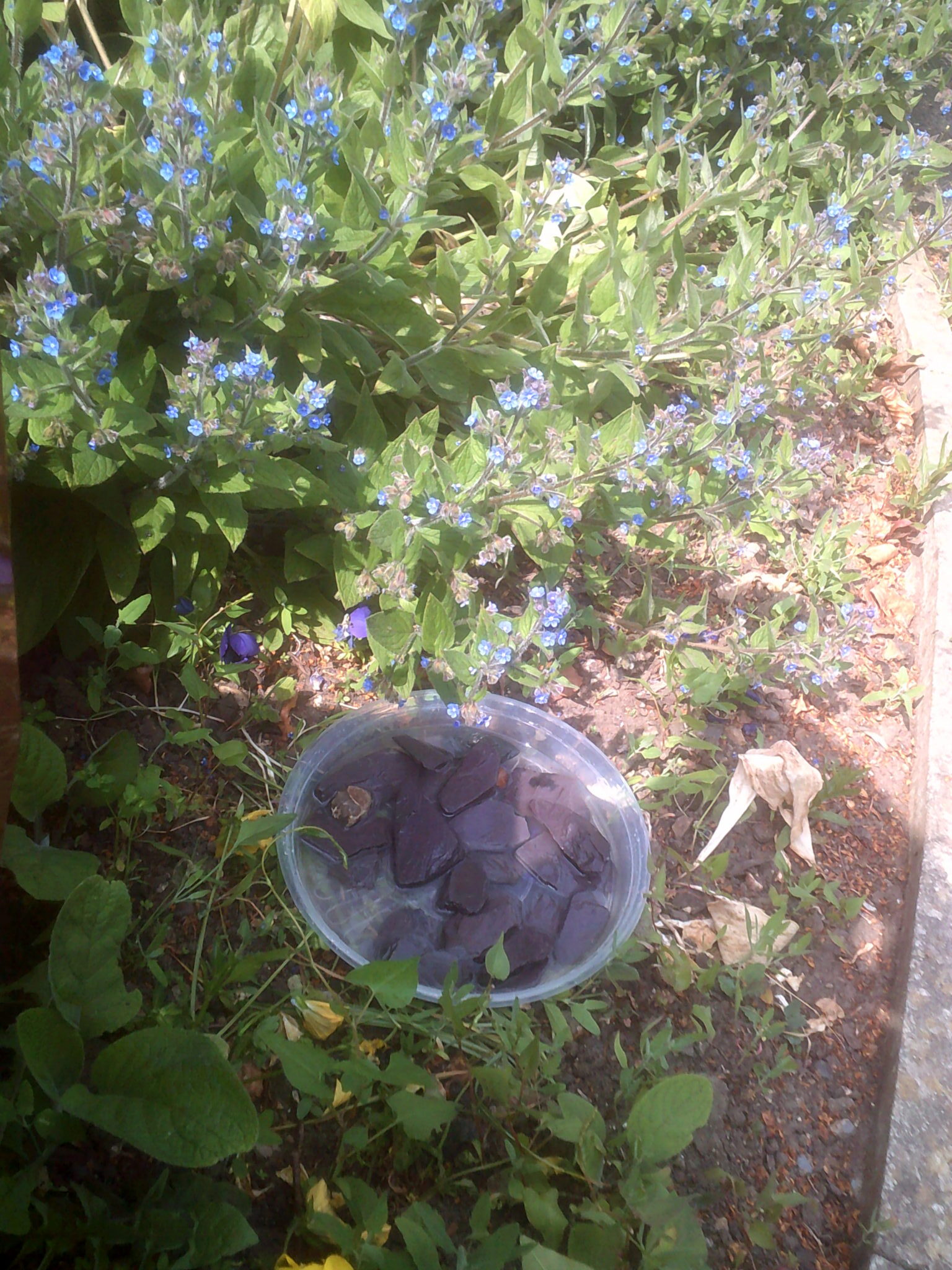
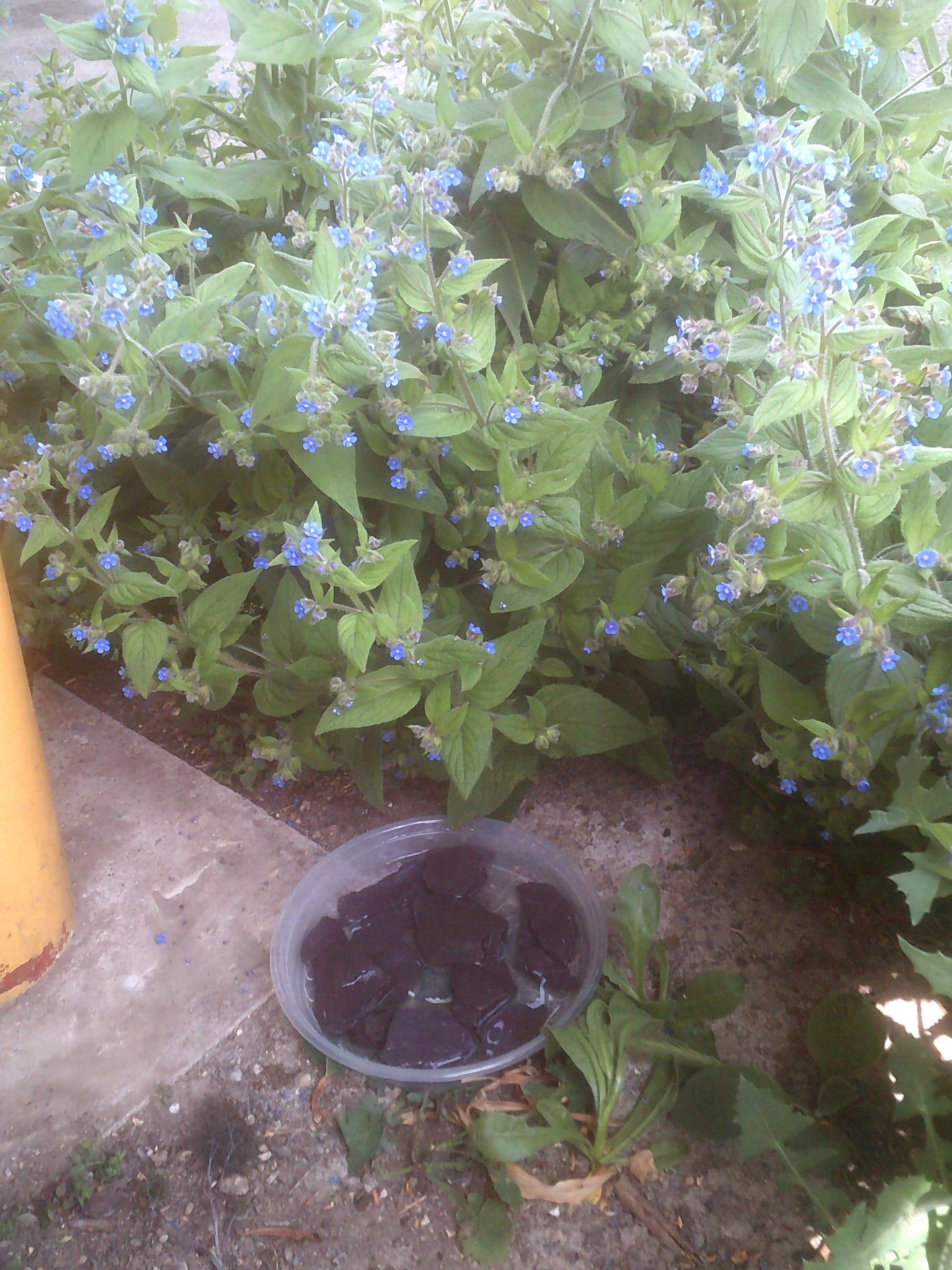
Bee water stations – the teacher next discussed how we can help bees to have safe access to drinking water. The children helped her to create our very own water stations using shallow trays with stones at the bottom, which were then covered in water. The children helped pour the water and decided that these should be placed next to the blue flowers, as this is where they had noticed the bees. She told them why they had been made like that, describing how the bees have the stones to stand on and can drink from the shallow water tray without falling in.
Part Five
Re-cap – having carried out all of the activities, the teacher wanted to see what the children had remembered from their very busy (or buzzy – sorry!) day. They went back outside to the allotment and observed the bees for a while. They then started talking about what they observed and had remembered.
“They are collecting pollen” said one child. The teacher asked if they remembered what else they were collecting from the flowers “nectar to make honey for us”.
One child noticed the detail on the bees, stating “look, they are very fluffy. They aren’t scary”.
When asked what kind of flowers they were, the children said “bee-friendly, because there’s lots of bees”.
We know this was a long description but we hope you made it to the end. We are so proud of the children and their efforts at learning about the natural world and want to say a big thank you to Tammy for her knowledge and for giving the children a wonderful day.
There are photos on our Facebook page
Thank you.
The Pre-school Team