This week’s activities
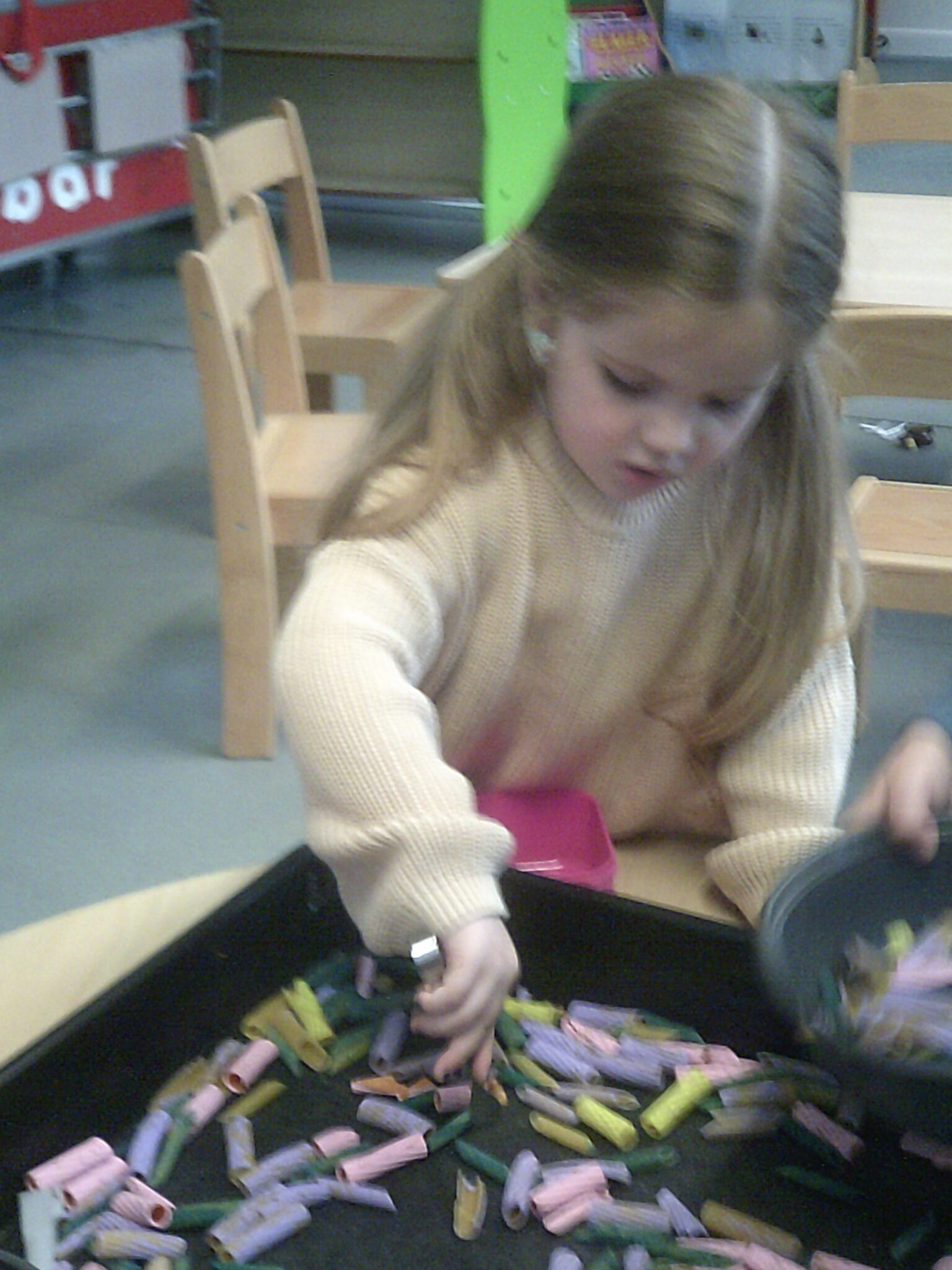
To help with developing their fine motor skills, the children had fun using the tongs and coloured pasta to fill up bowels. Very tricky to do when your hands are small and the bones and muscles are still developing.
In their sensory play, they have explored the sand mousse, together with small world resources, including Bob the Builder figures, Lego bricks to build, trowels and small shovels and trucks to fill with stones. This led to lots of imaginative role play around building sites and transport. Lots of lovely language was used as they learnt about the names of the tools and the vehicles, but also mathematical language, such as full, empty, too much, more, length, width, height, symmetry, to name but a few. Combining resources gives children holistic experiences.
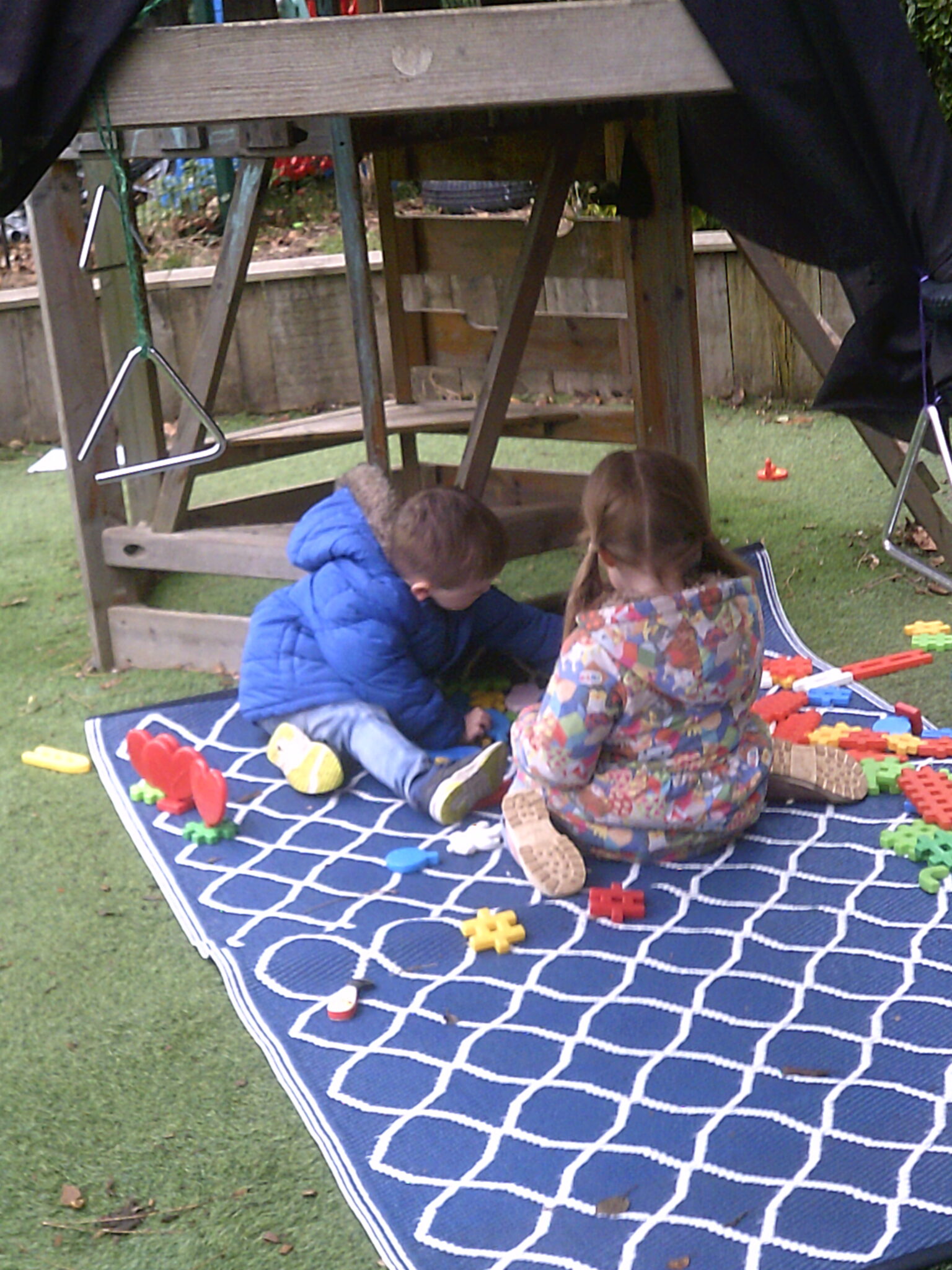
In the garden they thought about how they could make different sounds with the musical instruments. Lots of metal triangles were hung up around the garden. The children experimented with the different sounds they made as they hit them with a variety of resources, including a teaspoon, a stick and a toy dinosaur tail! They discovered that the metal teaspoon made the best tinkly sound and that the stick and dinosaur tail only made a dull sound. Not only are they learning about music but the different properties of varying materials and how they react together.
They went on to discover how many triangles there are in the garden, matching number to quantity, what size and shape they are and having fun finding them in the garden environment. Great for mathematical concepts but also exploration and observation.
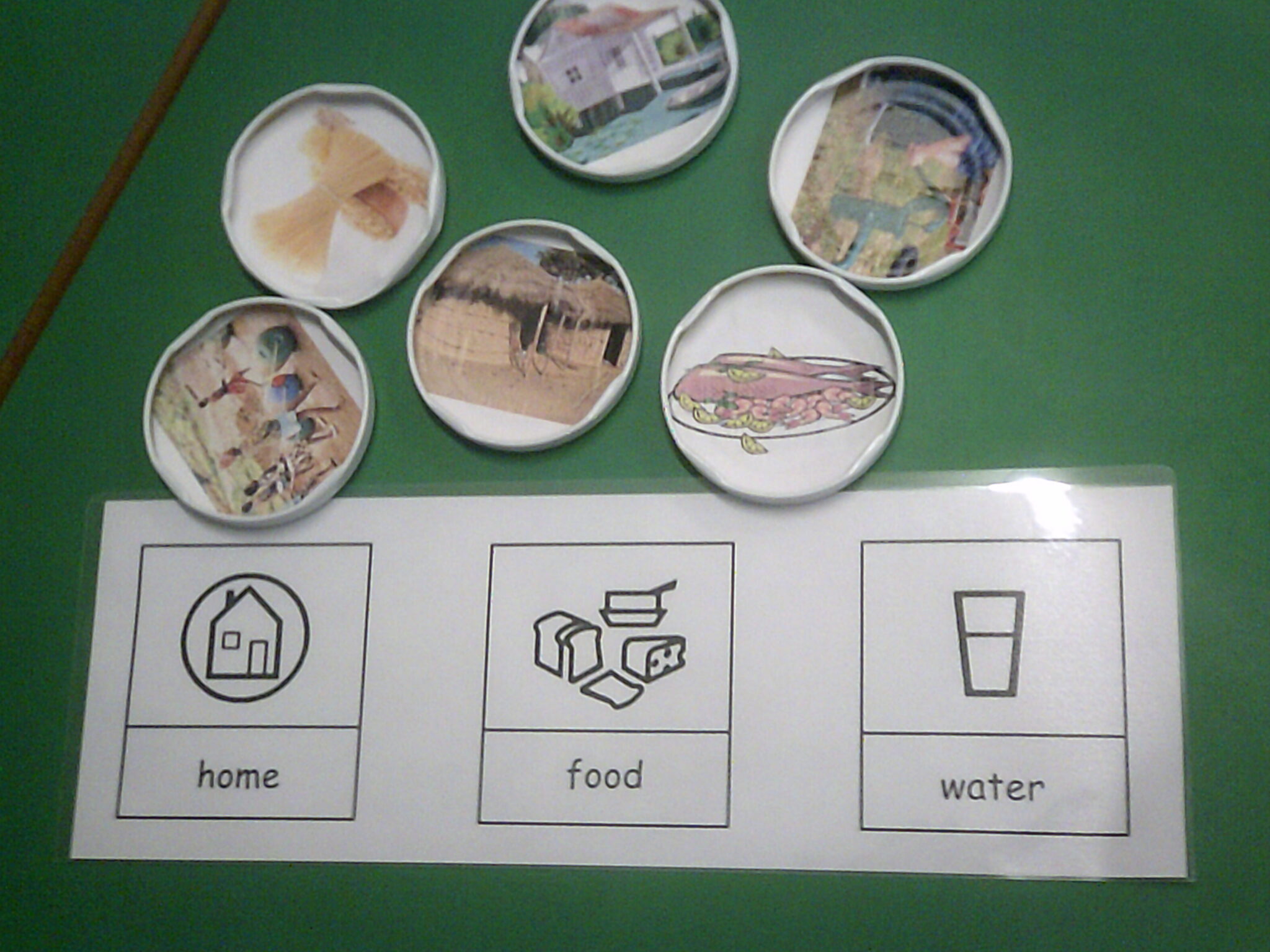
As we continue on our journey to gaining the Education for Sustainable Development Award, we focus on different areas of the United Nations Global Development Goals. This week, some of the children played a ‘basic human needs’ game. They discovered, in simple terms, what humans need to survive; so food and water and shelter from the elements.
When talking about water, they discussed how we all need water for many things, drinking, washing our bodies, washing our clothes, watering our plants, cooking our food, washing our food to make it safe. They discussed how precious water is and how we should always turn off the tap when we are not using the water and save water in water butts to water our plants. They learnt about those who are less fortunate than we are, who do not have access to clean running water in our own homes. They talked about how even those who can access water may not be able to turn on a tap but need to use a pump.
Discussing food, the children talked about why they need food, what it does for their bodies (ie gives them energy), the different types of foods and what foods are healthy. They learnt about different food groups; fruit, vegetables, fish, meat, dairy, cereals and how each group gives us the nutrients we need. Linking back to the sustainable development goal, they considered why it wasn’t good to waste food and to think about those people who weren’t lucky enough to have yummy food to eat every day.
Turning to the concept of ‘home’, they thought about what it meant to them – a shelter from the elements, a calm, safe place. They then looked at different types of homes; big, small, tall, made of bricks, wood, concrete, with wheels, made from mud, on stilts in the water. Lots of lovely fascinating types of architecture to explore. Next time you walk along a street, take a few minutes to talk to your child about the buildings they see, describe what they are made of, think about who might live there. Talk to them about how some people don’t have a home of their own and consider how lucky we really are.
Your children are amazing. They absorb information like sponges. They learn through hands-on experiences and being with people who are genuinely interested in what they have to say. Thank you for sharing them with us at the Pre-school.
The Pre-school Team