This week’s activities
Taking care of our allotment garden
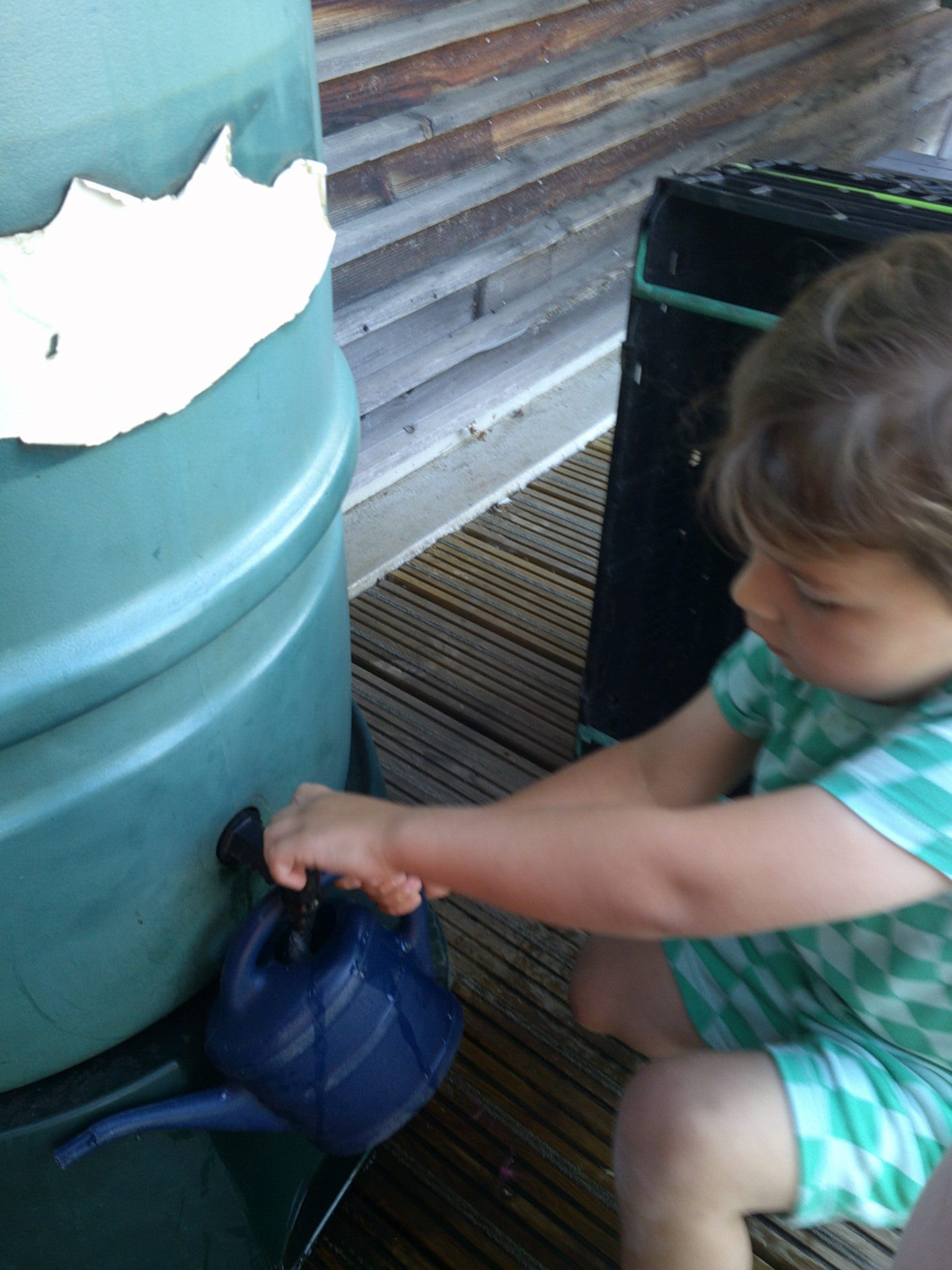
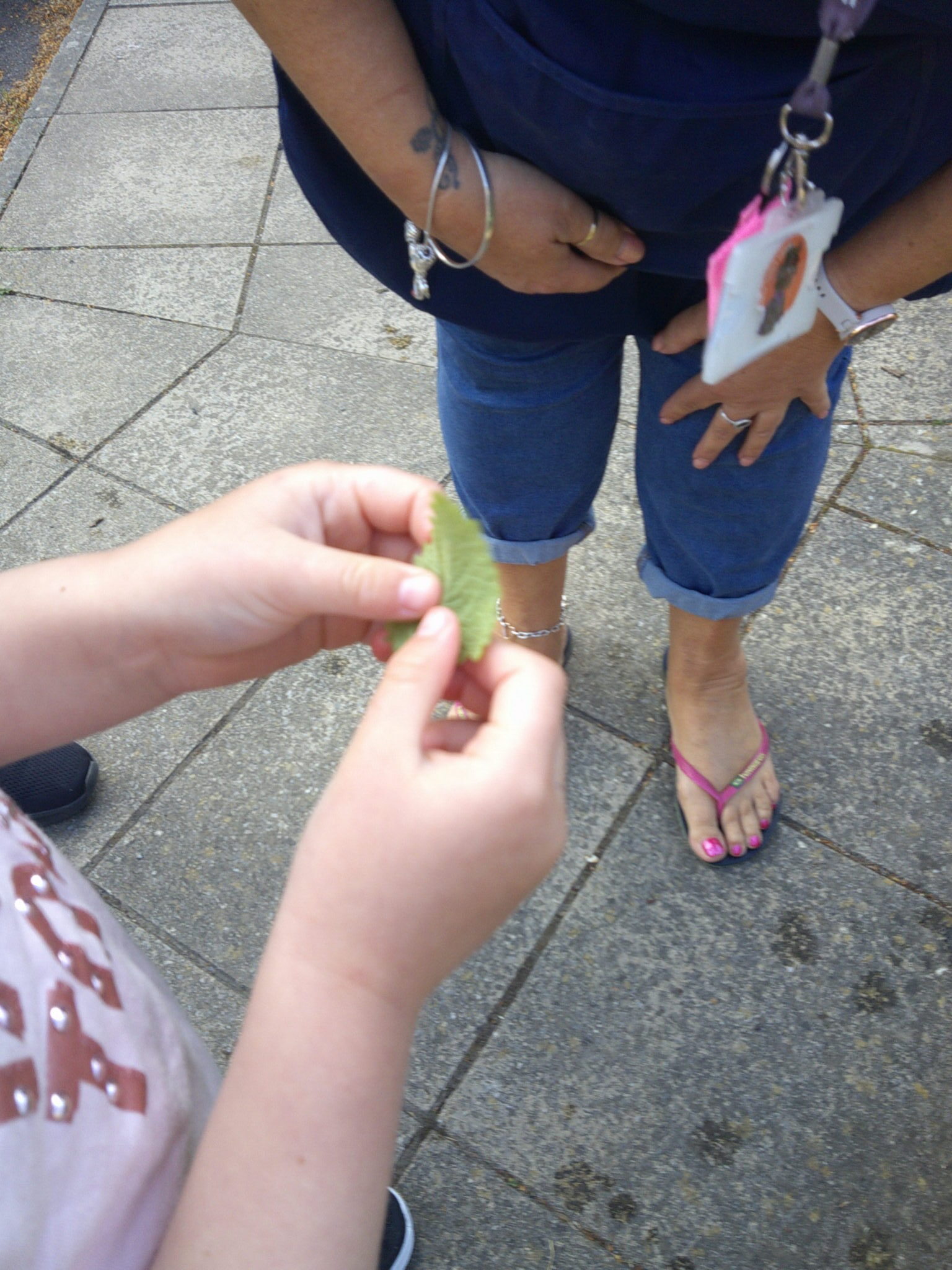
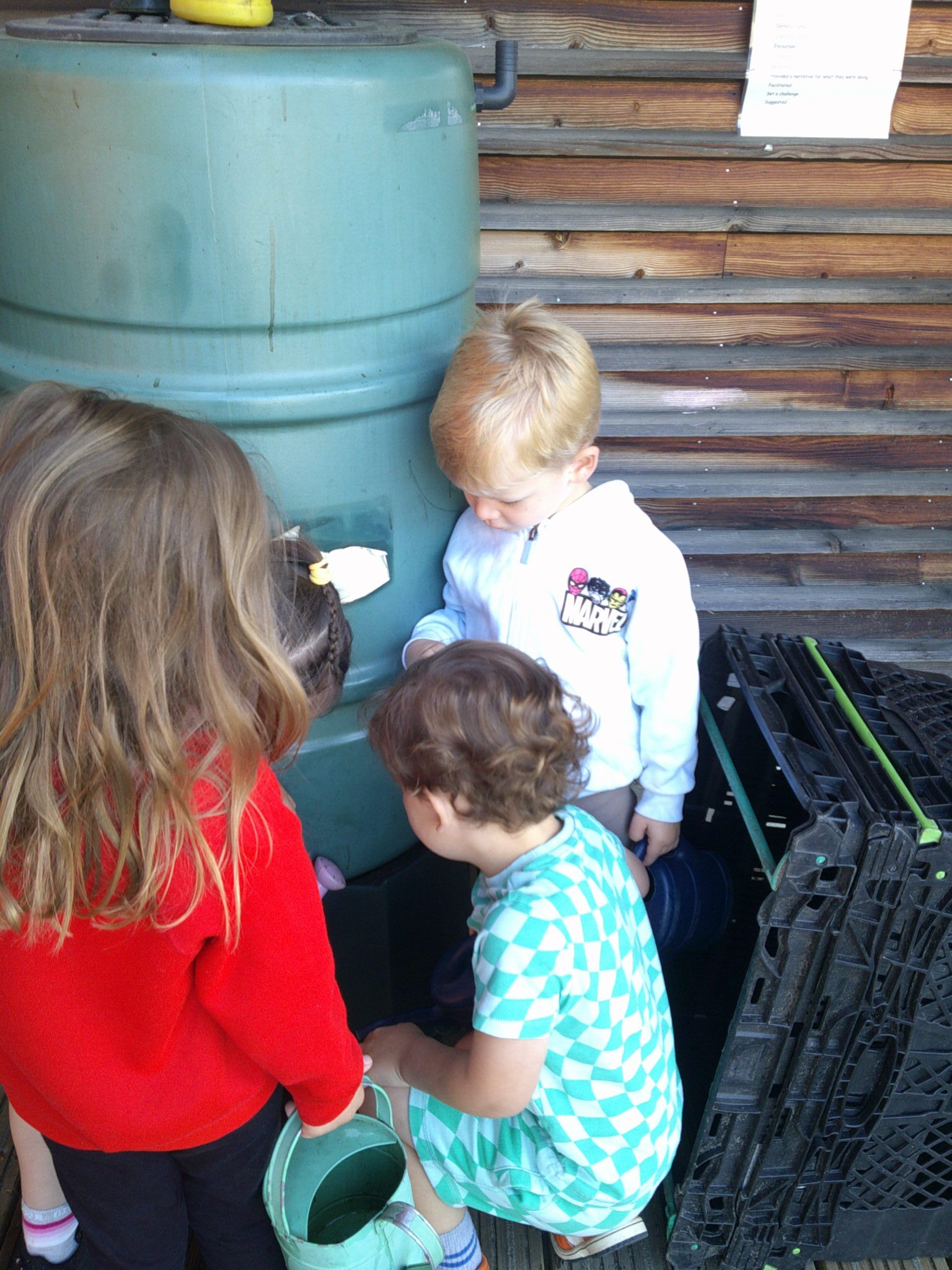
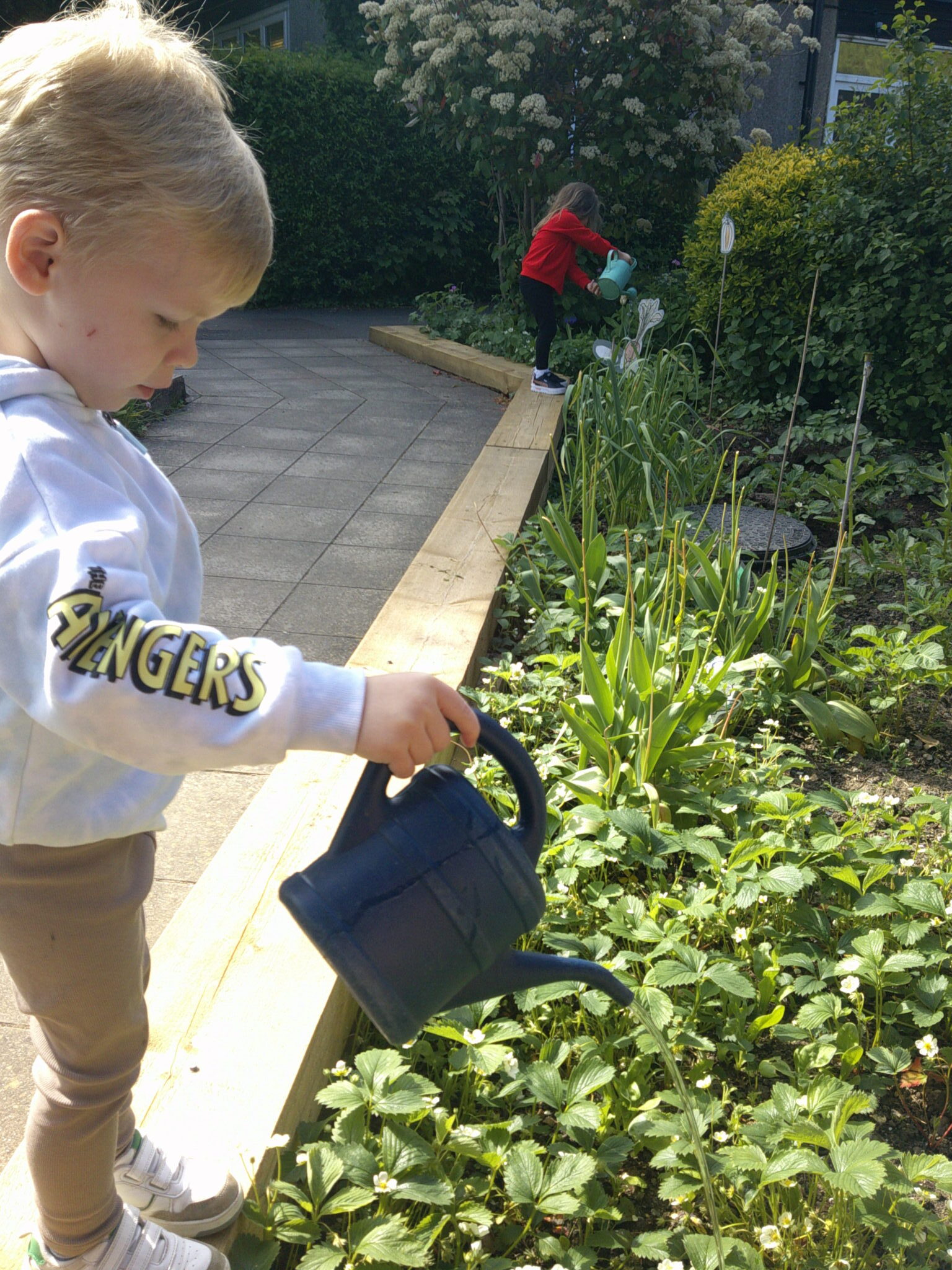
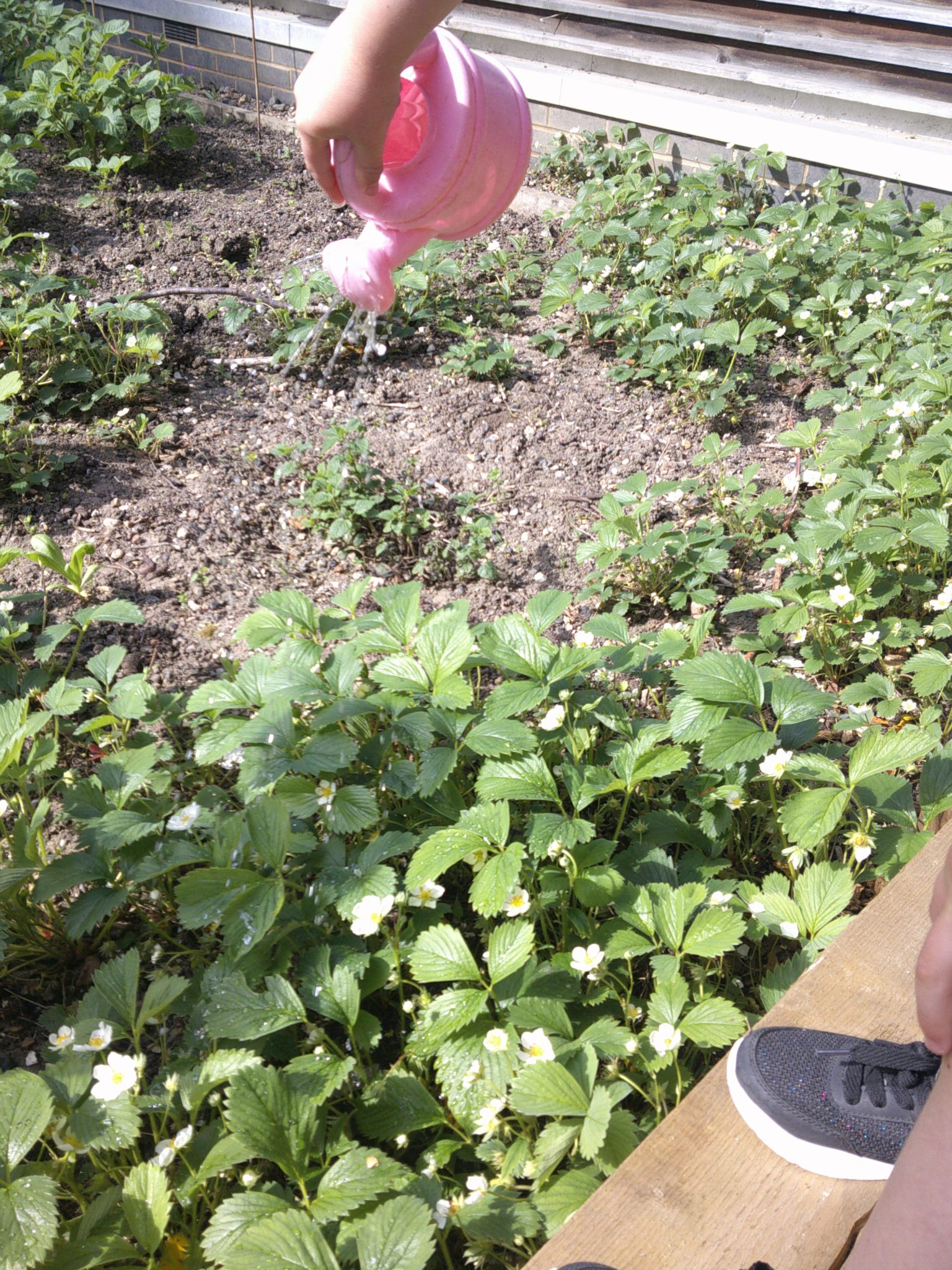
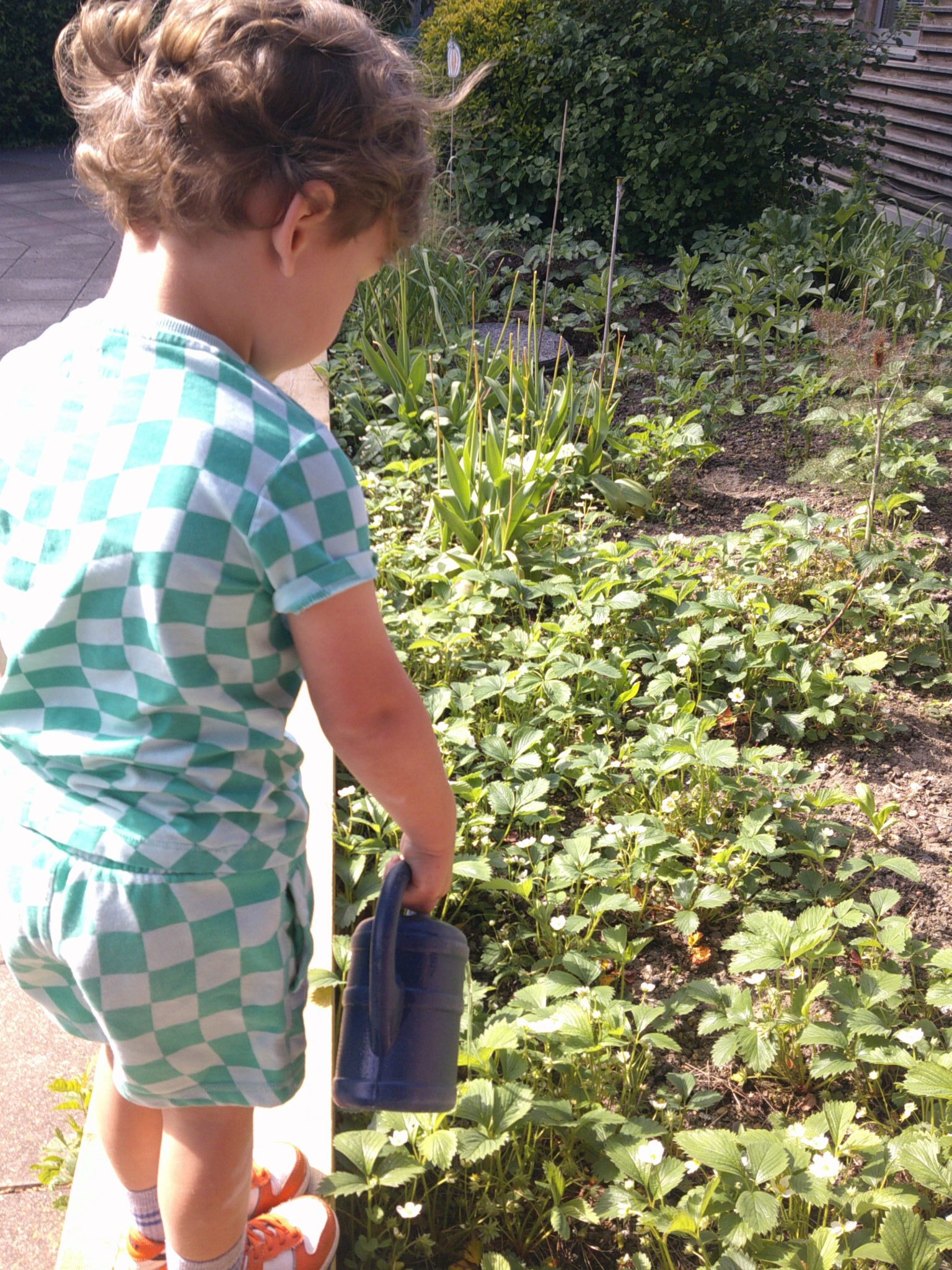
We are very lucky to have an allotment garden at the Pre-school. This is kindly looked after on a regular basis by volunteers from Eynsford in Bloom. To ensure that the plants are growing well and being cared for between their vistis, the children are learning what the plants need to survive and thrive. We have recently received an additional donation of strawberry plants. We will be re-potting these on our return from half term for the children to buy at our Fathers’ Day Shop. To make sure the strawberry plants are looking their best and growing well, the children have been checking on them to see if they need watering. They are learning to tell this by looking for signs in the plants. First of all, they check the soil – is it dry or damp, then they check the leaves and flowers – do they look green and lush or beginning to wilt and shrivel. They decided that they needed a drink of water, so the adult explained how we get the rainwater from our waterbutt to water the garden. This led to discussion around how rain falls from the clouds in the sky and it can be collected in waterbutts so that we can use it to keep the plants healthy. They also talked about conserving water and how we must not waste it by leaving taps running, for example when they are washing their hands after using the toilet or before snack.
Developing on the theme of using the resources we have, the teacher showed teh children our compost bin and explained how we can use our green waste foodstuffs from snack and lunchboxes to create compost by allowing it to rot down over time. This is helped along by the insects that eat their way through the compost, until it becomes a consistency that we can use on the compost to fertilise the plants.
Once they had finished looking at the plants and learning about the compost, they explored a book all about growing fruit and vegetables, particularly looking at the strawberry plants and seeing how they will look once they have matured and grown.
Making a football pitch
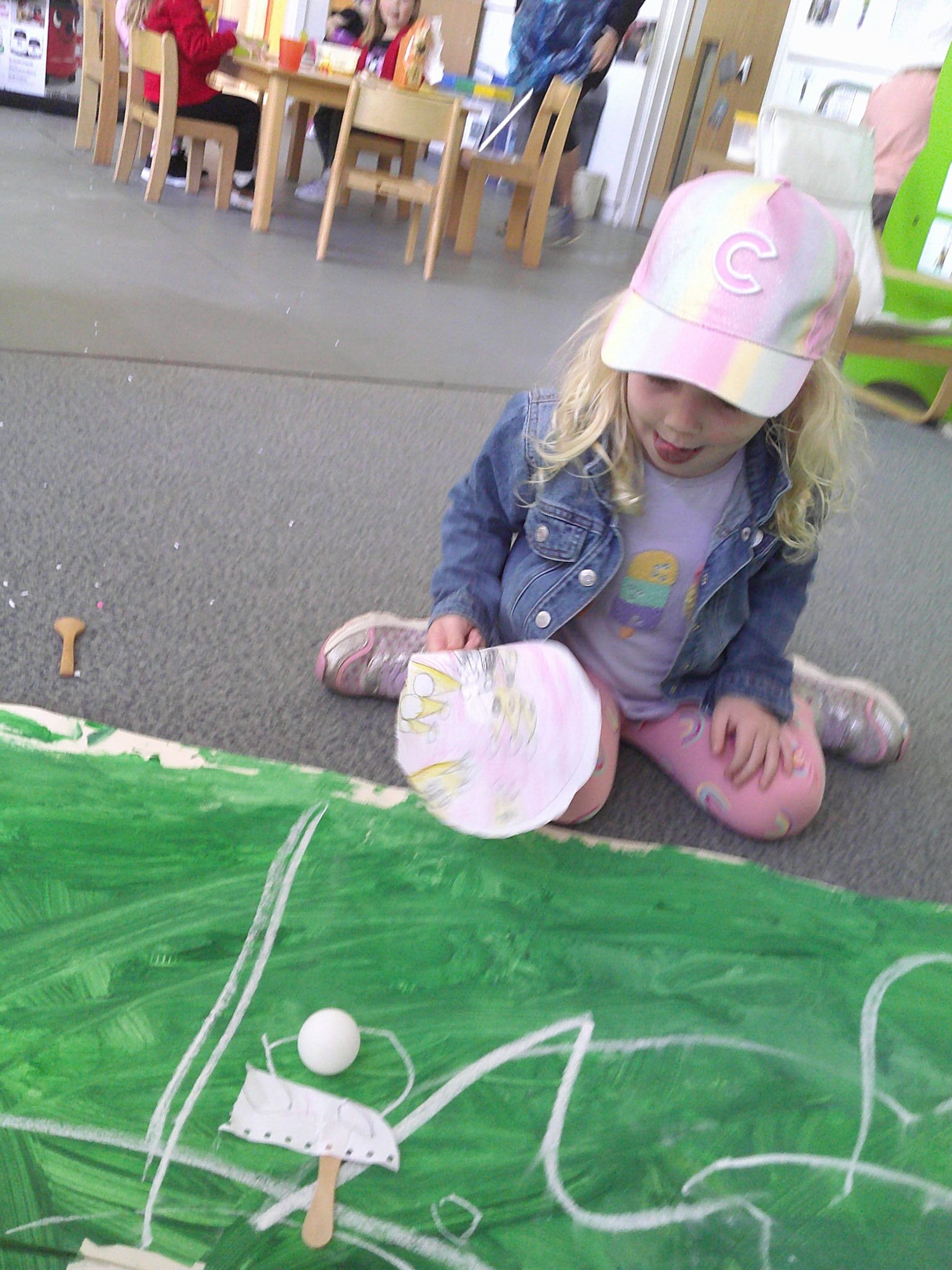
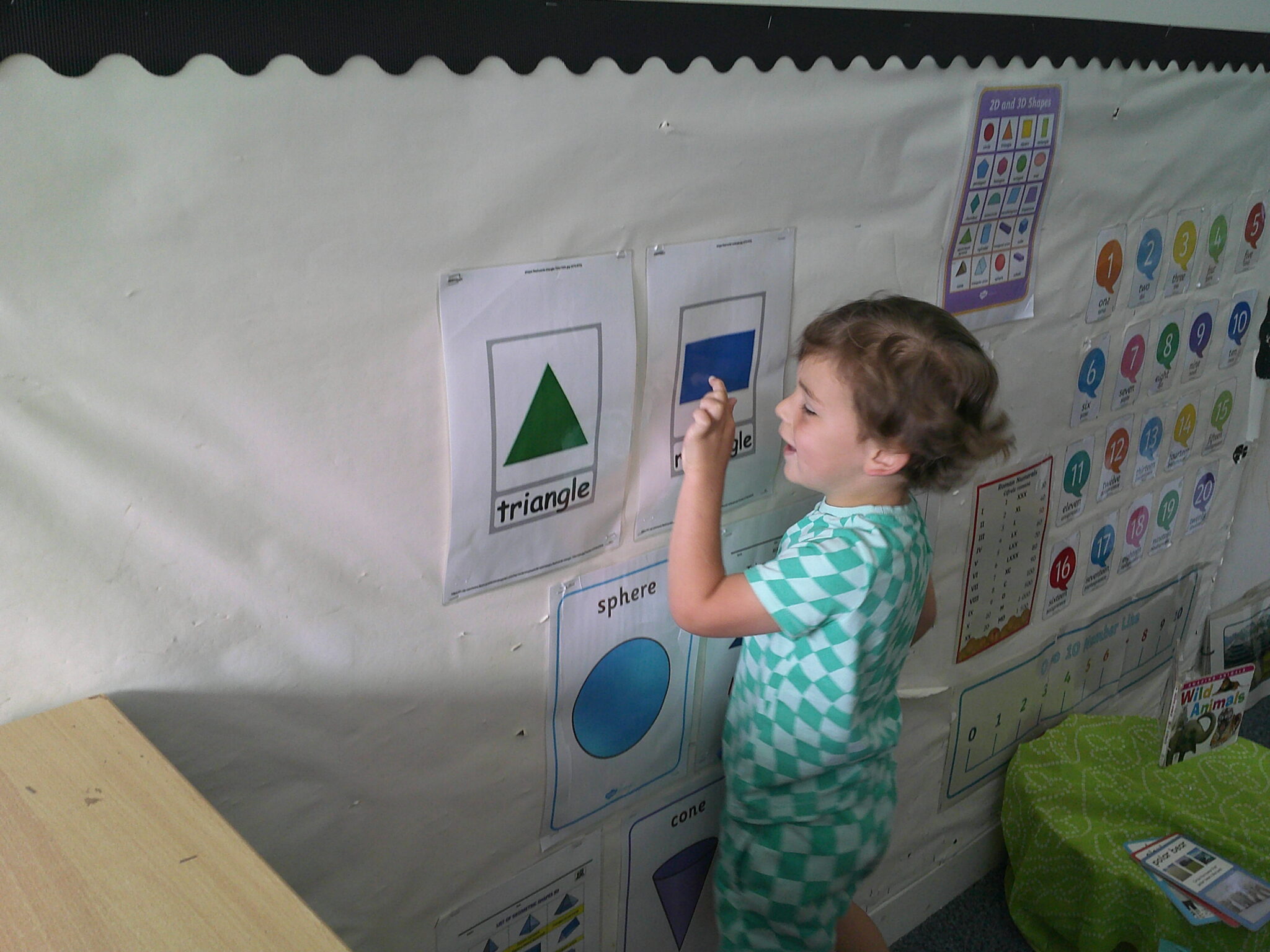
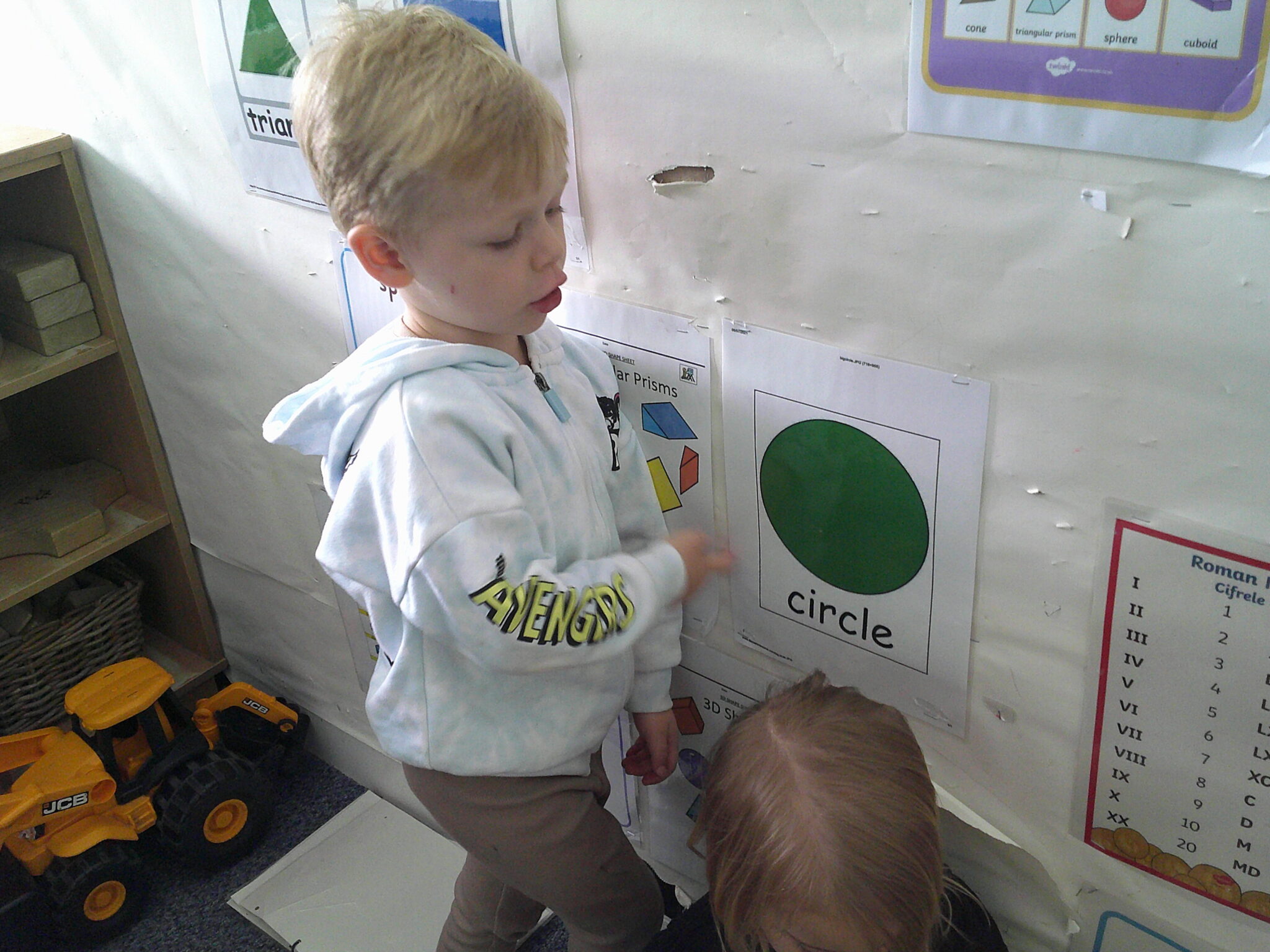
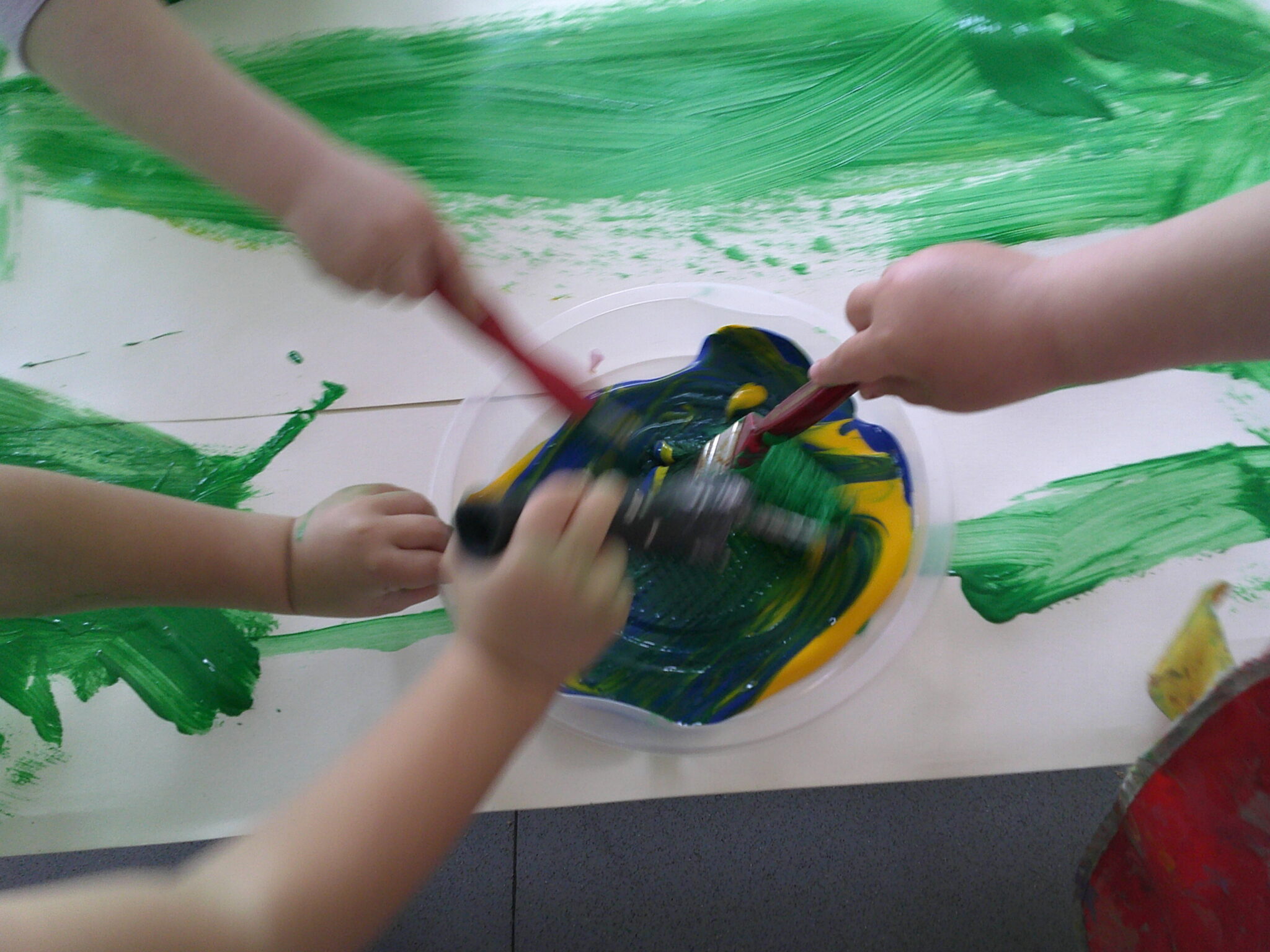
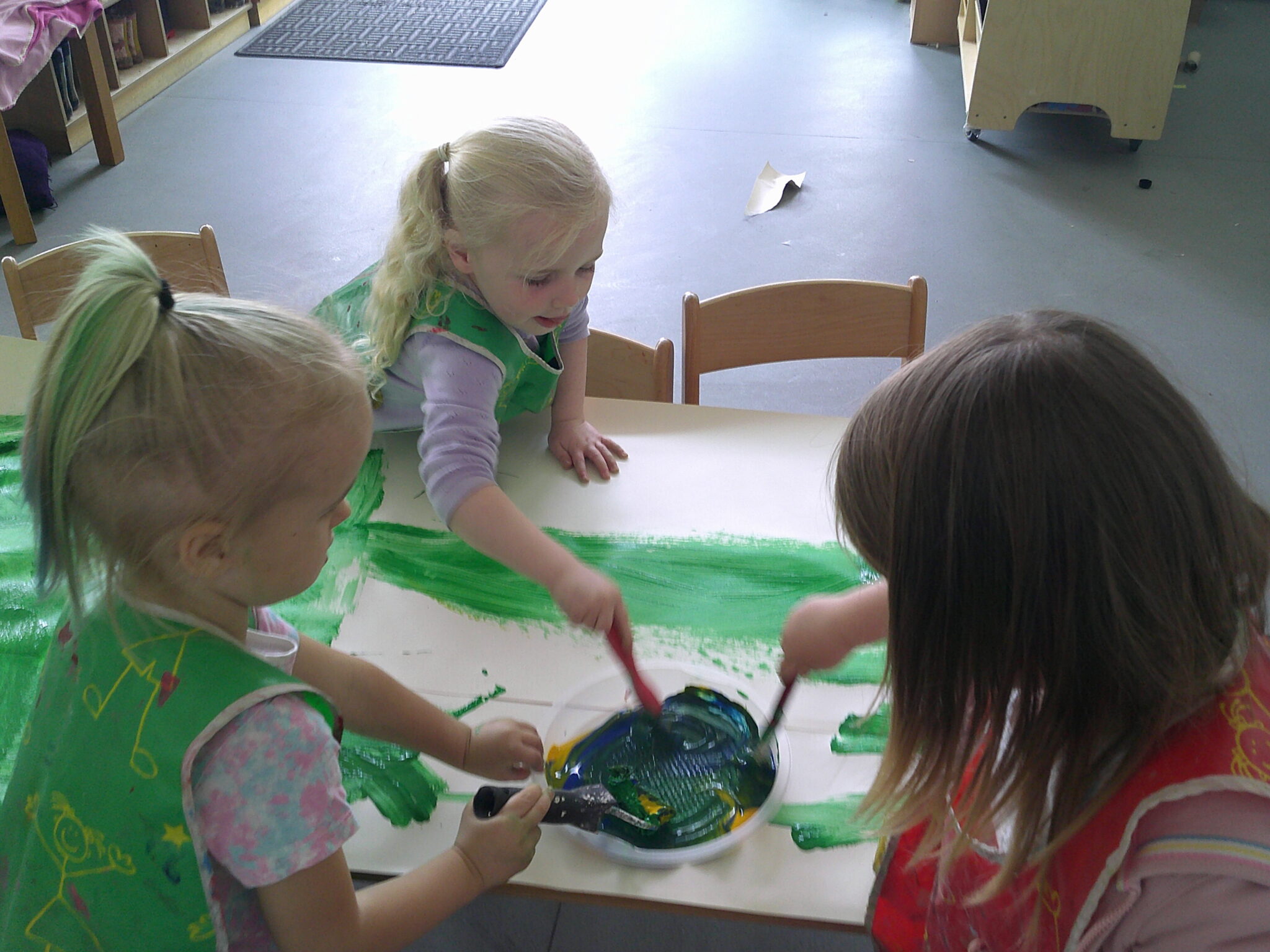
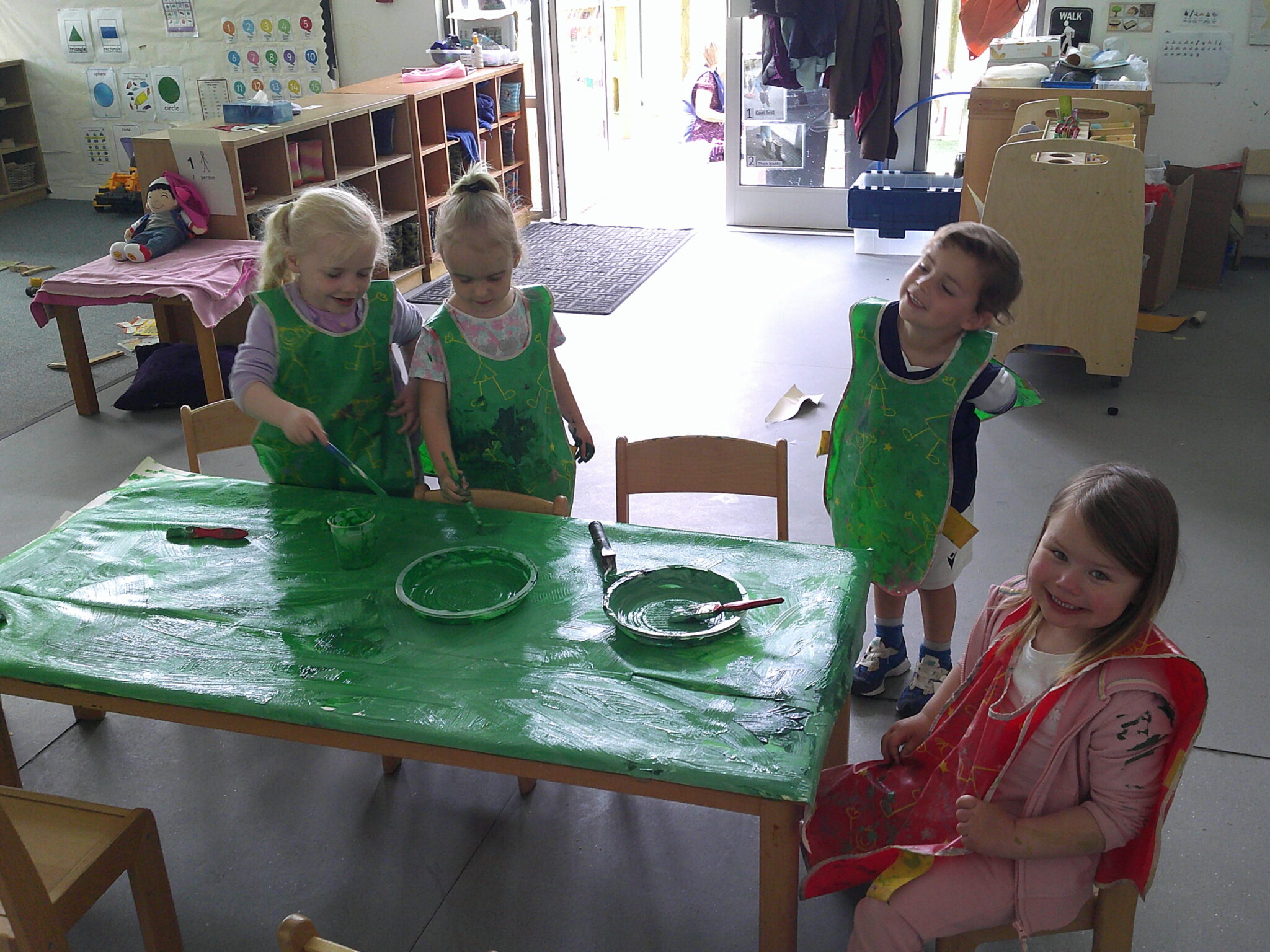
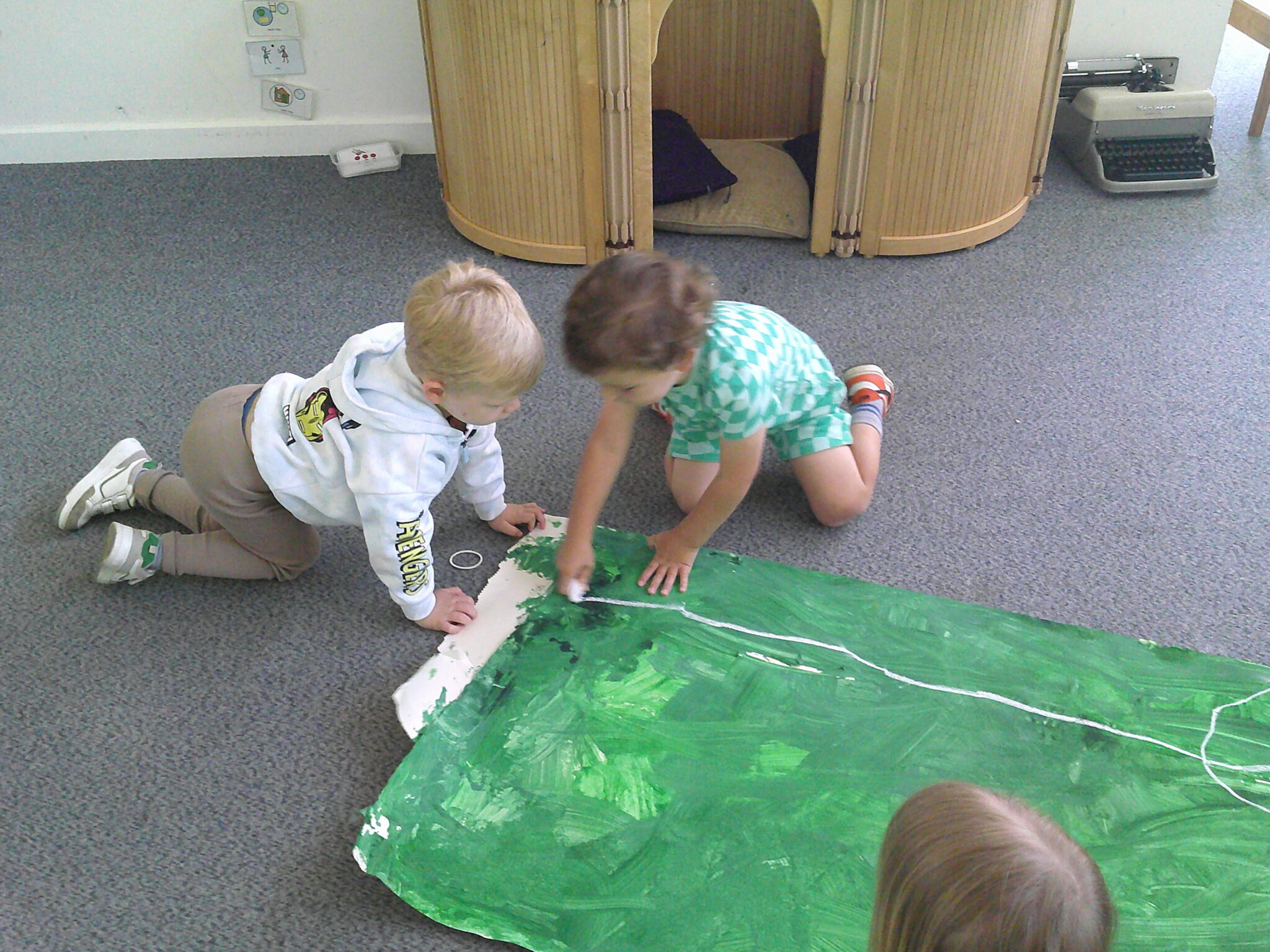
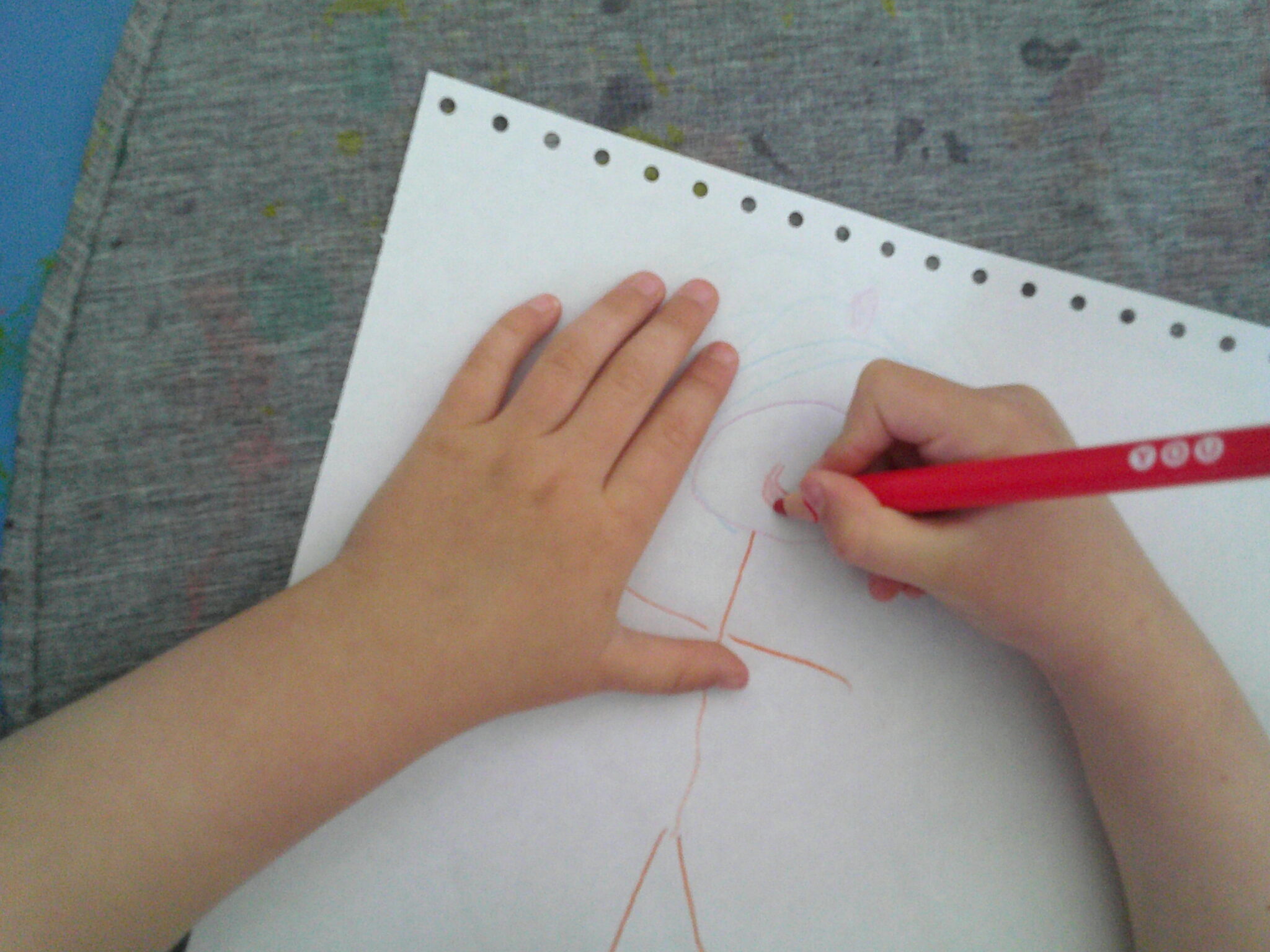
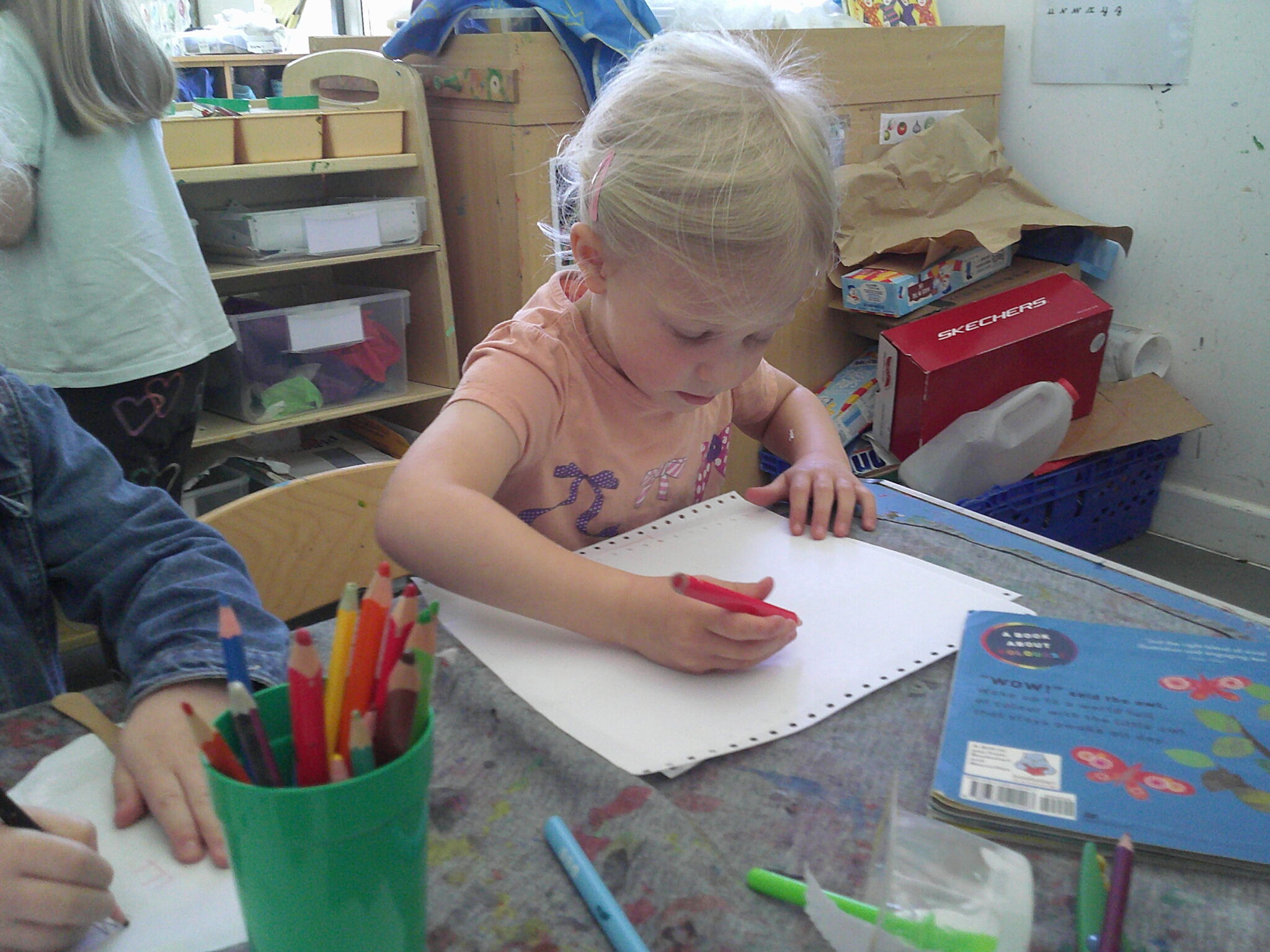
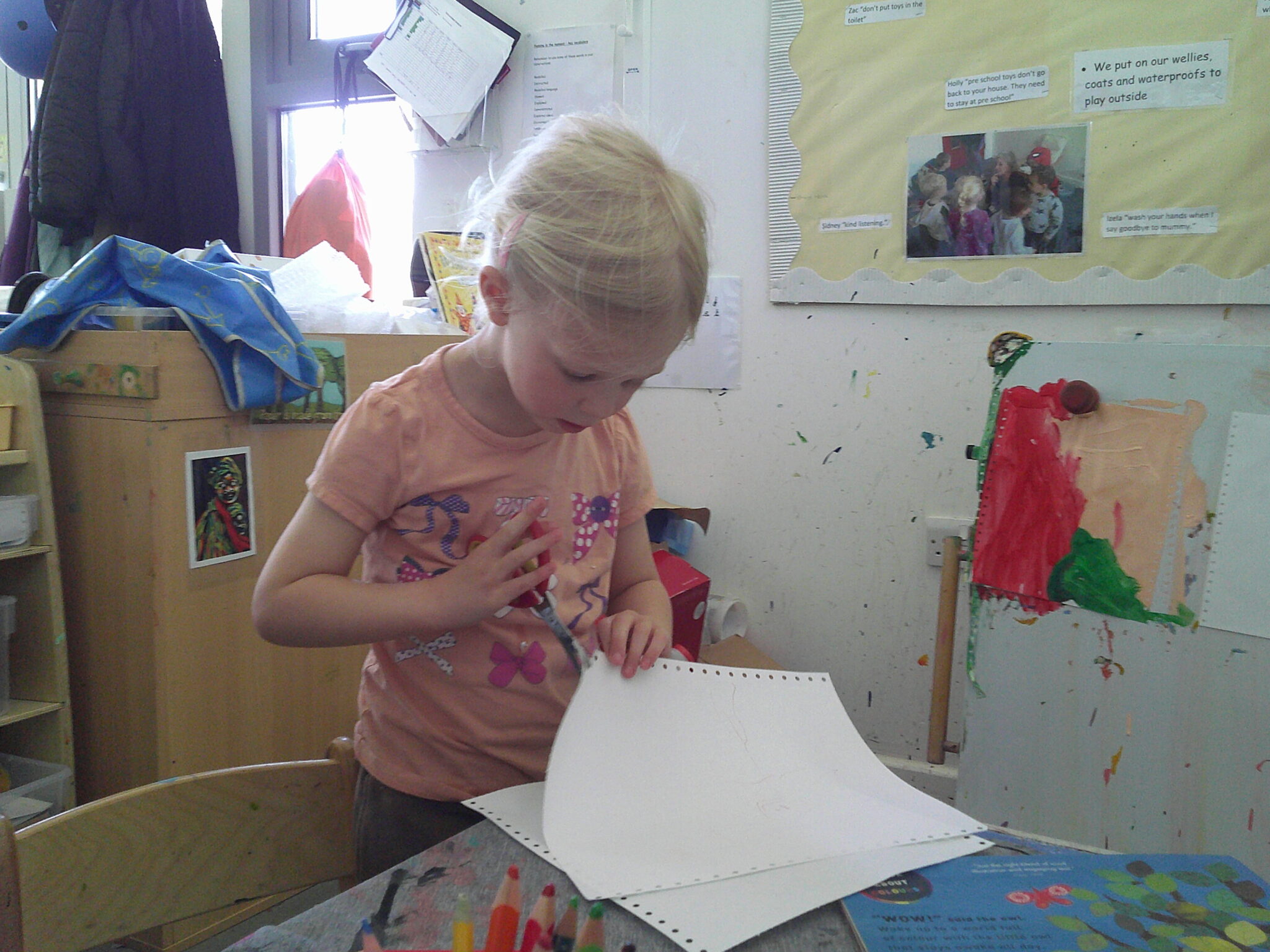
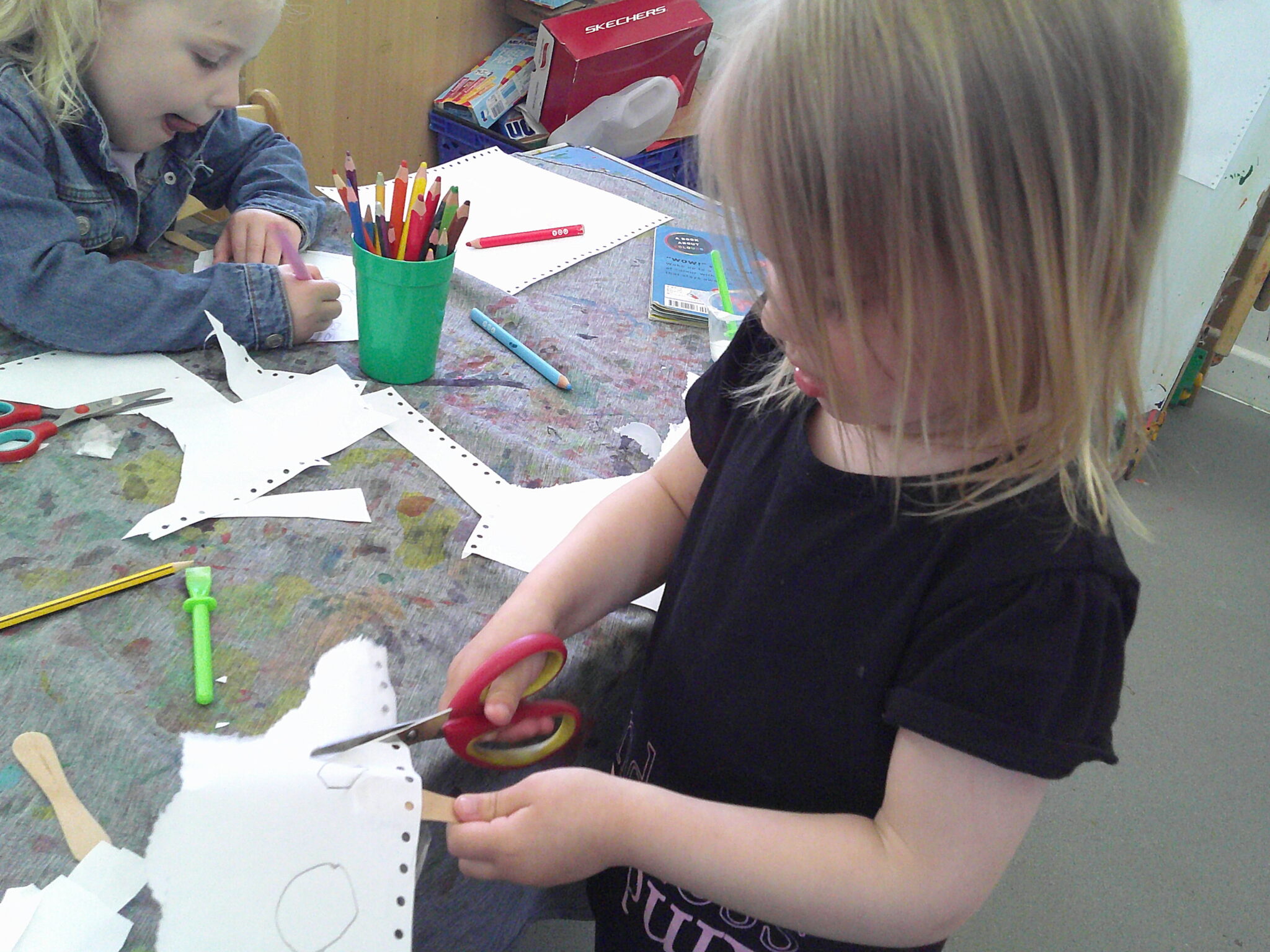
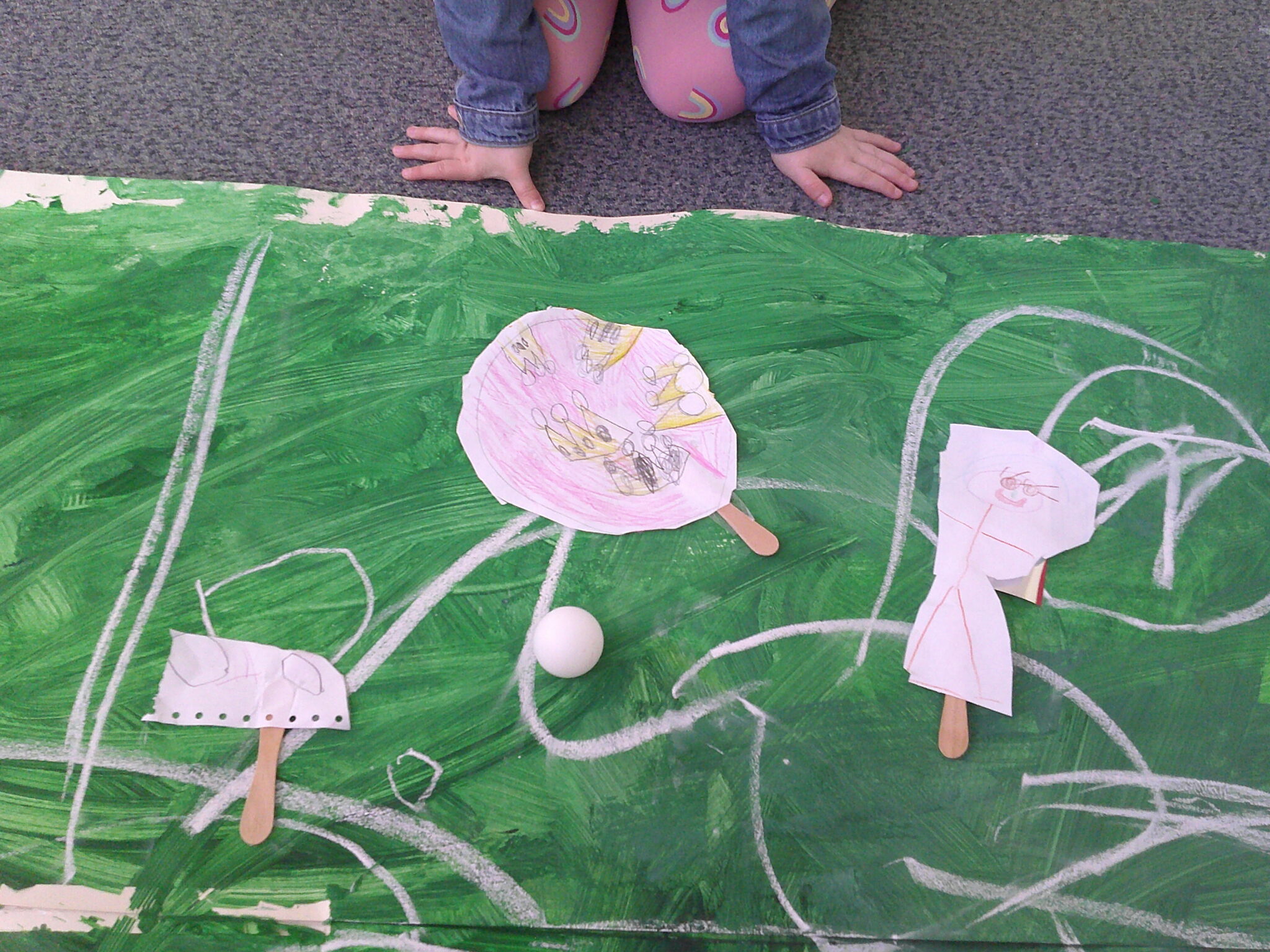
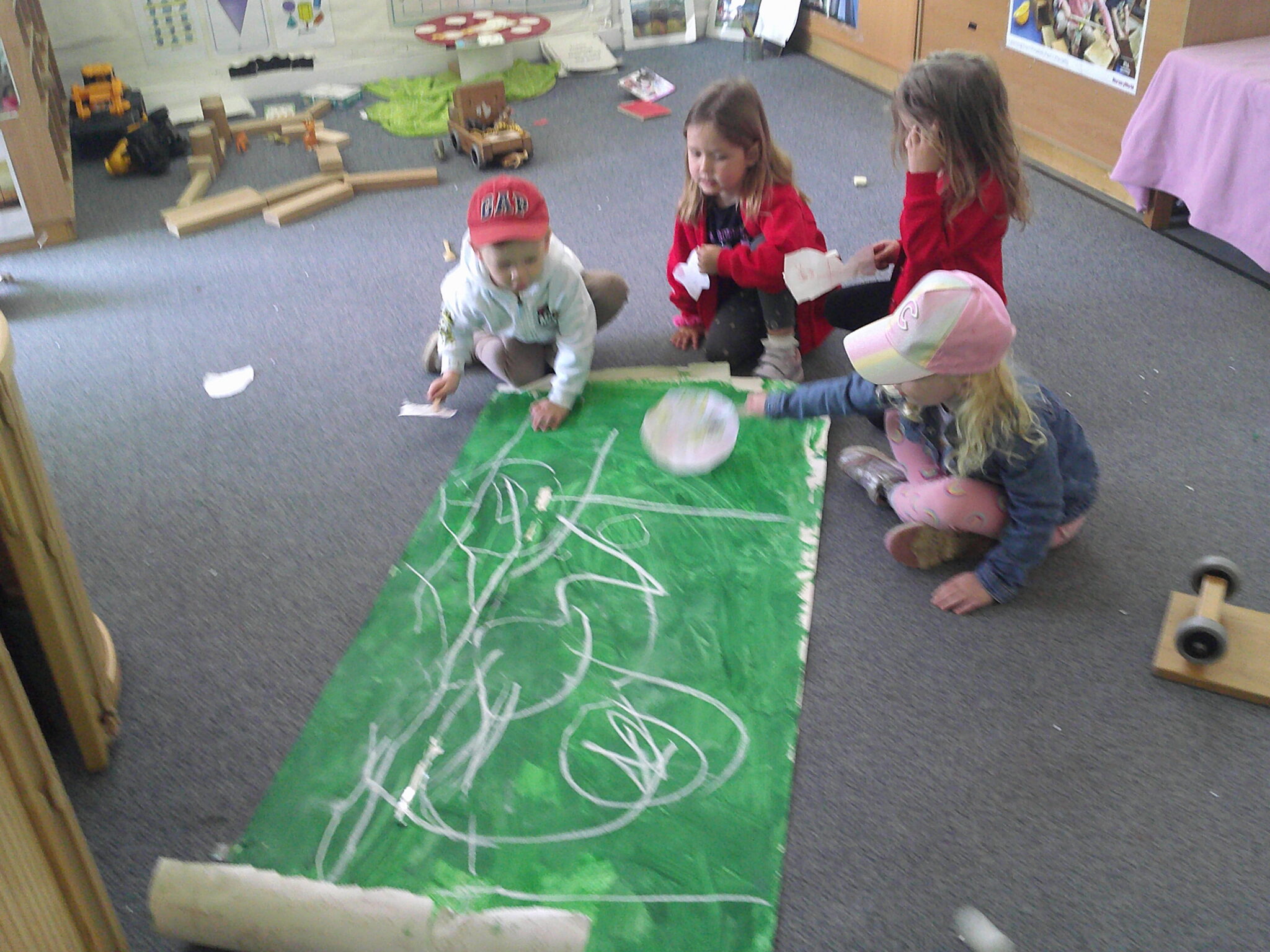
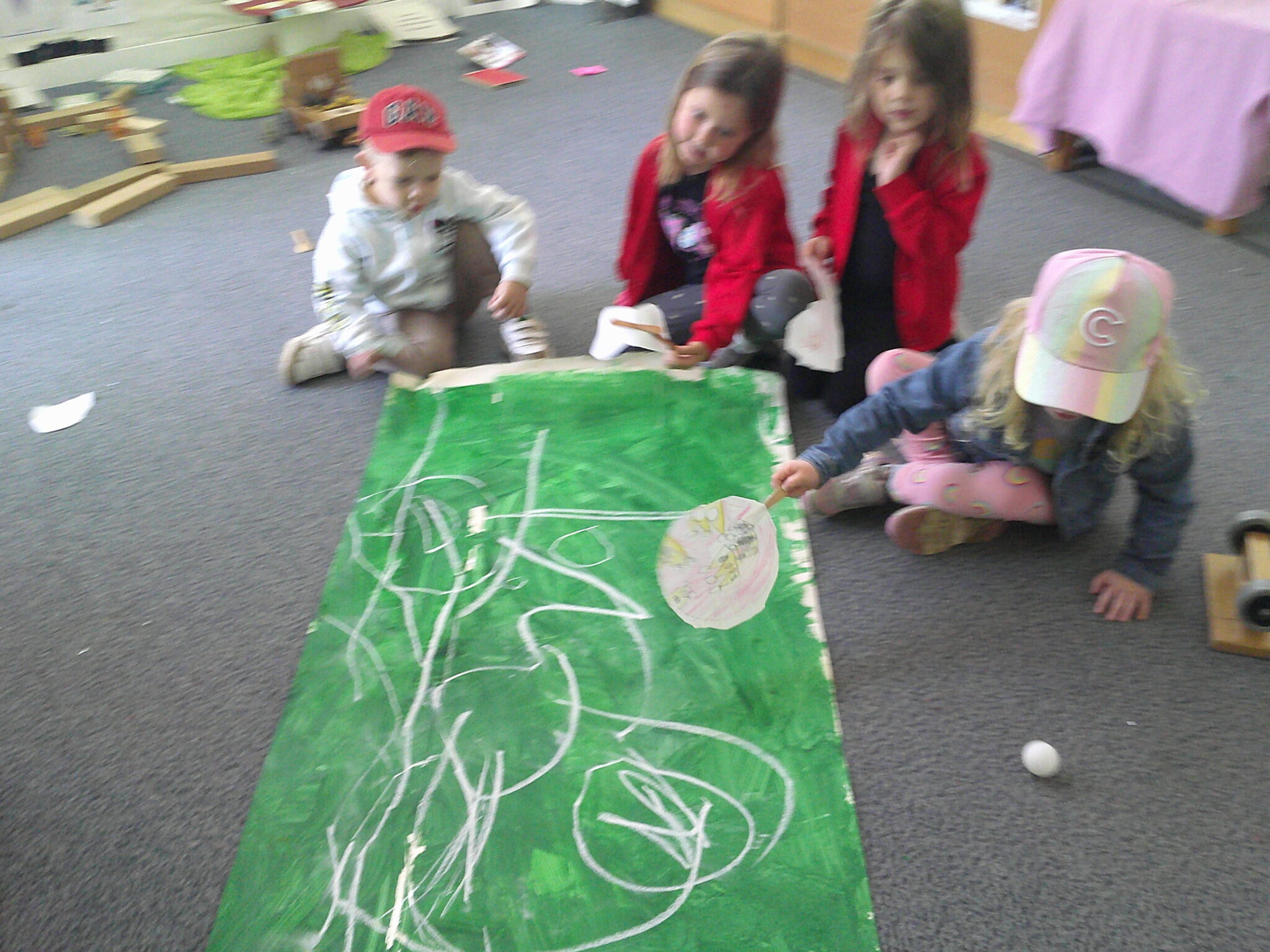
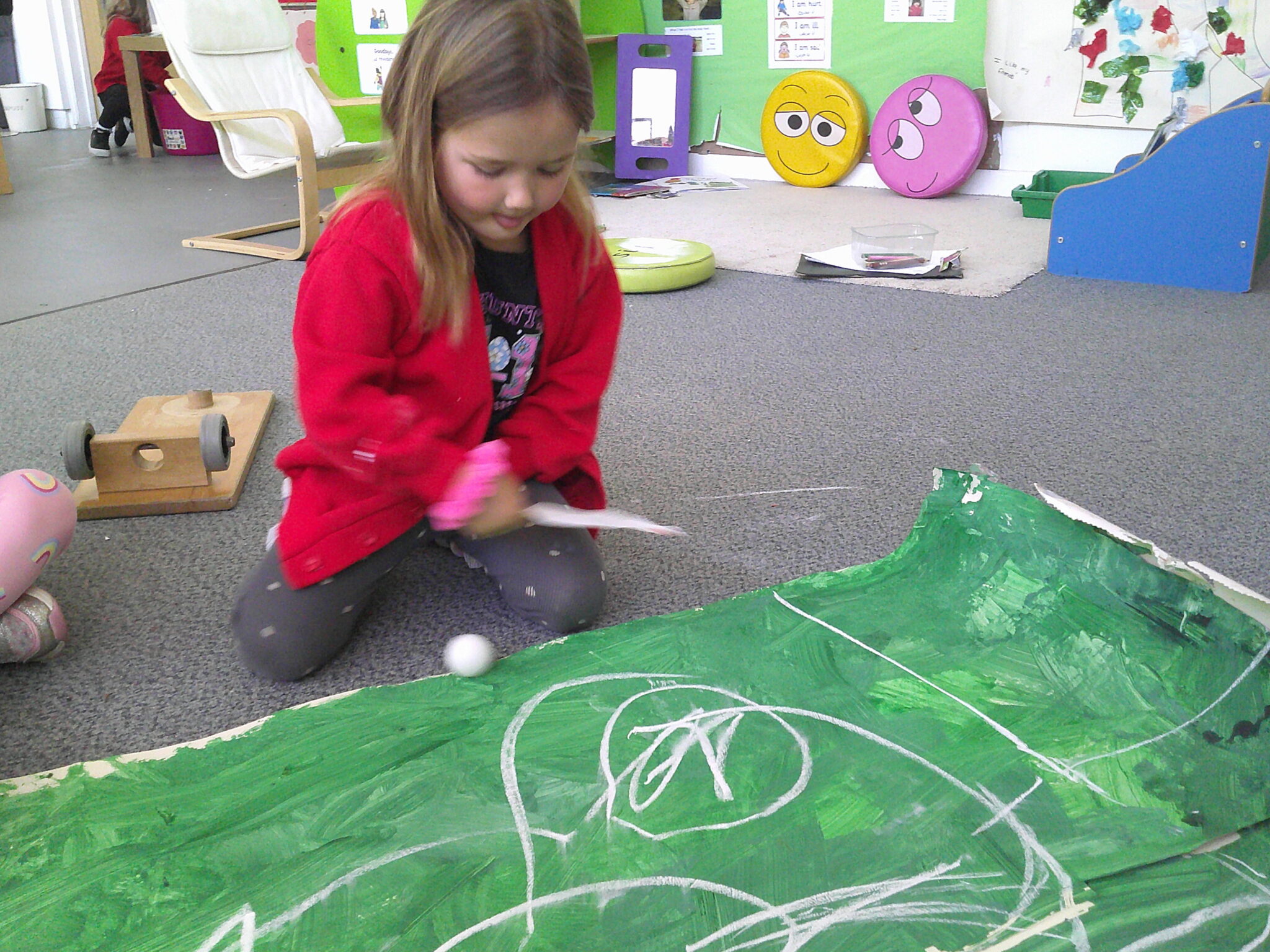
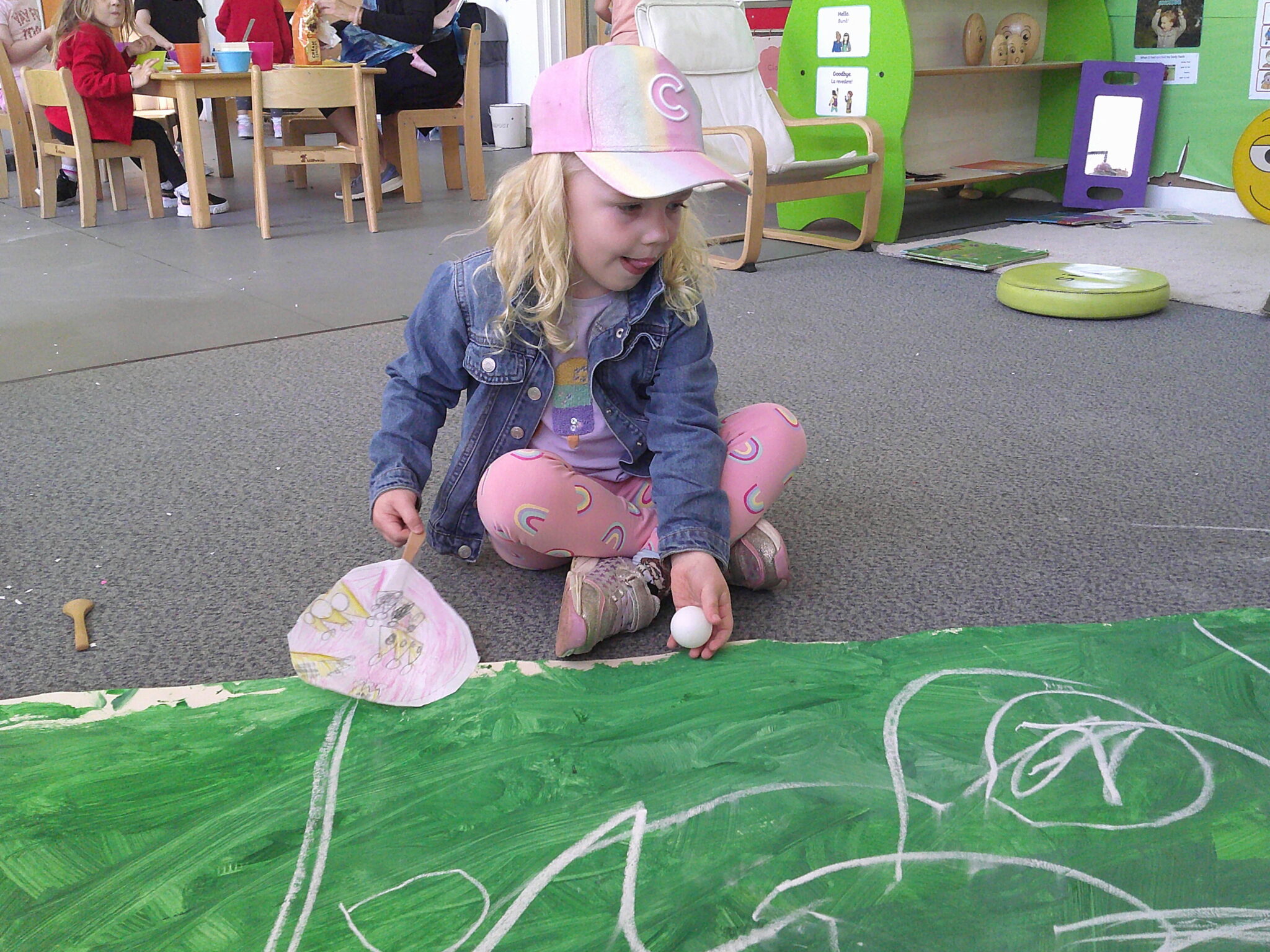
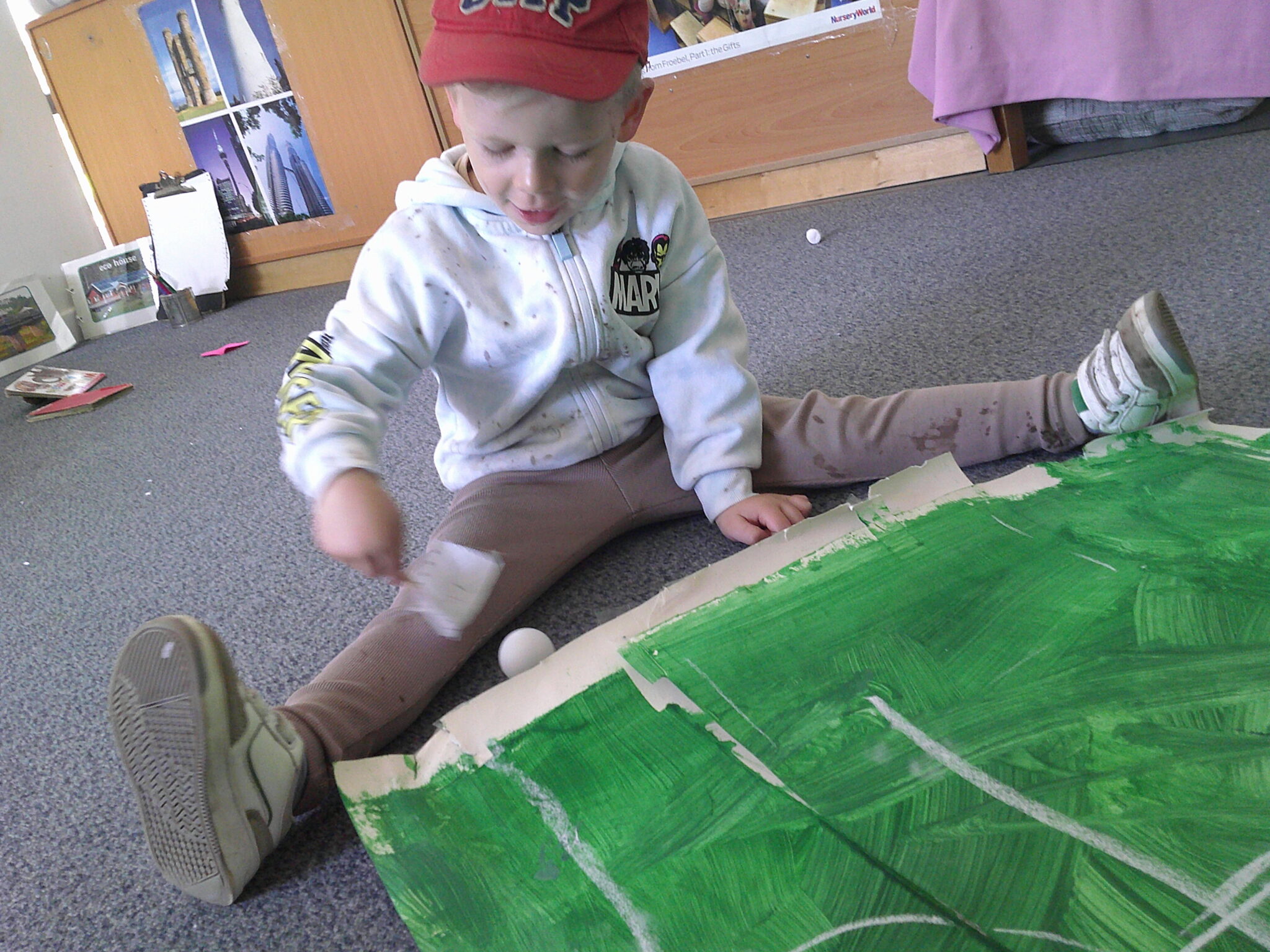
We try and draw on the children’s interests to develop their learning. If a child is interested in something they are more likely to concentrate and persevere. To help the children engage in mark-making and mathematical concepts, one of the teachers drew on the children’s interests in football. First of all they thought about what they could use to make a football pitch. They decided that they needed some very big paper. However, the paper was the wrong colour, as all of the children realised that a football pitch should be green. As it was a large piece of paper they thought the best way to cover it quickly to make it green would be to paint it. Sadly, the green paint ran out before they had finished the job. They then problem-solved as to how they could finish it by making their own green paint, mixing blue and yellow together. So far, so good. The only thing was, it was slightly too dark for some. Again they thought about how they could fix the problem and they discovered that by adding white paint, the shade changed to a lighter colour. Fab. Once the pitch had been created the children realised they couldn’t do any more to it until it was dry. One of them came up with a great solution. As it was a sunny day, they suggested hanging it outside to dry. Very smart. Once it was dry they decided that there were still things missing from the pitch. It needed the markings for the goal, the half way line, etc. They used chalks to mark these out. They thought about the shapes that were needed for each element and named them. This included some 3D shapes, as a ball is not a circle but a sphere. Once the pitch was ready, they needed to create their fantasy football teams to play the match. They drew their own teams and cut them out. They decided a ping-pong ball would be the right size ball for their pitch/players and the match began. To help the teams along, they sang some football songs that they had heard and were familiar with. There are so many areas of learning/development covered in this activity. Learning should be fun and creative. Motivated, engaged and inspired children learn better than being forced to sit at a table and do worksheets.
Have a lovely half term.
The Pre-school Team