This week’s activities
Please find below a summary of some of the activities that have happened over the last couple of weeks.
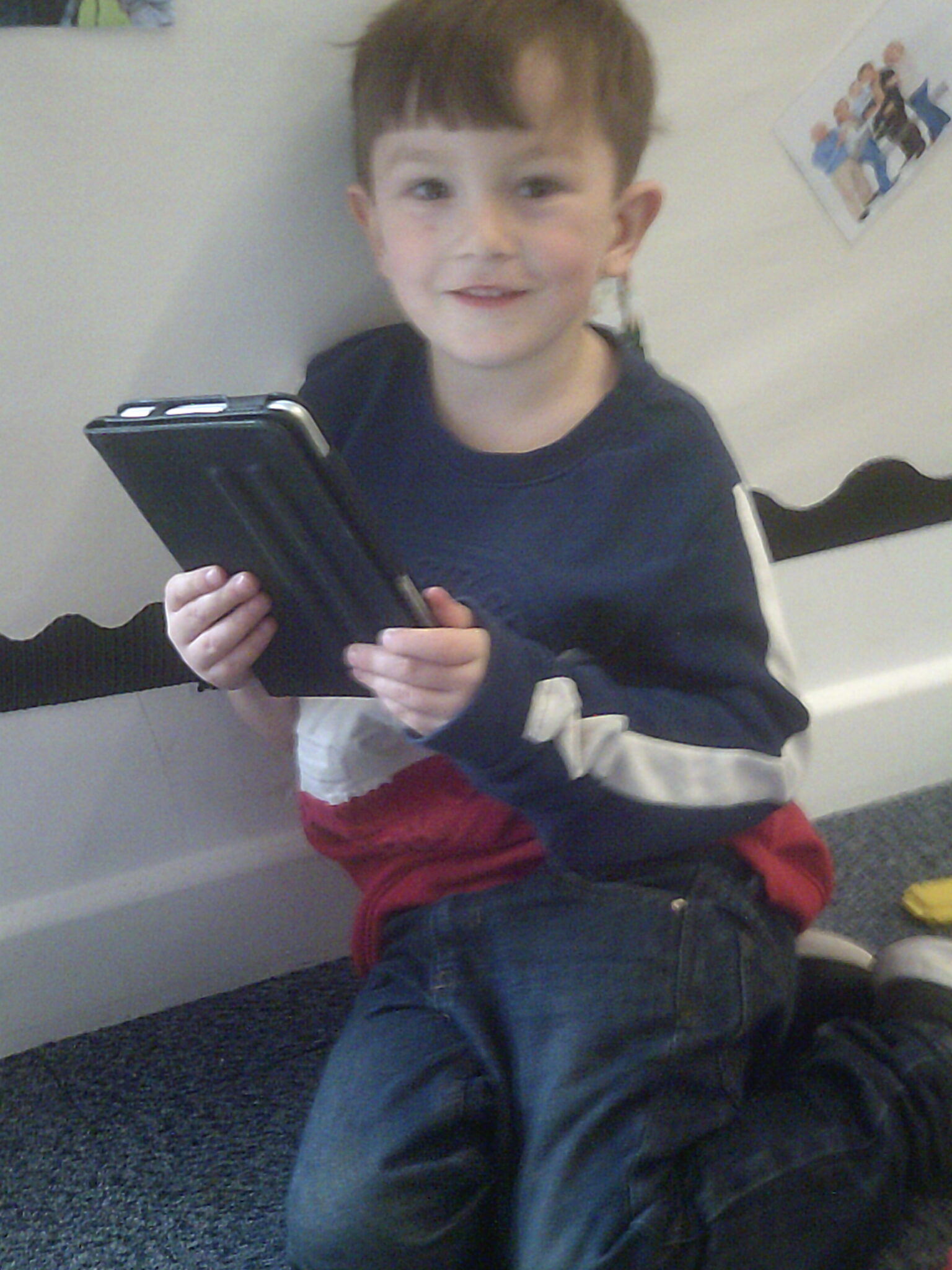
One of the children, who had been reading a book with penguins in, was curious about whether a penguin was an amphibian? This led to discussion around what animals are amphibians, so the tablet was used to explore the subject. We not only use the tablet to discover information and facts, we use it as a tool to talk to the children about keeping safe in the digital world. We tell the children that if they see something they don’t like they should close the lid or turn it over and tell a grown-up. One of the children suggested “click on something else”.
Whilst we cannot ignore the fact that future generations are surrounded by digital platforms, we must try to ensure that they learn how to keep themselves and others safe online. This is part of our usual practice but this week really focuses the mind as it is Safer Internet Week. There are lots of resources available for families. Their website can be accessed via https://saferinternet.org.uk/safer-internet-day/safer-internet-day-2022/advice-for-parents-and-carers. Please see our website and Facebook page for some photos of the children engaged in online activities this week.
To support children with their language development, some of the children engaged in story telling and the teacher introduced prepositions, using props to support the children’s understanding; such as under, on, in, beside.
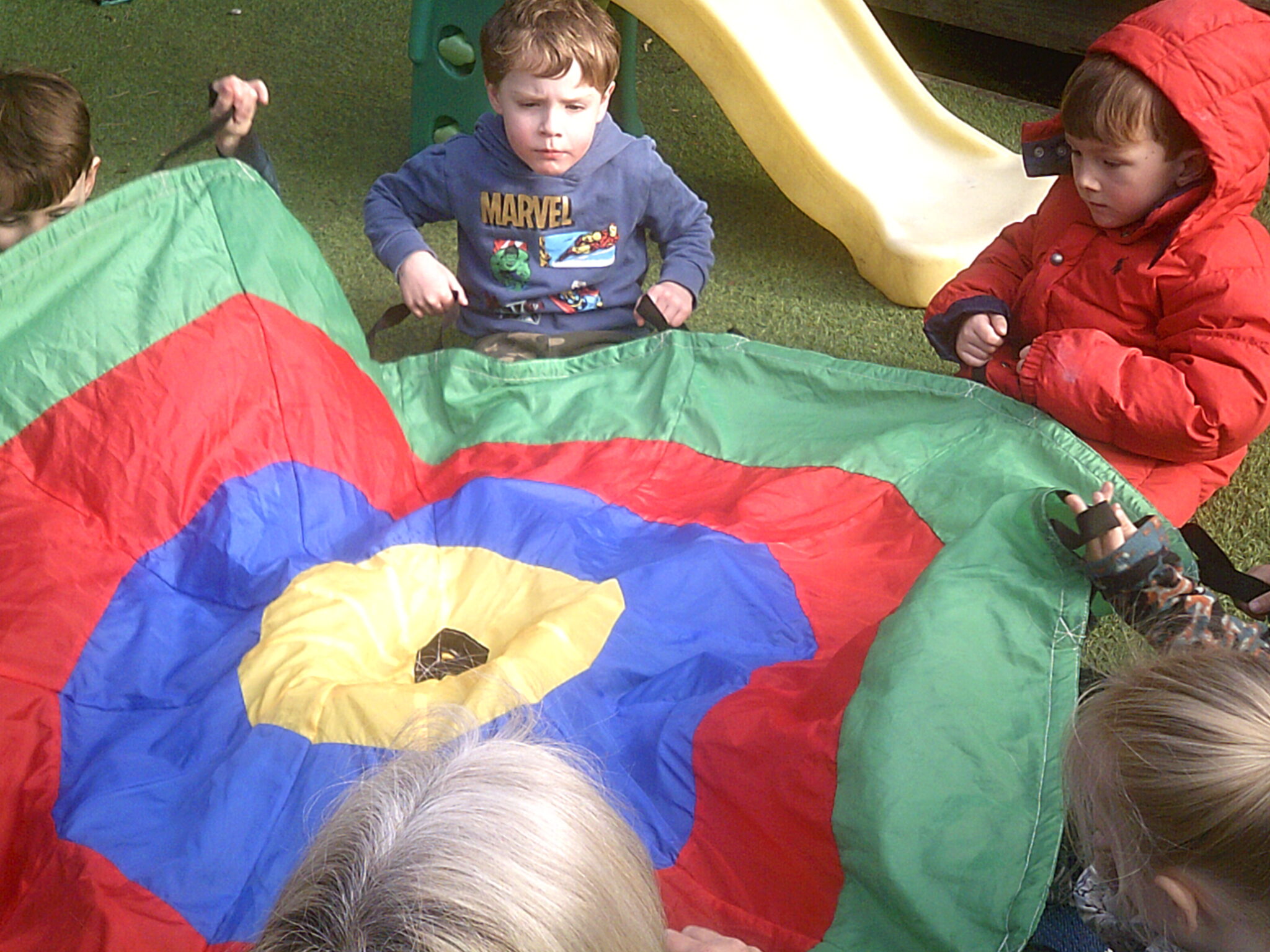
The weather always plays a big part in our day. We ask the children to think about the weather in lots of different ways. We talk about it when they arrive in the morning and update our weather chart. We ask them to think about what clothes they need to wear to go outside – whether that be a coat, hat, mittens, waterproofs and wellies, or sunhats in the summer. Recently, it has been very windy. As you can’t see wind, we have tied scarves to the fence in Robin Garden so the children can see the effect of wind, as the scarves blow up and down. This led to them exploring how kites fly and thinking about the best places to fly a kite. There was lots of fun and laughter, as they helped each other to untangle the string tail and helped each other to launch them into the air.
Also outside, we added a wooden workbench and tools, alongside the bikes and scooters. The teacher drew three parking bays (numbering each 1-3). The children then learnt that they could park their bike/scooter into a bay and use the tools to ‘repair’ their vehicle. Several children took part in this activity. Learning that tools can be used for a purpose, naming and using new vocabulary, including ‘garage, mechanic, spanner, spirit level and bay’, that many things can be fixed, rather than thrown away, teamwork and sharing and focusing on an activity of their choosing, to name but a few.
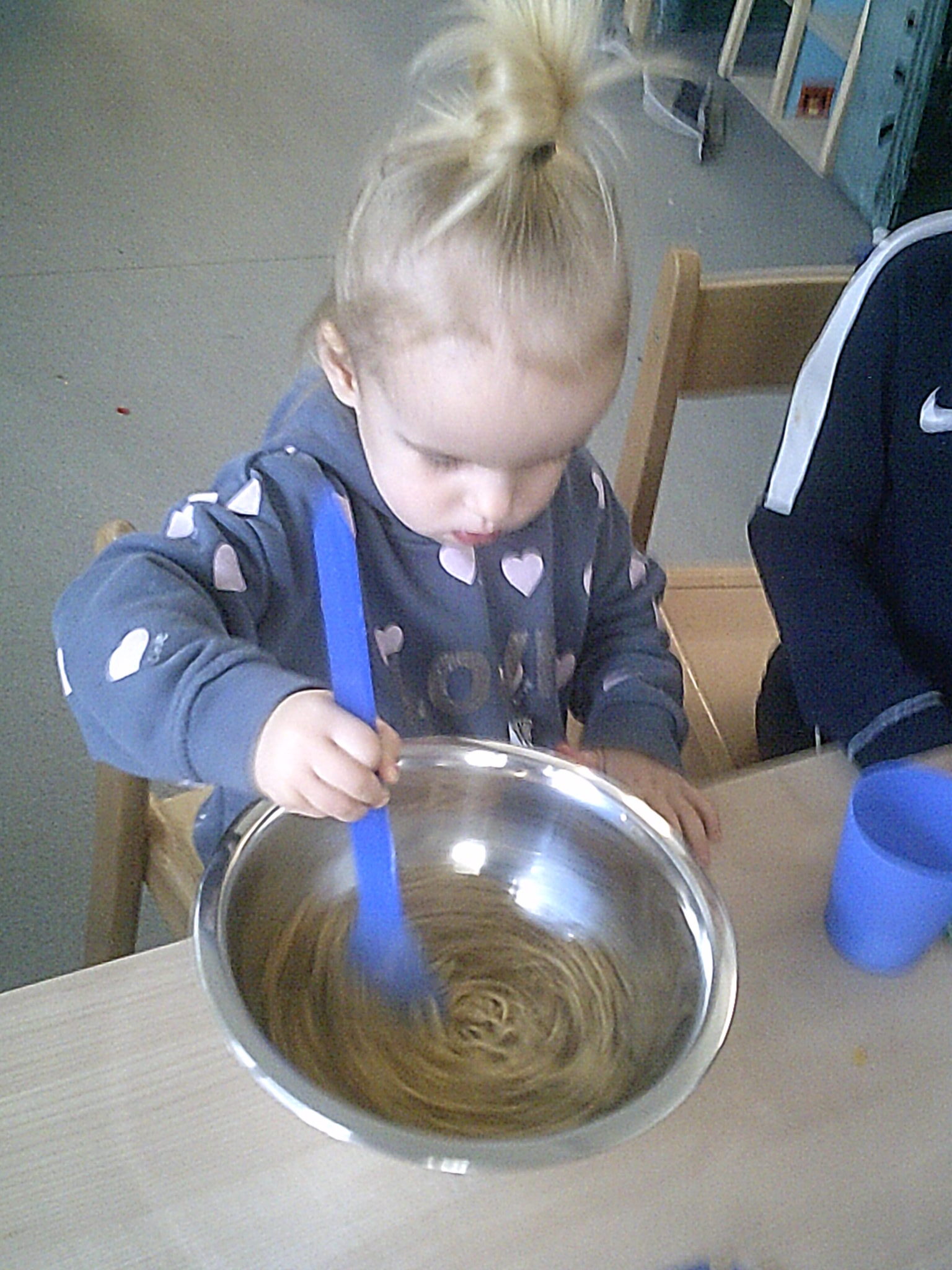
As you will probably be aware, it has recently been Chinese New Year, this year being the Year of the Tiger. We try to give children relatable and meaningful information around cultural events, rather than being tokenistic. This was more of a teacher-led activity, as we wanted to ensure that the children were learning about the event, rather than just making a “Chinese lantern”. One of our tuff trays was filled with red rice (red being a lucky colour in the Chinese culture). The children were given chopsticks and bowls and it was explained that this is a traditional way of eating food within the Chinese community. We had a display of Chinese numbers, alongside western numbers, so that the children could see how different communities record quantity. This prompted mark making and observation of how different numbers are recorded depending on your culture/heritage. Discussion was had around the New Year and how each year is represented by an animal – this year being the Year of the Tiger. Similarities were drawn with the western celebration of New Year and how it is a special time in families and communities.
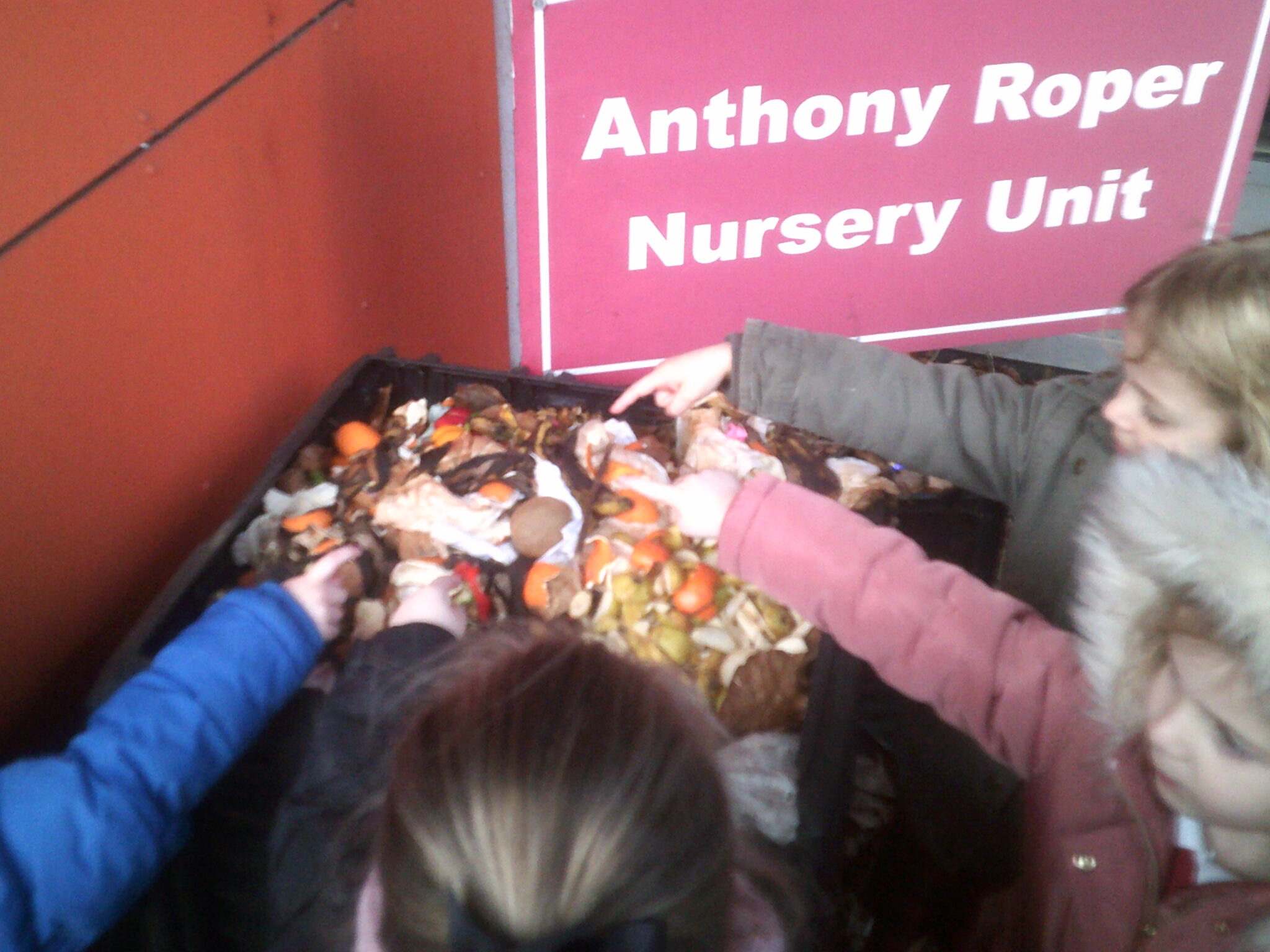
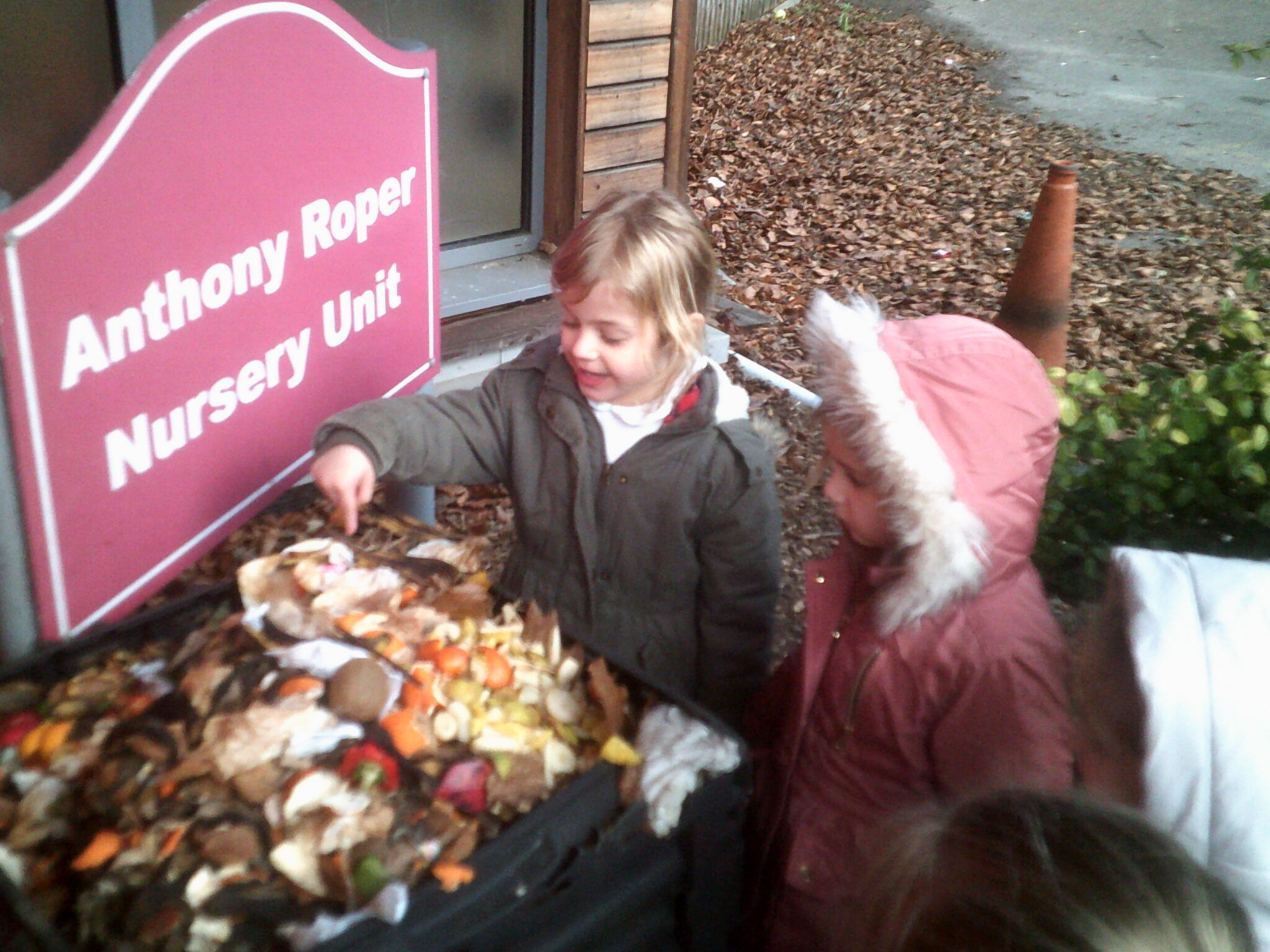
For many years now we have been helping our children to understand where their food comes from and what happens when we throw leftovers away. We have small compost bins in each room that the children put their waste vegetables/fruit after snack time and lunchtime. The grown-ups also use a compost bin and put in any used teabags and paper towels. You may have noticed that there is a large compost bin near the entrance to the Pre-school into which this lovely waste food gets tipped every day. Over the course of this week, the children have been helping one of the teachers to empty the compost into this bin and she has been explaining what happens next. She explained to the children what was needed for the waste foods to turn into compost and what else was needed to be added to the mix, such as leaves, twigs and dead plants. She continued with talking about how the air, heat from the sun and rainwater, all contributed to the mix, alongside the insects that like to live in this lovely mixture.
The children learnt some new language, such as decompose, learning that this is what happens as the vegetation breaks down, and how long this can take, from 6 months to 2 year – the same age as some of our children.
She introduced new vocabulary, including organic, enzymes and nutrients, explaining in simple terms what these words mean. They further discussed what the compost will look like when it is finally ready and how gardeners refer to compost as ‘black gold’ because it is so valuable and precious for the health of the soil.
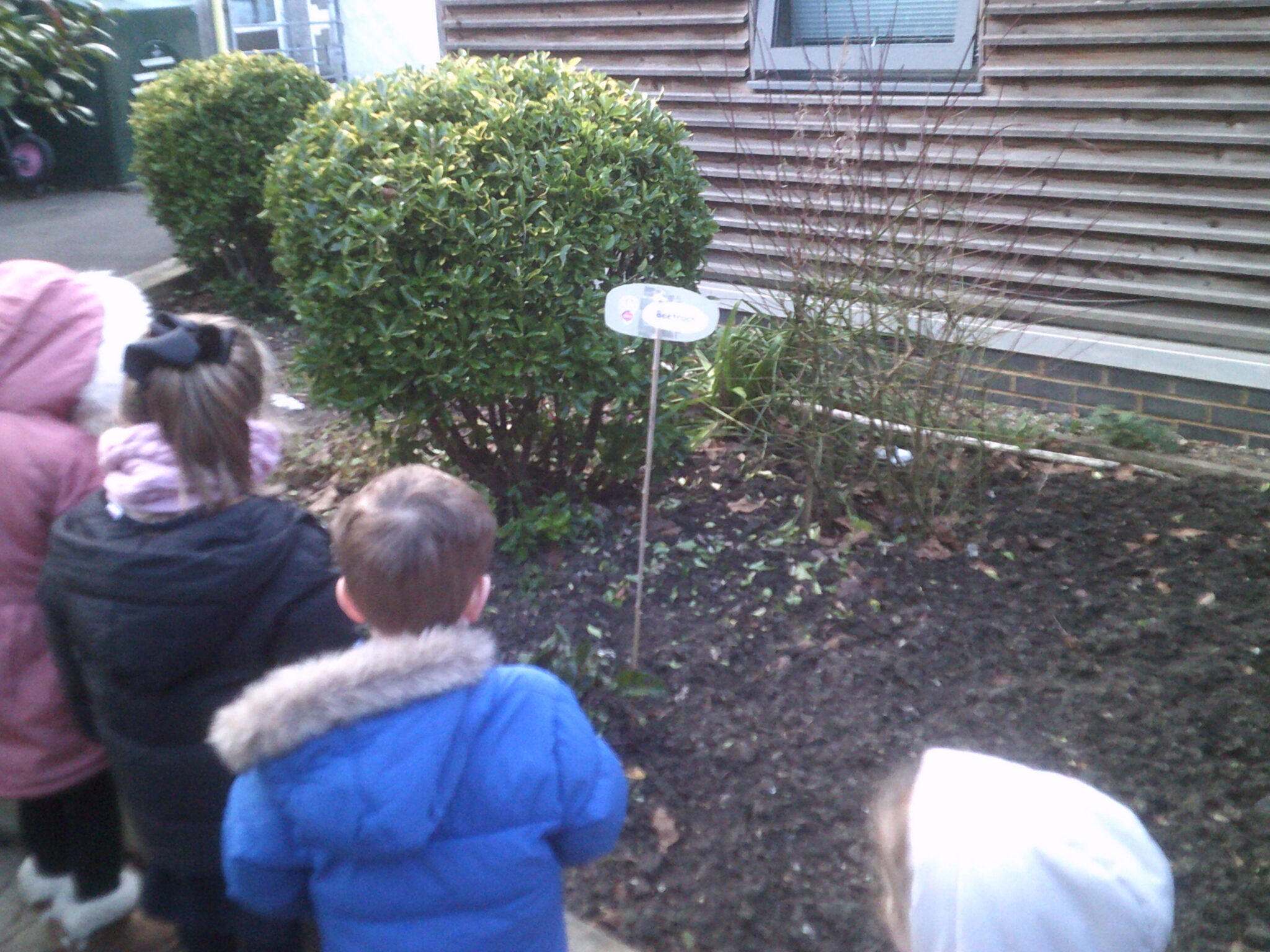
The children then looked at our allotment garden, which is slowly taking shape with the help of the lovely Eynsford in Bloom team, thinking about what we can plant in the garden soon, including potatoes, carrots, radishes, beetroot, strawberries, pumpkins, onions, flowers and sunflowers. They thought about where the plants grow – some on top of the soil and some underneath and how all of them need sunshine and rain to help them grow.
The natural environment is very important to us at the Pre-school and the children are learning about how to care for their world – vital in their lifetimes. Quite a lot of rubbish gets blown into our gardens from the Primary School and surrounding areas, so the children became ‘litter pickers’, finding and picking up the litter and putting it in the correct bin. They talked about what is and isn’t biodegradable and/or recyclable, learning that some things will take thousands of years to break down.
As always, this is a snapshot of some of the activities the children have taken part in. There will be some photos available on our website and Facebook page.
We hope you have a wonderful half term break with your lovely families.
The Pre-school Team